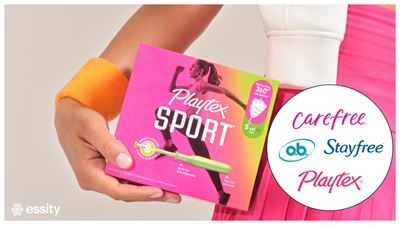
Essity has completed the acquisition of Edgewell Personal Care’s feminine care business for USD 340m (cash- and debt-free), acquiring Carefree, Stayfree and o.b. in North America plus global Playtex feminine care rights and a Dover, Delaware production facility. The assets will be consolidated into Essity’s accounts from February 2, 2026, and the deal is positioned to bolster Essity’s North American personal-care footprint and margin profile. The transaction is small relative to Essity’s scale (2025 net sales ~SEK 138bn) but strategic for category growth and market share in the US.
Market structure: Essity’s USD 340m purchase is incremental relative to its SEK138bn sales but meaningful in the US feminine-care niche — it strengthens Essity (ESSITY.ST) distribution and manufacturing (Dover plant) vs incumbents (PG, KMB). Winners are Essity (scale, margin uplift potential) and US retail partners who get consolidated SKUs; Edgewell (EPC) is a mixed winner via cash proceeds but loses category exposure and potential cross-sell. Expect small upward pressure on branded pricing in targeted premium segments, but overall category elasticity remains low so volume declines are unlikely.
Risk assessment: Main tail risks are integration failure (loss of market share at Playtex/Carefree within 12–24 months), plant operational disruption at Dover, and a reputational/chemical safety recall that could produce >5% EPS hit for a cycle. Near-term (days–weeks) volatility is limited; medium-term (3–12 months) execution risks dominate synergies realization; long-term (2–5 years) sits on whether Essity converts brands to higher-margin sustainable SKUs. Hidden dependency: cross-border supply chain reconfiguration and SKU rationalization could transiently raise COGS by 50–150bp.
Trade implications: Tactical long ESSITY (ESSITY.ST) exposure is attractive — acquisition is accretive scale at a modest price; consider 2–3% portfolio long-sized position, target +10–15% in 12 months. Pair trade: long ESSITY vs short Edgewell (EPC) 1–2% to capture differential execution; use a 12-month call spread on ESSITY (buy ATM, sell 15% OTM) sized to 1–2% notional to limit capital. Watch Q1/Q2 2026 integration updates and US retail promotion cadence as catalysts.
Contrarian angles: Consensus may underprice the upside from SKU rationalization and cross-sell into Essity’s US channels — $340m could unlock >€50–80m annual EBITDA if executed, implying a 6–8x payback on acquisition multiple over 3–5 years. Conversely, market may understate brand attrition and private-label pressure; if product reformulation/eco-labeling costs rise >200bp, margin accretion could reverse. Historical parallels: small brand tuck-ins into global players often deliver modest mid-single-digit organic growth if integration is disciplined; failure to integrate has led to write-offs within 18–24 months.
AI-powered research, real-time alerts, and portfolio analytics for institutional investors.
Request DemoOverall Sentiment
mildly positive
Sentiment Score
0.25
Ticker Sentiment
