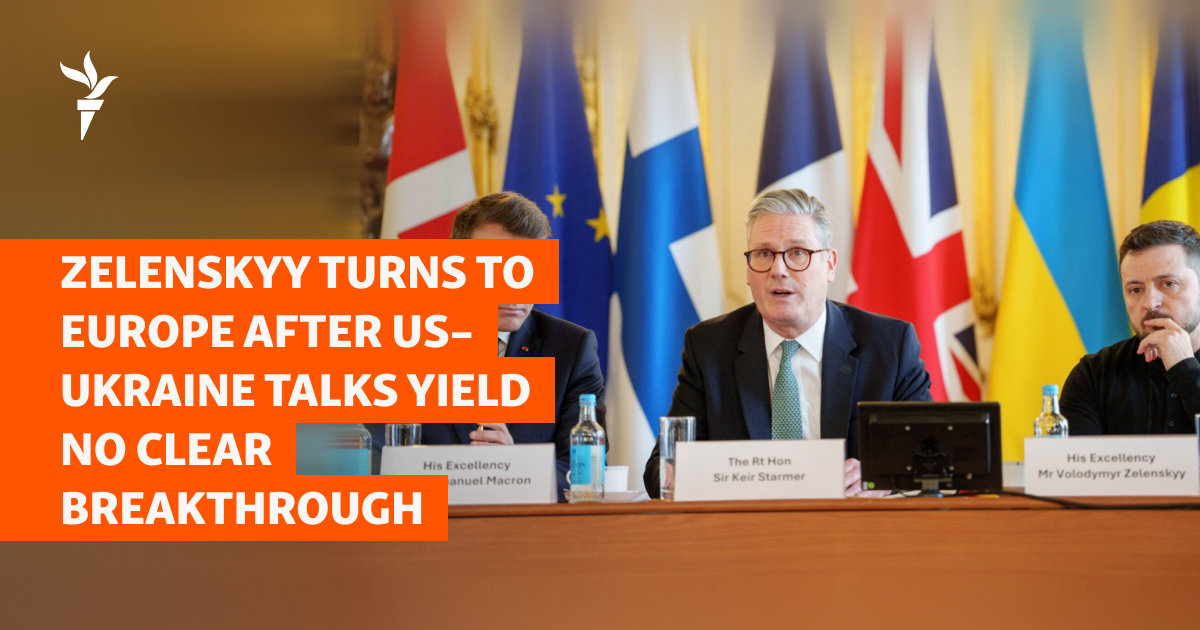
Ukrainian President Volodymyr Zelenskyy will meet Britain’s Keir Starmer, France’s Emmanuel Macron and Germany’s Friedrich Merz in London on Dec. 8 to press for more air-defence systems and missiles after three days of talks with US officials in Florida that yielded a constructive but non‑decisive outcome. Kyiv reported intensified strikes — some 1,600 drone attacks and 1,200 guided aerial bombs in the past week — including reported damage to a dam in Kharkiv and attacks on energy infrastructure, underscoring near‑term upside risk to European energy prices and potential acceleration of Western defense support and spending depending on the London summit’s deliverables.
Market structure: Immediate winners are air‑defence and systems integrators (prime contractors) and LNG/European power producers — they capture accelerated orders and price pass‑through into winter. Losers are European utilities with constrained supply, airlines/tourism (demand destruction), and Ukrainian local infrastructure owners; expect higher capex for reconstruction that benefits heavy equipment, construction materials and insurers over 6–36 months.
Risk assessment: Tail risks include NATO escalation or a nuclear/major dam incident (low probability, very high impact) that could spike commodity and safe‑haven flows; model a 20–50% move in European gas and oil prices and 3–5% EURUSD shock in such events. Immediate (days) risk is headline volatility around the London meeting; short term (weeks–months) is winter energy shortfalls; long term (quarters–years) is sustained Western defense procurement and reconstruction spending.
Trade implications/cross‑asset: Expect wider peripheral sovereign spreads, steeper German/Bund volatility, stronger USD and higher gold; defend‑name implied vols should reprice +30–70% on new contracts. Supply/demand: LNG exporters (US) tighten availability to Europe pushing TTF/HUB spreads wider by 10–40% in cold snap scenarios; commodities (nickel, copper) may rerate on sanctions/disruption.
Contrarian angles: Market may underprice European small/midcap engineering names that win NATO/EU micro‑contracts and overprice large primes already rallied in 2022–23; historical parallel: post‑2014 sanctions led to 2–3 year multi‑year defense spend tailwinds. Unintended consequence: large Western orders could create delivery bottlenecks (electronics, chips) — favor integrators with secure supply chains.
AI-powered research, real-time alerts, and portfolio analytics for institutional investors.
Request DemoOverall Sentiment
moderately negative
Sentiment Score
-0.40
