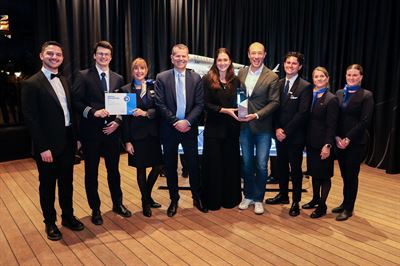
Scandinavian Airlines (SAS) was awarded “Most Impactful Solution – Ground Operations” at The Aviation Challenge Awards in Copenhagen on 21 January for deploying advanced de-/anti-icing fluids and precision measuring tools that reduce glycol use, delivering measurable operational and safety improvements. The recognition underscores SAS’s focus on scalable, data-driven sustainability initiatives across the SkyTeam network; SAS noted it serves over 25 million passengers annually, transports 60,000 tons of cargo, operates hubs at CPH/OSL/ARN, joined SkyTeam in September 2024 and targets net-zero by 2050. The development is a reputational and ESG positive for SAS and may support longer-term cost and regulatory positioning, but it is unlikely to have material near-term market-moving financial impact.
Market structure: SAS’s award signals modest but tangible operational differentiation for SkyTeam members; winners are airlines that can scale measurable OPEX reductions (SAS:ST, DAL) and niche vendors of precision de/anti‑icing tech (ground‑handlers, sensor/software providers). Losers are marginal glycol suppliers (small negative demand tail vs. global ethylene glycol market <1% of revenue for majors like EMN/DOW), and airports with legacy runoff liability. Pricing power shifts are subtle — airlines that show repeatable winter cost savings can win corporate contracts and reduce winter fuel/maintenance volatility over 12–36 months.
Risk assessment: Tail risks include a safety incident from new de/anti‑icing processes that could trigger fleet-wide groundings (days–weeks) or regulatory rollback, and greenwashing/regulatory scrutiny if claims don’t match measurable cuts (6–12 months audits). Hidden dependencies: benefits scale only at high winter-flight density hubs (CPH/OSL/ARN), and savings depend on frequency of cold-weather ops; insurance premium relief or regulatory mandates would be the biggest accelerants. Key catalysts: EU/ICAO guidance, SkyTeam procurement directives, or multi‑carrier adoption in next 6–18 months.
Trade implications: Direct equity exposure to SkyTeam/operational leaders (small overweight in DAL, selective SAS exposure) and thematic bets on ground‑operations tech providers and ESG‑focused airline ETFs (JETS) are preferred; hedge by shorting incumbent chemical producers with glycol exposure (EMN/DOW) sized to expected demand delta <2% over 2 years. Options: use defined‑risk call spreads on DAL (6–12 month) to capture re‑rating and buy protection via cheap puts on smaller, ESG‑lagging carriers to hedge execution risk. Rebalance if measured glycol usage reduction <5% across pilots/sites after one winter.
Contrarian angles: Market may underprice operational ESG as a revenue driver — sustainability wins can reduce cost of capital for adopters (credit spread tightening 20–50bp over 12–24 months) but overestimate supply‑side impact on chemical majors. Historical parallels: tech led operational wins (e.g., weight reduction programs 2015–2018) delivered 3–7% unit cost improvement over 1–2 years; expect similar magnitude if scaled. Unintended consequence: rapid substitution could concentrate regulatory attention and certification costs on new fluids/tools, raising near‑term CAPEX for airlines that move fastest.
AI-powered research, real-time alerts, and portfolio analytics for institutional investors.
Request DemoOverall Sentiment
mildly positive
Sentiment Score
0.30
