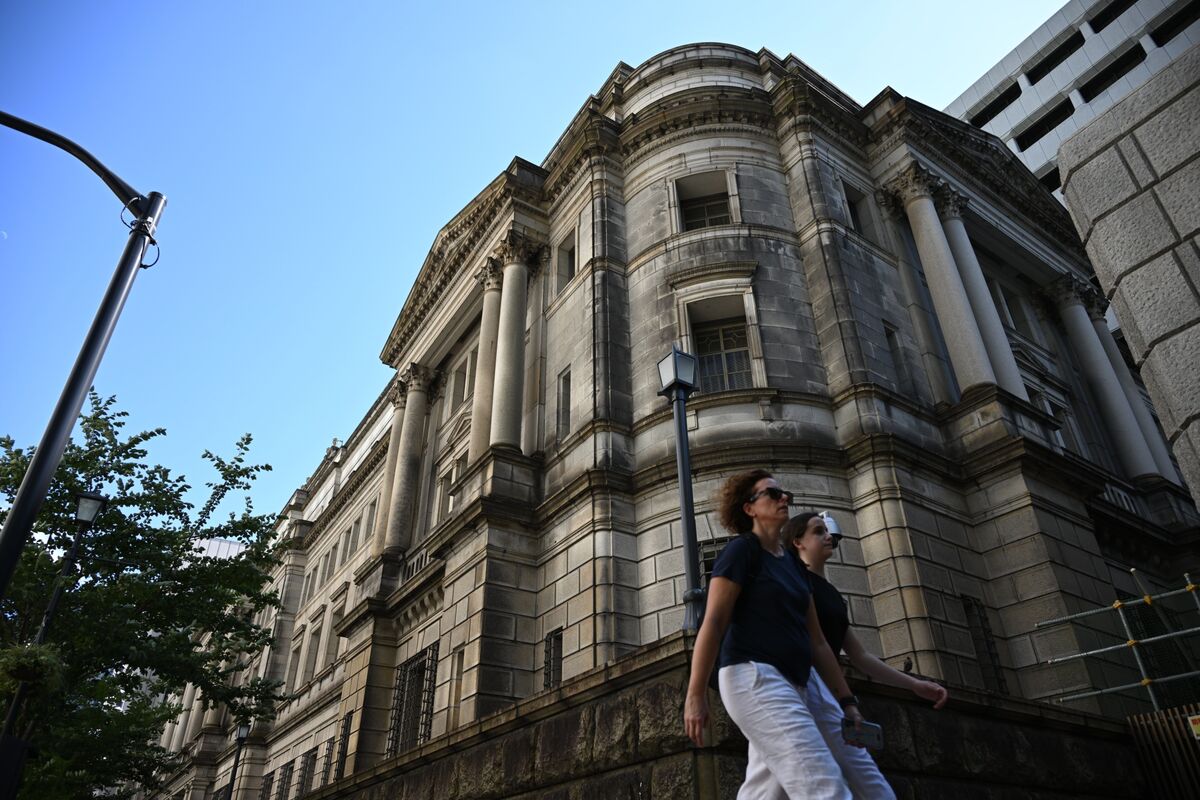
A Bank of Japan board member indicated a potential shift towards a rate hike by year-end, contingent on the impact of US tariffs. The BOJ will assess tariff effects over the next two to three months, with the Japanese economy's resilience closely linked to the US economy's ability to withstand its own tariff policies. This signals a data-dependent monetary policy path for the BOJ, closely tied to global trade developments and their implications for economic stability.
A Bank of Japan board member has signaled a potential hawkish shift in monetary policy, indicating the central bank may exit its 'wait-and-see' stance with a rate hike by year-end. This policy normalization is explicitly conditional, hinging on an assessment of the economic impact from US tariffs, which the BOJ intends to evaluate over the next two to three months. The statement establishes a direct link between the resilience of the US economy to its own trade policies and the health of the Japanese economy; stronger-than-expected US performance would likely mitigate damage to Japan, creating a viable window for the BOJ to tighten. This data-dependent approach introduces global trade developments, specifically US tariff effects, as the primary variable influencing the BOJ's near-term interest rate trajectory.
AI-powered research, real-time alerts, and portfolio analytics for institutional investors.
Request DemoOverall Sentiment
mildly positive
Sentiment Score
0.30
