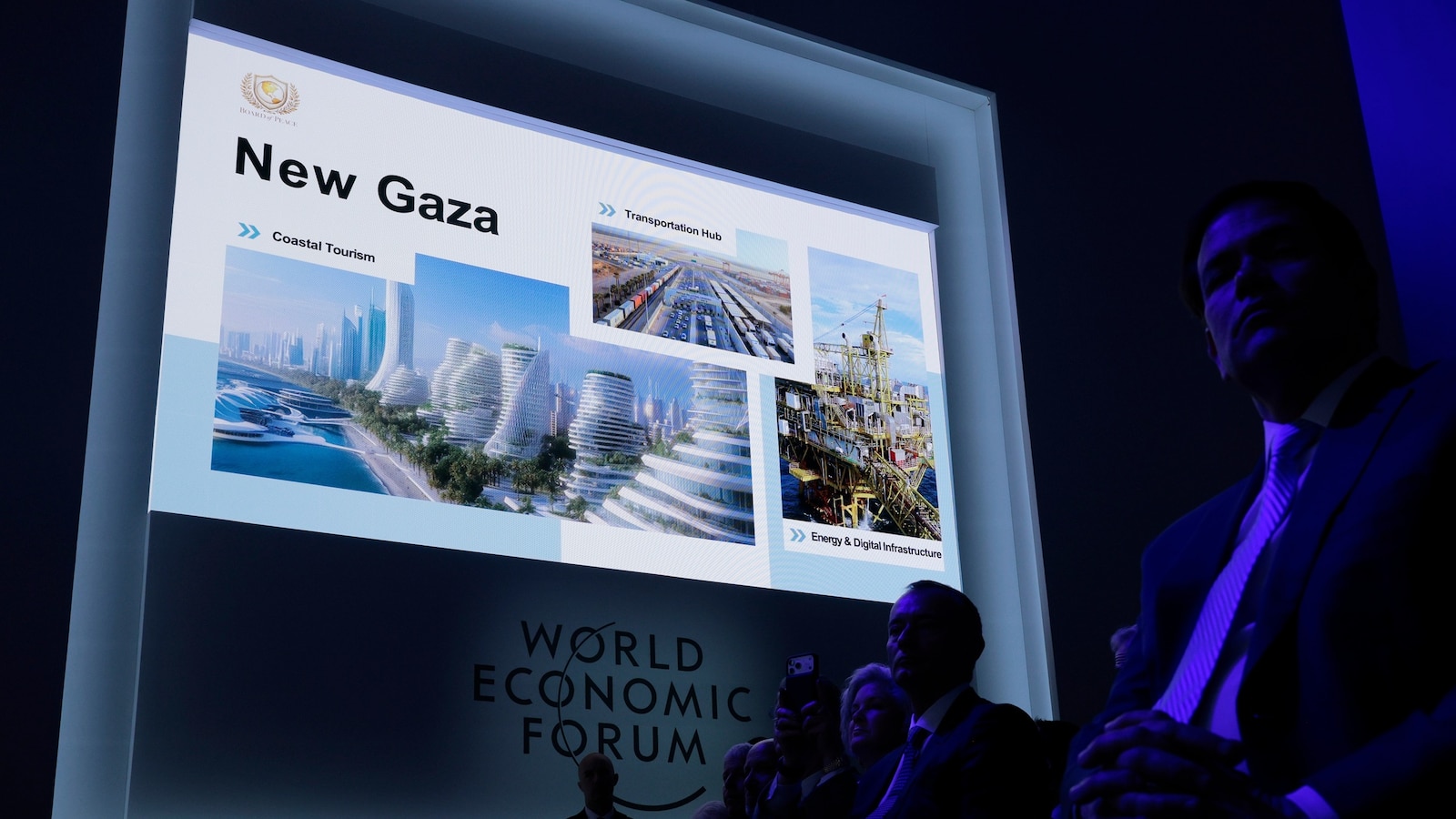
Jared Kushner unveiled a Trump-backed post-war redevelopment “master plan” for Gaza proposing phased, zone-based reconstruction (Rafah, Khan Younis, Center Camps, Gaza City) with private-sector-led funding, a special economic zone and an estimated cost of more than $25 billion for utilities and public services. Key project claims include New Rafah with over 100,000 permanent housing units, 200 education centers, 75 medical facilities and 170 coastal towers; Kushner projected a two-to-three-year construction horizon and highlighted immediate 100-day humanitarian and rubble-clearing priorities (about 68 million tons). For investors, the plan signals potential large-scale real estate, infrastructure and development opportunities but carries substantial political, security and implementation risk, uncertain financing commitments and reputational exposure.
Market structure: The proposal explicitly shifts demand into large-scale construction, heavy materials, data-center buildouts and security services. If even $10–25B of committed capital materializes, expect a multi-quarter uptick in steel, cement and heavy equipment demand (supporting NUE, MLM, CAT) and a re-rating of infrastructure/private-equity allocators that can underwrite sovereign or quasi-sovereign risk (BX, BIP). Pricing power will be localized and heavily gated by security and insurance availability; margins for contractors will depend on risk premia and mobilization speed.
Risk assessment: Tail risks are high—ceasefire breakdown, donor pullback, asset expropriation, or major ESG sanctions could wipe out value (loss scenarios >70% for on-the-ground assets). Time horizons: immediate (days-weeks) limited market reaction; short-term (3–12 months) contingent on formal donor pledges and insurance capacity; long-term (2–5 years) execution risk dominates (Kushner’s 2–3 year claim is optimistic). Hidden dependencies include Gulf states’ political will, UN/IFC participation, and comprehensive security guarantees.
Trade implications: Favor materials and global infra/private equity feeders over luxury real estate or tourism plays tied to regional stability. Tactical option plays can hedge tail risk; prefer modular exposure (ETFs, managers) until donor confirmations >$10B appear. Watch catalysts: public funding commitments, insurance market capacity announcements, and signed MOUs with Gulf investors.
Contrarian angle: Consensus treats this as PR-heavy; the market may underprice demand for security/engineered solutions and overprice fast luxury upside. If major Gulf capital (Saudi/UAE) provides even $5–10B and insurance markets accept deployment, select contractors and infra managers could outpace broader construction cyclicals; conversely, reputational and sanction costs could make direct developers toxic—favor intermediaries (BX, BIP) over blueprints and branded luxury firms.
AI-powered research, real-time alerts, and portfolio analytics for institutional investors.
Request DemoOverall Sentiment
mildly positive
Sentiment Score
0.12
