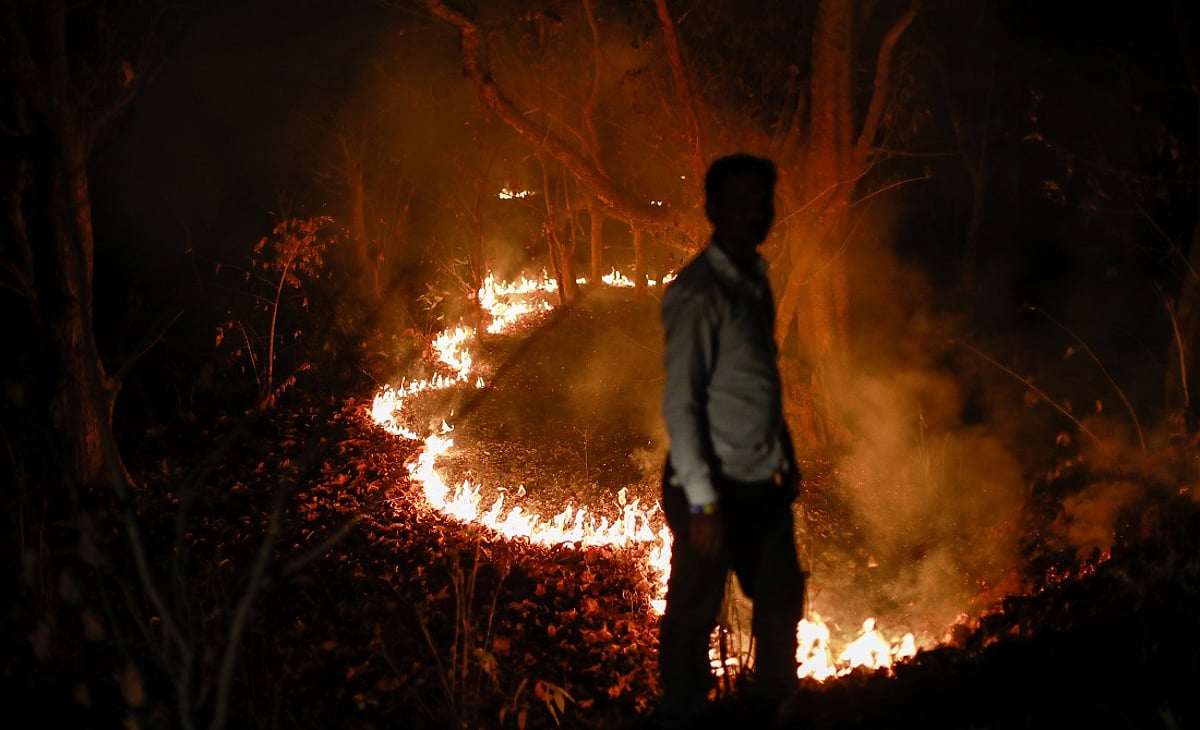
More land burned in the first four months of 2026 than in the same period of any prior year, according to World Weather Attribution. The largest burned area was in Africa, with extensive fires also reported across Asia including India, China, Laos, Myanmar and Thailand. With a Super El Nino approaching, the article warns that fire risk and climate-related disruption are set to worsen.
The first-order read is not just agricultural damage; it is a compound inflation shock that arrives through multiple channels at once: food, power, logistics, and insurance. Because the burn pattern is broad-based across emerging Asia and Africa, the market should expect more simultaneous stress on staples, forest products, and rural labor supply rather than a single-country shock that can be quickly arbitraged away. The second-order effect is that climate-sensitive supply chains become less reliable exactly when a Super El Nino raises the probability of follow-on crop stress and hydropower shortfalls.
The most underappreciated beneficiary is not a commodity producer, but input-heavy agribusiness with pricing power and diversified sourcing. Fertilizer, seed, irrigation, and agricultural chemical names can gain share if farmers shift toward yield-protection spending even as volumes get pressured by acreage loss. Conversely, consumer staples and food processors with weak pass-through get hit later, because margin compression typically lags the event by 1-2 quarters as procurement contracts reset.
In EM, the macro trade is more dangerous than the event headline implies. Countries already running current-account or food-import deficits face a higher probability of subsidy extensions, FX pressure, and policy tightening, which can spill into local banks and transport names through weaker credit quality and lower freight volumes. The key reversal variable is not the fires themselves, but whether rainfall normalizes quickly enough to preserve the next planting season; if not, the earnings drag extends from weeks into 2-3 quarters and becomes a 2026 inflation story rather than a transient ESG headline.
The contrarian point: the market often overprices the immediate disaster premium but underprices persistence. Climate-event beneficiaries can mean-revert fast if the headline fades, but the real opportunity is in names exposed to repeated reinsurance, replacement-cost, and input-cost inflation that compounds across seasons. That argues for using near-dated volatility to express a medium-duration view rather than chasing the event on day one.
AI-powered research, real-time alerts, and portfolio analytics for institutional investors.
Request DemoOverall Sentiment
moderately negative
Sentiment Score
-0.40
