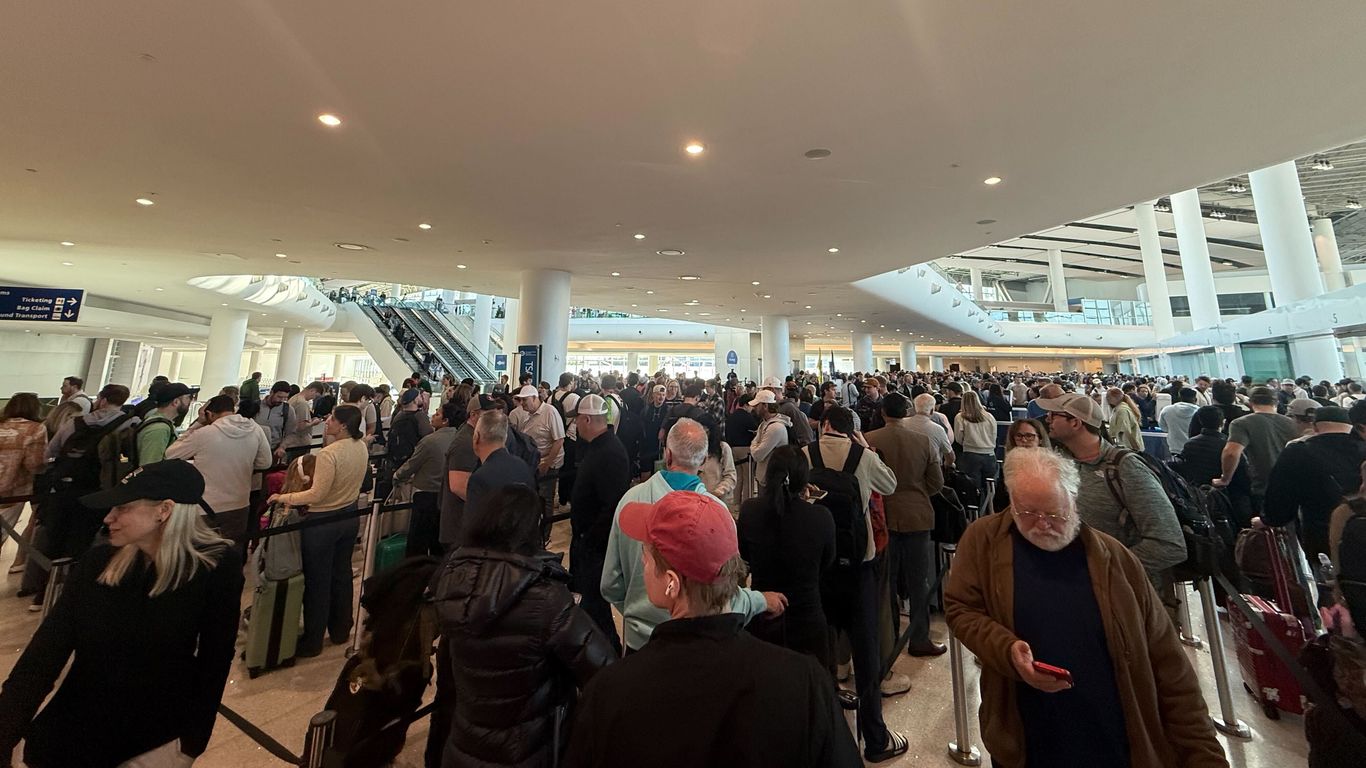
President Trump said ICE agents will be deployed to airports starting Monday to assist unpaid TSA staff amid the partial DHS shutdown. Nearly 36% of TSA officers at MSY called out sick last week, producing hourslong lines and missed flights; MSY urges travelers to arrive three hours early. Administration says ICE would not run X-ray machines but could guard exit lanes and check IDs, and the governor backed National Guard support already in New Orleans. The move raises operational and reputational risks for airports and carriers but is unlikely to have material market impact.
Operational chokepoints at security screening are nonlinear: small staffing shortfalls can produce outsized delays because queue length and missed-connection rates compound across a hub-and-spoke network. A persistent degradation in throughput of days-to-weeks will disproportionately hit point-to-point carriers and origin-heavy airports, creating ripple effects in crew rotations and aircraft utilization that can raise unit costs by low-single-digit percent for affected carriers in the quarter.
A short-term federal augmentation of on-site personnel is a stopgap rather than a structural fix — legal scope, training, and passenger-processing authority limit how many incremental screening lanes can actually be opened. Political optics of mixing enforcement tasks with traveler-facing functions also introduce demand-side friction for certain demographic cohorts, which could depress local discretionary travel volumes for multiple months if perceived as sustained.
Secondary beneficiaries are private security contractors and vendors that can supply trained checkpoint staff and rapid-deployment screening tech; procurement cycles are short in crisis mode, so contract awards can materialize inside 30–90 days. Conversely, local hospitality and airport concession revenue are vulnerable to repeated flare-ups: persistent multi-hour waits shave per-passenger spend and increase refund/re-accommodation costs for airlines, pressuring regional liquidity for smaller carriers and concessionaires.
Key catalysts to watch: demonstrated change in checkpoint throughput (days), union/legal pushback or federal policy clarifications (1–6 weeks), and whether augmentations become protracted (2–12+ months), which would shift market impact from operational blip to structural reallocation of security spend and vendor market share.
AI-powered research, real-time alerts, and portfolio analytics for institutional investors.
Request DemoOverall Sentiment
neutral
Sentiment Score
0.00
