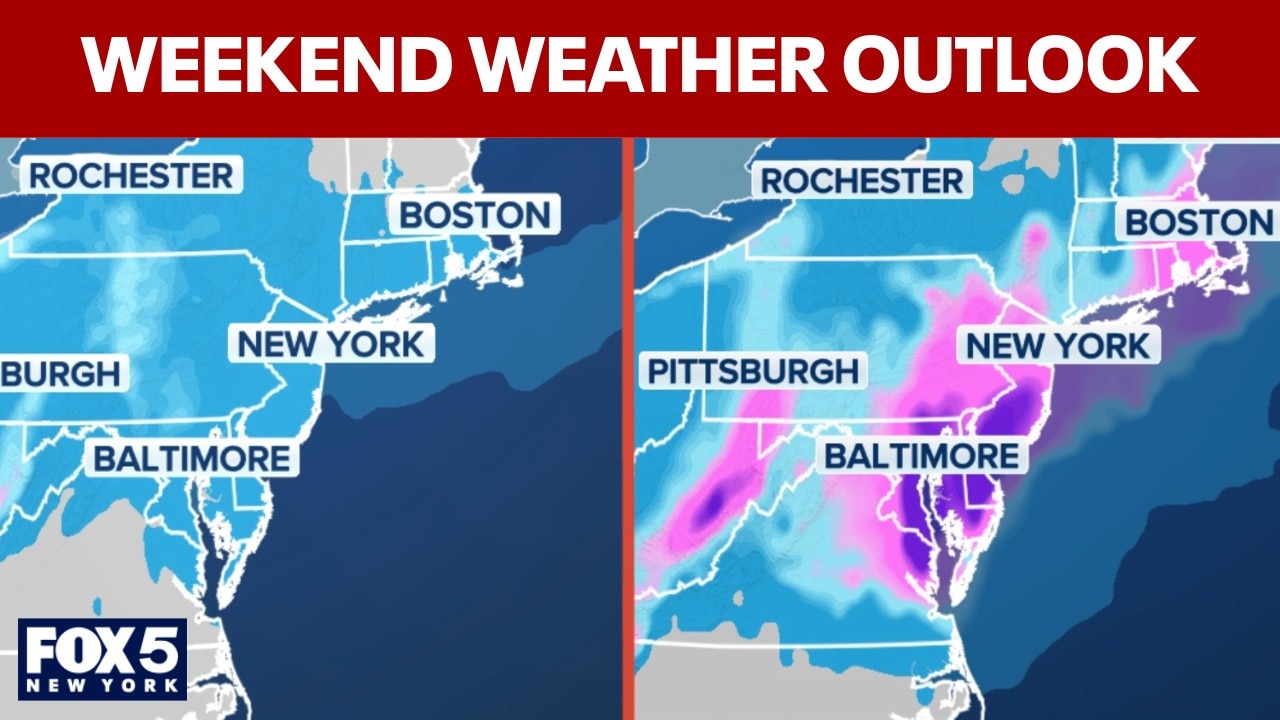
A coastal storm is being monitored for this weekend with the National Weather Service assigning a roughly 50% chance of snow for New York City on Sunday (50% chance Sunday night) and a 30% chance of precipitation late Saturday that could change from rain to snow. Forecast models (notably the GFS and ECMWF) diverge on the storm track — if the low hugs the coast NYC could see more significant accumulations, but current projections favor only a few inches unless the system intensifies; confidence in timing and totals should improve approaching the weekend, with implications for transportation, energy demand and urban operations.
Market structure: A coastal snow event is a short-duration demand shock that benefits heating fuels and local service providers while hurting transportation and leisure exposures tied to NYC airports and port activity. If the storm tracks onshore, expect prompt natural gas demand to rise 3–8% over 48–72 hours and NYISO winter peak usage to tick up 1–3%, supporting basis strength into NYC hubs; airlines and ride-hailing revenues could drop 5–20% during the disruption window. Competitive dynamics favor vertically integrated fuel suppliers and utilities (stable cash flows) over regional carriers and airport-reliant retail/tourism operators who lose perishable revenue and face rebooking costs.
Risk assessment: Tail scenarios include a major nor’easter causing multi-day airport closures (30–50% daily capacity hit at JFK/LGA/EWR for 1–3 days) or infrastructure damage that creates weeks-long congestion; insured losses could reach low hundreds of millions regionally, but systemic financial risk is low. Immediate (days) effects are traffic, cancellations and short gas/power spikes; short-term (weeks) effects are retail restocking and claims flow; long-term impact is negligible unless repeated storms shift travel patterns. Hidden dependencies: clearance capacity for salt/plows, Con Ed operational constraints, and social-media-driven trading that may exaggerate IV moves in local stocks/options.
Trade implications: Use short-dated, directional trades sized small relative to portfolio (1–3% positions) to capture high event asymmetry. Buy weeklies on energy and protective puts on carriers rather than outright equity shorts to cap downside, and favor consumer-retail longs tied to weather-driven sales (home improvement, e-commerce) for short, tactical exposure. Watch IV in airline options — it will rise on confirmed storm runs, creating opportunities to sell premium after headlines settle.
Contrarian angles: The social-media “major storm” consensus is binary and likely overstates probability — models currently imply ~50% NYC snow chance; markets may underprice low-probability heavy-snow tail that would spike localized demand and transport losses. If you believe the storm will be near-miss, buying insurance (cheap OTM calls on NG or OTM puts on carriers) is cheaper than directional positions; conversely, if you believe confirmation will push realized disruptions, owning utilities/retail and shorting carriers will compound gains. Historical parallels (northeast nor’easters) show large IV swings that mean option spreads are the preferred vehicle to capture skew without large delta exposure.
AI-powered research, real-time alerts, and portfolio analytics for institutional investors.
Request DemoOverall Sentiment
neutral
Sentiment Score
0.00
