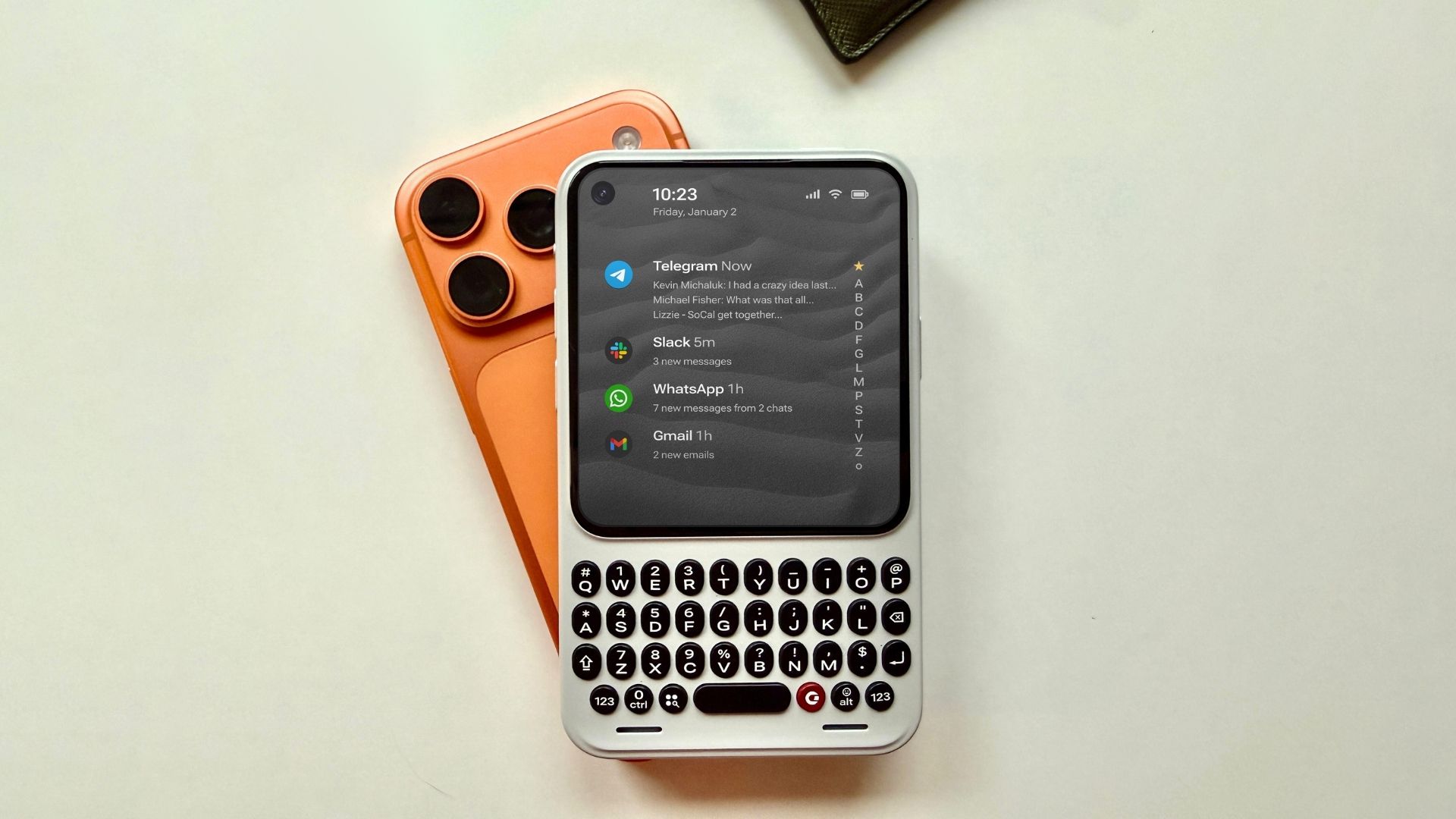
Clicks Technology unveiled the Clicks Communicator, an Android 16, purpose-built ‘second phone’ focused on messaging with a physical keyboard, a dedicated Prompt Key for dictation, 4,000 mAh battery, 256GB built-in storage plus microSD up to 2TB, 50MP rear/24MP front cameras, USB‑C, 3.5mm jack, and global 5G/LTE with SIM and eSIM. U.S. introductory pricing is $499 (discounted to $399 with a $199 deposit before Feb. 27); shipments are expected later this year and the device will be showcased at CES 2026 — a niche hardware launch that could modestly increase revenue if it finds a market but is unlikely to be material market-moving news.
Market structure: This is a niche, purpose-built second-phone segment targeting “two‑phone” users and privacy/attention-conscious buyers at a $399–$499 price point. Expect low initial unit volumes (likely <<1% of global smartphone shipments in Year‑1) but outsized margin per unit for component suppliers (NAND, camera sensors, 5G modems) if production scales to 100k–500k units. Incumbent OEMs (AAPL, Samsung) are minimally affected near term; component vendors (QCOM, MU, SONY) see incremental TAM upside if multiple niche devices follow.
Risk assessment: Tail risks include failed shipments/cash burn from pre‑order deposits, regulatory issues around eSIM/carrier interoperability, and software lock‑in if the curated launcher fails to retain users; each could wipe >50% of expected revenue in 6–12 months. Short‑term (days–weeks) market impact is negligible; medium (3–9 months) depends on CES partnerships and pre‑order conversion; long‑term (1–3 years) the trend could create a 1–3% structural uplift to mid‑tier component demand if niche devices reach >1M units cumulatively.
Trade implications: Favor component exposure over single-device equity: semiconductors and NAND suppliers scale faster than any single OEM. Implement small, option‑efficient positions into QCOM and MU and rotate 1–2% portfolio from idiosyncratic consumer‑hardware retail risk into SMH (semiconductor ETF) over 3–6 months; avoid speculation on the device maker until shipping starts.
Contrarian angles: Consensus underestimates the aftermarket accessory and keyboard revival economics — software curation could command subscription revenue, turning a hardware play into recurring revenue for partners. Conversely, the market may be pricing this as a lifestyle gadget; if CES reveals carrier tie‑ups or 500k+ deposits within 60 days, re‑rate component names aggressively; failure to hit those thresholds argues for rapid de‑risking.
AI-powered research, real-time alerts, and portfolio analytics for institutional investors.
Request DemoOverall Sentiment
mildly positive
Sentiment Score
0.25
Ticker Sentiment
