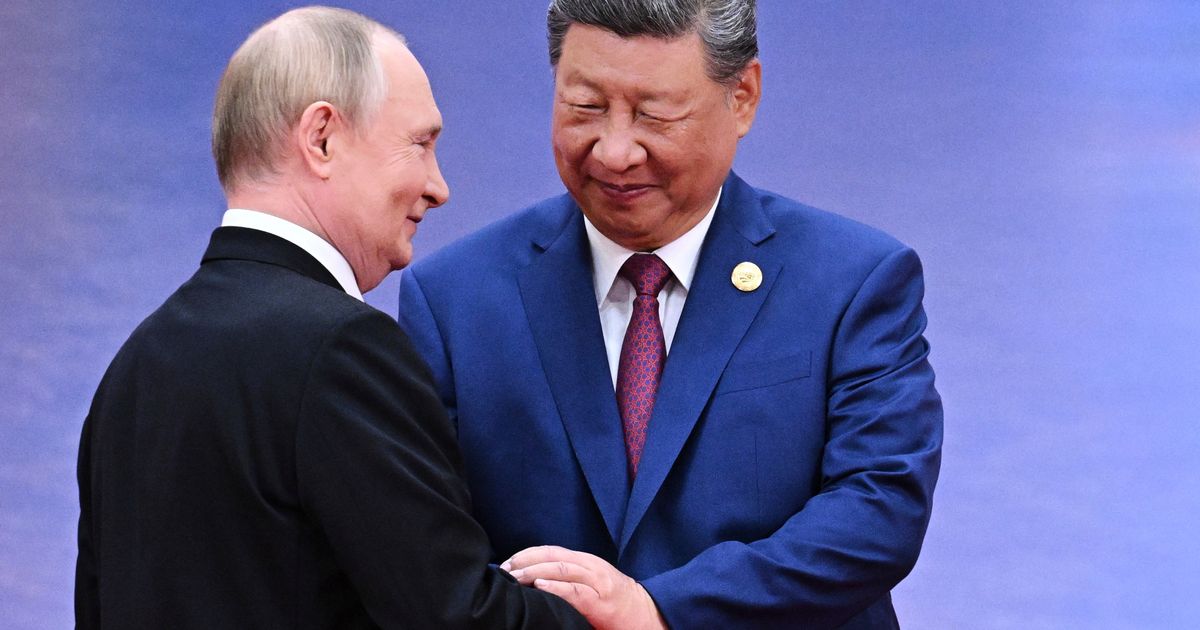
Putin is visiting China for talks on economic cooperation and key regional issues, underscoring the continued Russia-China strategic partnership just days after Trump’s Beijing trip. The article highlights China’s role as Russia’s top trade partner and key buyer of Russian oil and gas, despite Western sanctions and export-control pressure. While no immediate policy outcome is announced, the visit reinforces geopolitical alignment that could affect energy flows, sanctions enforcement, and broader market risk sentiment.
The market implication is less about the photo-op and more about how Beijing is trying to preserve optionality across two strategic dependencies: U.S. market access and Russian commodity/security alignment. That usually keeps risk assets calm in the near term, but it quietly raises the probability of a bifurcated policy regime where China leans harder into sanctioned supply chains, barter-like settlement, and non-dollar channels. The second-order winner is anyone supplying infrastructure for settlement, routing, and compliance circumvention; the loser is the pricing power of Western exporters that rely on China as the marginal buyer.
For energy, the visit reinforces that Russian barrels and molecules remain structurally sticky in Asia, which caps the upside for seaborne crude differentials even if headline geopolitics intensify. The bigger move is in midstream and shipping: longer voyage distances, more blending/reshuffling, and elevated working-capital needs favor tanker owners and trading houses over pure producers. That said, if China feels pressure to showcase neutrality, it may selectively slow visible support rather than reduce actual import volumes, so the near-term effect is more on routes and discounts than on absolute demand.
The main catalyst to watch is not diplomacy but enforcement: U.S./EU secondary sanctions or export-control tightening on Chinese intermediaries would matter within days, while any genuine de-escalation in U.S.-China ties would take months to alter capital allocation. A tail risk is that China extracts better energy terms from Russia in exchange for financing and industrial inputs, which would further compress margins for non-sanctioned Middle East suppliers competing into Asia. Consensus likely underestimates how durable these redirected trade flows become once logistics and payment rails are rebuilt; the reversal would require a meaningful policy shock, not just rhetorical détente.
AI-powered research, real-time alerts, and portfolio analytics for institutional investors.
Request DemoOverall Sentiment
neutral
Sentiment Score
0.05
