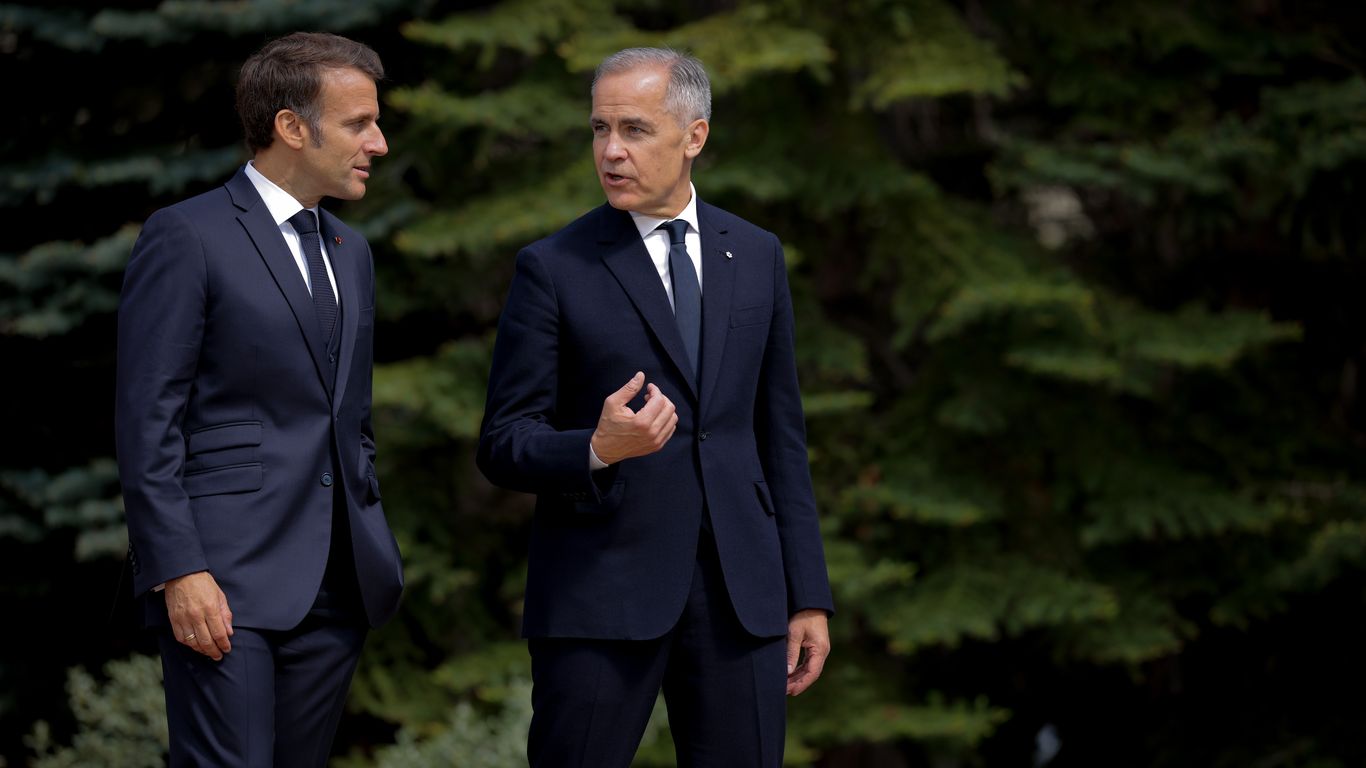
Canada announced its intention to recognize the State of Palestine at the UN General Assembly in September, contingent on the Palestinian Authority committing to reforms, elections, and a demilitarized state. This decision, mirroring intentions from France and the UK, further isolates the U.S. and Israeli governments, with Prime Minister Mark Carney stating it aims to preserve the two-state solution, a stance rejected by Israel as rewarding Hamas. The move reflects a broader international shift, with other U.S. allies also considering similar recognition.
A significant geopolitical shift is underway as Canada has announced its intention to recognize a Palestinian state in September, contingent upon a series of reforms by the Palestinian Authority. This development aligns with similar declarations from France and the UK, signaling a coordinated change in diplomatic posture among key U.S. allies and a growing international isolation of the current U.S. and Israeli stances. Canadian Prime Minister Carney justified the policy shift as a necessary step to preserve the viability of a two-state solution, which he stated is being eroded by both Hamas's actions and Israeli settlement expansion. The conditions attached—including PA reforms, 2026 elections, the exclusion of Hamas from government, and demilitarization—add significant nuance and create a high bar for the recognition to proceed. This move has been explicitly rejected by the Israeli foreign ministry and the White House, which both frame it as a 'reward for Hamas' that could undermine ongoing ceasefire and hostage negotiations. The potential for other allies like Australia, New Zealand, and several EU members to follow suit underscores a broadening diplomatic divergence from U.S. policy in the region, introducing a new layer of complexity to the Israeli-Palestinian conflict and its international dimensions.
AI-powered research, real-time alerts, and portfolio analytics for institutional investors.
Overall Sentiment
neutral
Sentiment Score
0.00
