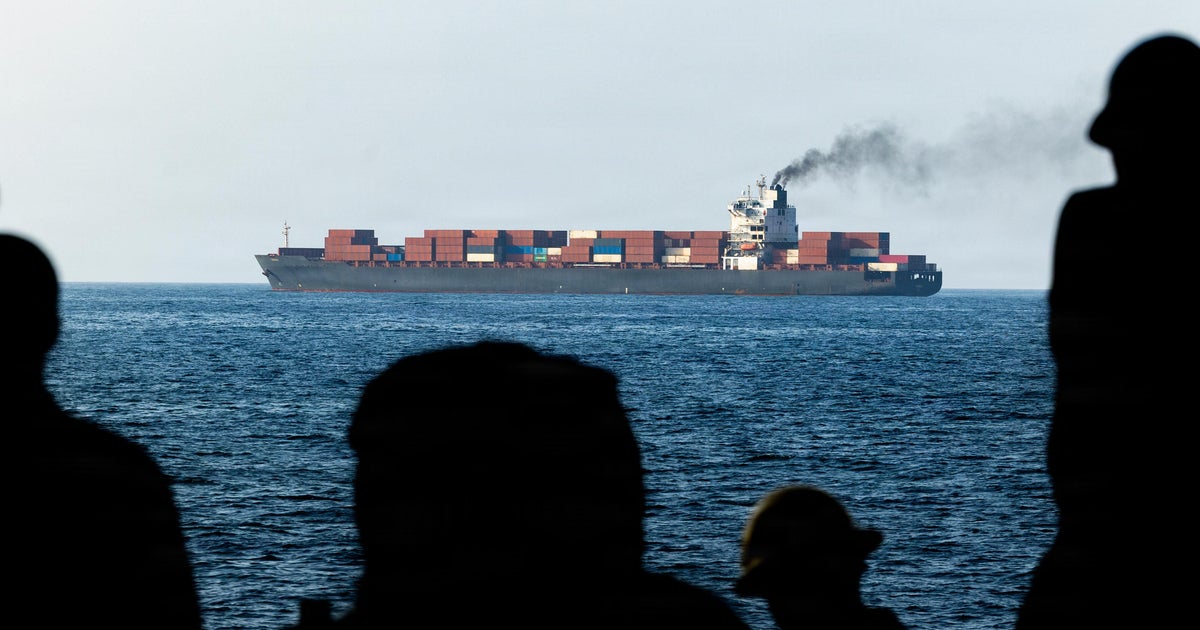
Three commercial vessels were attacked in the Strait of Hormuz as Iran said the shipping lane was closed, heightening fears of a broader regional escalation. President Trump indefinitely extended the U.S. ceasefire while continuing the blockade of Iranian ports, and Treasury warned that Kharg Island storage could fill in days, threatening Iran’s oil export capacity. The standoff is pushing oil prices higher and creating significant risk for global energy flows, shipping, and regional security.
The immediate market implication is not just higher energy prices; it is a broader transport and inventory shock. A sustained disruption in the Strait effectively taxes every Gulf-to-Asia supply chain, which should widen freight rates, raise insurance premia, and create a transient margin windfall for carriers with low Middle East exposure and quick spot-rate reset, while crushing anyone reliant on just-in-time regional routing. The more important second-order effect is that even short-lived incidents can force shippers to reroute, and those detours tend to persist longer than the headlines because charterers keep safety buffers after the first near-miss.
The cable angle matters because it expands the conflict from physical flow disruption to digital infrastructure risk. If subsea links become a credible target, hyperscalers and telecoms face a low-frequency, high-severity latency and redundancy problem across Gulf data traffic; that is materially different from a pure oil shock because it can trigger customer migration to more diversified cloud regions and accelerate capex on alternate routes and terrestrial backhaul. The market is likely underpricing this as a regional issue rather than a global one: the real loser is the Gulf’s role as a consolidated logistics and data hub.
For equities, the setup is negative for AAPL and MSFT at the margin, but not through direct revenue loss; the issue is higher supply-chain friction, Middle East enterprise caution, and potential cloud/network redundancy spending that may compress near-term efficiency ratios. The cleaner expression is in rates, energy, defense, and FX rather than mega-cap tech. The base case is that headline volatility stays elevated for days to weeks, but the tail risk is a forced escalation that reprices oil, freight, and risk assets in one move.
Contrarianly, the ceasefire extension may not be bearish for risk assets if it reduces the probability of a conventional kinetic response and shifts the game toward harassment and infrastructure signaling instead. That scenario can keep oil bid without fully breaking global growth expectations, which favors relative longs in inflation beneficiaries over outright crash hedges.
AI-powered research, real-time alerts, and portfolio analytics for institutional investors.
Request TrialOverall Sentiment
strongly negative
Sentiment Score
-0.82
Ticker Sentiment
