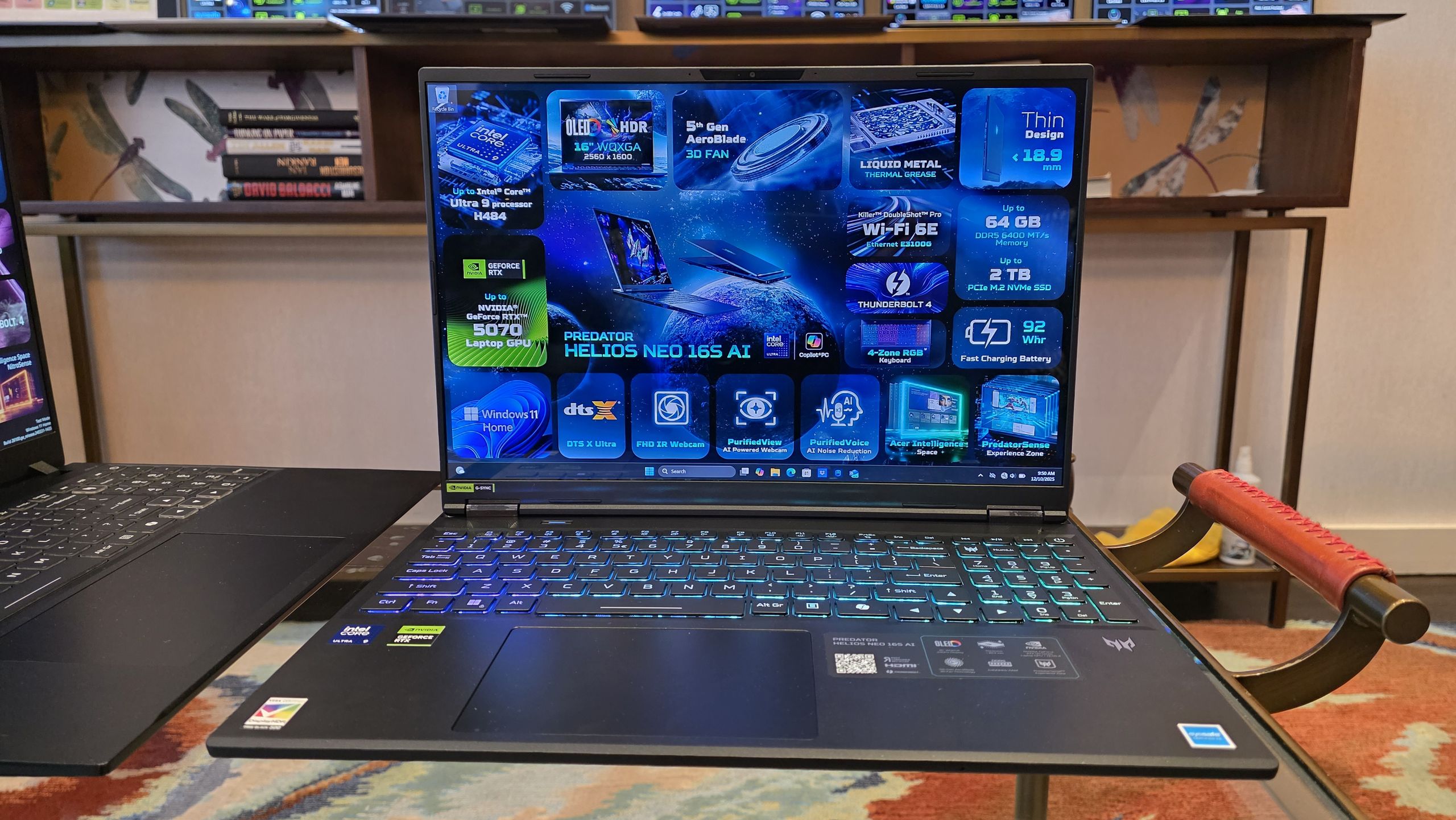
Acer unveiled refreshed Predator and Nitro 16-inch gaming laptops at CES 2026, led by the OLED Predator Helios Neo 16S AI (up to Intel Core Ultra 9 386H, NVIDIA RTX 5070 Laptop GPU, up to 64GB DDR5, 2TB SSD, 92WHr) and two Nitro V 16 models (up to Core Ultra 7 355, RTX 5070, up to 32GB DDR5, 2TB SSD, 76WHr). The Nitro V 16 AI arrives in Q2 2026, with the Nitro V 16S AI and Predator Helios Neo 16S AI following in Q3; Acer also announced Galea 570 headset ($149) and Cestus 530 mouse ($109) for Q1. Absence of retail pricing and a cited RAM-pricing issue, plus the decision to ship Wi‑Fi 6E instead of Wi‑Fi 7, constrain revenue and margin visibility, so the announcements are unlikely to materially move markets absent further commercial or pricing details.
Market structure: Acer’s Q2–Q3 2026 refresh pushes Nvidia RTX 50-series into both mid- and high-tier laptops, implying higher GPU attach rates and ASPs for NVDA over the 2026 laptop cycle (Q2–Q4). Intel also benefits from Panther Lake design wins across the lineup, but OEM margin pressure from the ongoing RAM pricing crisis shifts value to component suppliers (memory makers) and away from OEMs if RAM costs don’t normalize within 90 days.
Risk assessment: Tail risks include a renewed export-control regime on discrete GPUs or a >20% swing in DRAM contract prices within 60–90 days that would either choke GPU supply or compress OEM margins materially. Immediate (days–weeks) impact is low; short-term (Q2–Q3 2026) is product shipment-driven revenue; long-term (2026–2028) sees structural GPU adoption for AI-enabled laptops, favoring NVDA and selective IP/thermal suppliers.
Trade implications: Favor asymmetric exposure to NVDA into the Q2–Q3 refresh (buy call spreads to limit premium) and limited, conditional exposure to INTC via longer-dated options if shares drop >8% (captures mobile CPU recovery without relying on near-term margin improvements). Hedge OEM margin risk via options on DRAM-sensitive names: enter put spreads on memory cyclicals or buy protection on OEM indices if DRAM contract prices move >±10% in 60–90 days.
Contrarian angles: Consensus may underweight Intel’s regained design share—a >8% INTC dip is a buying window rather than a long-term short if Panther Lake yields prove solid. Markets may also over-penalize OEMs for RAM noise; if DRAM prices stabilize within 60 days, expect a snap-back in OEM margins and a rotation from memory longs into OEMs and NVDA. Monitor DRAM price indices and NVDA mobile inventory for early signals.
AI-powered research, real-time alerts, and portfolio analytics for institutional investors.
Request DemoOverall Sentiment
neutral
Sentiment Score
0.12
Ticker Sentiment
