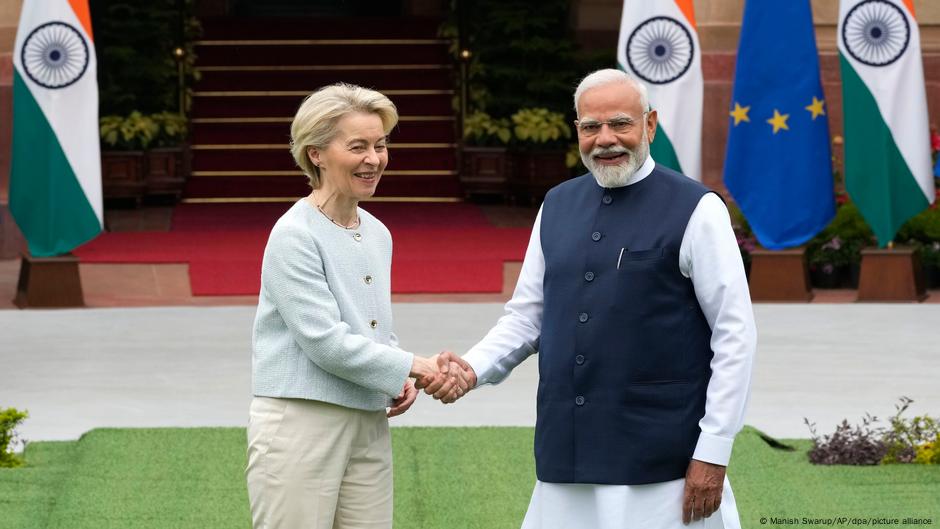
India and the EU are accelerating efforts to finalize a Free Trade Agreement by year-end, driven by the strategic imperative to diversify trade relationships amid US protectionism, which currently impacts roughly half of India's $87 billion annual exports to the US. This deal offers India critical tariff-free market access and reduced reliance on volatile US markets, while the EU, already India's second-largest trading partner with €120 billion in goods trade, seeks diversified supply chains and enhanced geopolitical leverage. Despite ongoing negotiations on market access for specific sectors and the EU's Carbon Border Adjustment Mechanism, high-level political engagement underscores the urgency to secure this significant economic and strategic partnership.
India and the European Union are accelerating negotiations for a Free Trade Agreement (FTA) with an ambitious target for conclusion by year-end, a move largely catalyzed by geopolitical and trade-related pressures from the United States. The current US administration's 50% tariff, impacting roughly half of India's nearly $87 billion in annual exports to the US, has created a strategic urgency for both parties to solidify a reliable trade partnership. For India, a successful FTA offers crucial tariff-free access for key exports such as textiles, pharmaceuticals, and steel, thereby de-risking its trade portfolio from US market volatility. For the EU, which is already India's second-largest trading partner with goods trade valued at €120 billion, the deal promises supply chain diversification, enhanced access for its agricultural and automotive sectors, and strengthened geopolitical influence in the Indo-Pacific. Despite the strong political momentum, significant hurdles remain. Key sticking points include the EU's Carbon Border Adjustment Mechanism (CBAM), which poses a considerable risk to Indian industrial exports like steel and aluminium, and conflicting market access demands, with the EU seeking lower tariffs on vehicles and wine while India pushes for its textile and pharmaceutical products. The cautiously optimistic sentiment is therefore warranted, as a final agreement hinges on resolving these complex issues.
AI-powered research, real-time alerts, and portfolio analytics for institutional investors.
Overall Sentiment
moderately positive
Sentiment Score
0.50
