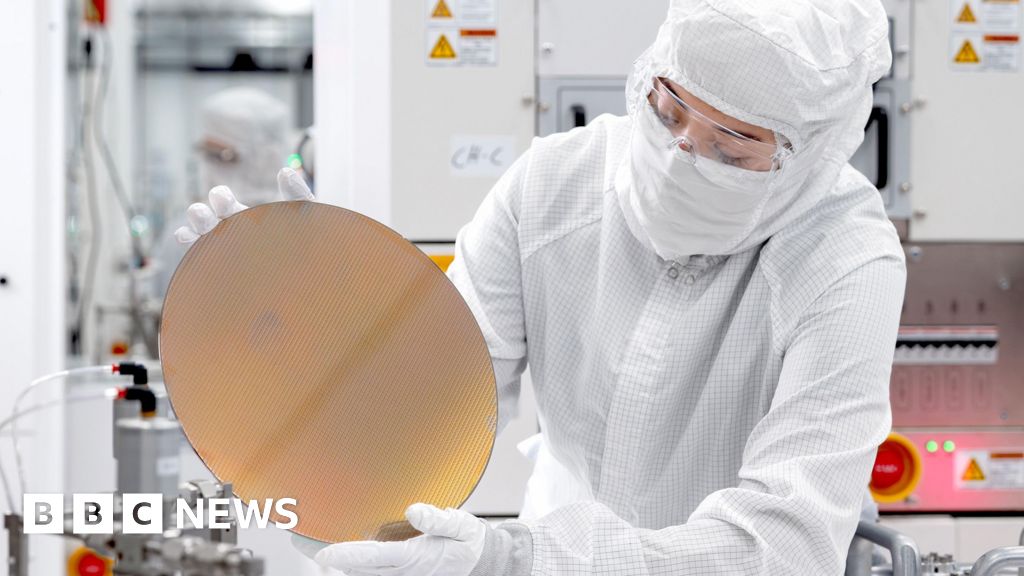
Texas Instruments will invest over $60 billion to build or expand seven chip-making facilities in Texas and Utah, creating 60,000 jobs, in what it calls the largest US investment in foundational semiconductor manufacturing history. The move, which follows similar announcements from companies like Micron, comes amid pressure from President Trump to increase domestic chip production and threats of tariffs on imported semiconductors, though some analysts view these announcements as attempts to placate Trump, who has threatened to cancel the CHIPS and Science Act.
Texas Instruments (TXN) has announced a significant strategic move with a planned investment exceeding $60 billion to expand its US semiconductor manufacturing footprint across Texas and Utah, aiming to create 60,000 jobs, an initiative the company terms the "largest investment in foundational semiconductor manufacturing in US history." This development, which carries a moderately positive overall sentiment (score 0.5) and a notable market impact score (0.6), aligns with similar large-scale US investment pledges from other semiconductor firms like Micron, which recently committed to $200 billion. The announcement occurs amid considerable political pressure from the Trump administration to increase domestic manufacturing and follows threats by President Trump to cancel the $52.7 billion CHIPS and Science Act and potentially impose new semiconductor import tariffs. While TXN-specific sentiment is strongly positive (0.75), some market observers suggest these substantial spending declarations, which in TI's case include some previously earmarked funds, may be partly aimed at placating political figures. The investment focuses on foundational chips, essential for a wide array of applications including smartphones and automotive systems for clients such as Apple and Ford, a segment where TI faces growing competition from Chinese manufacturers. Notably, the Biden administration had previously finalized a $1.6 billion subsidy for TI related to an earlier $18 billion investment plan, underscoring existing governmental support, though a detailed timeline for the new $60 billion expenditure has not yet been provided by Texas Instruments.
AI-powered research, real-time alerts, and portfolio analytics for institutional investors.
Overall Sentiment
moderately positive
Sentiment Score
0.50
Ticker Sentiment
