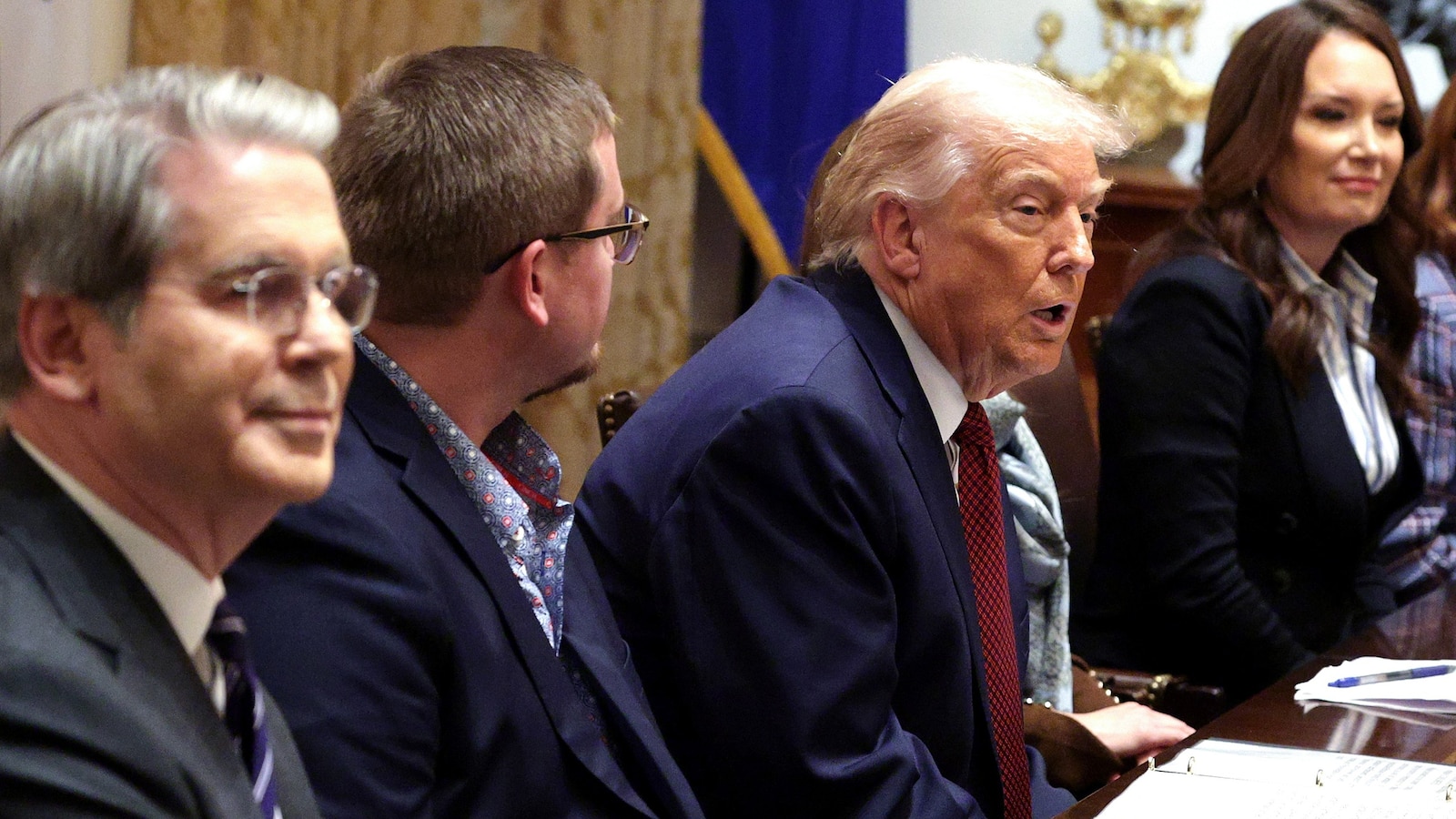
President Donald Trump announced a $12 billion farm aid package to be financed from tariff revenue, with $11 billion in one‑time payments to crop farmers through a new USDA bridge‑payment program and the balance directed to other crops. The package is meant to offset damage from his trade policies—most notably lost U.S. soybean sales to China, which accounted for $12.64 billion in 2024 and has purchased only about 2.2 million metric tons since a late‑October framework agreement—and responds to political backlash after a $20 billion Argentina bailout and prior U.S. farm aid. The administration says the aid will provide near‑term certainty for harvest marketing, support farm incomes and help moderate food prices.
President Trump announced a $12 billion farm-aid package to be funded from tariff revenue, with $11 billion earmarked as one-time payments to crop farmers through a new USDA bridge-payment program and the remainder directed to other crops. The administration frames the program as near-term relief to give farmers "certainty" as they market this year’s harvest and plan the next season.
The package is a direct response to trade-war disruption: China was the largest buyer of U.S. soybeans in 2024 at $12.64 billion in sales, yet has only purchased about 2.2 million metric tons from the U.S. since a late-October framework deal that pledged 12 million metric tons in the final two months and 25 million metric tons annually in 2026–28. The announcement follows criticism over a separate $20 billion Argentina bailout and prior U.S. farm aid of $28 billion in 2018–19, underlining domestic political pressure to shore up farmer incomes.
Near-term implications include stabilized farm cash flows and a mildly positive sentiment for agricultural commodities and ag-related credit, consistent with the provided market-impact score (~0.4). Key risks are the volatility and transience of tariff-derived funding, potential congressional or legal pushback, and uncertainty around the timing and distribution mechanics of USDA bridge payments; investors should watch USDA payment details and actual tariff-receipt flows as execution risks.
AI-powered research, real-time alerts, and portfolio analytics for institutional investors.
Overall Sentiment
mildly positive
Sentiment Score
0.28
