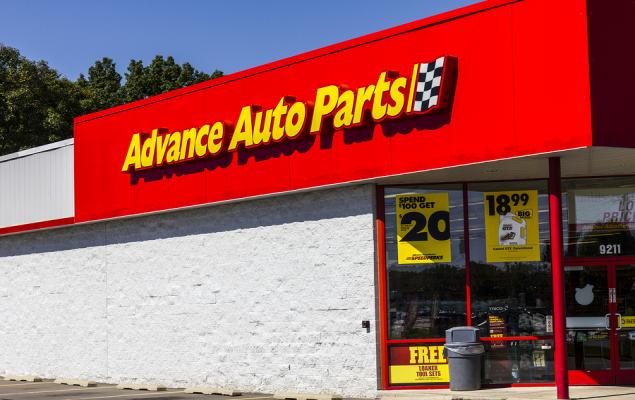
Advance Auto Parts has completed a store footprint optimization (75% of stores in top-two density markets) and is pursuing expansion and supply-chain consolidation—planning more than 100 new stores over two years, converting legacy distribution centers into market hubs (closing 12 DCs in 2025, targeting 60 hubs by mid-2027) and deploying a new operating model in Q4 with full rollout in H1 2026 to improve labor/vehicle allocation and 30–40 minute delivery for pro accounts. Operational improvements have helped adjusted operating income reach $90 million in Q3 2025 (roughly 370 bps improvement) and management targets a 2025 adjusted operating margin of 2.4–2.6% and ~7% for full-year 2027. However, the company’s leverage and cash-flow profile are key risks: long-term debt rose to $3.4 billion from $1.8 billion year-over-year (long-term debt to capital 0.61 vs. sector 0.18), capex is increasing to roughly $250 million in 2025, and DIY weakness plus intense retail and online competition may constrain near-term flexibility, leaving execution and deleveraging as the primary catalysts and risks for investors (Zacks Rank: Hold).
Advance Auto Parts completed its store footprint optimization in March 2025, with roughly 75% of stores located in markets where it ranks first or second by density, and plans to open more than 100 new stores over the next two years to capture a share of a stated >$150 billion total addressable market. The company is consolidating its supply chain into a unified network, implementing a warehouse management system, converting legacy DCs into market hubs, closing 12 DCs in 2025 to end the year with 16 DCs, planning 12 large DCs by 2026-end and targeting 60 market hubs by mid-2027 (14 hubs planned in the current year). Adjusted operating income from continuing operations was $90 million in Q3 2025, a roughly 370-basis-point improvement year-over-year, and management guides 2025 adjusted operating margin of 2.4–2.6% (versus an operating loss in 2024) with a longer-term target of ~7% for full-year 2027; an updated operating model launches in Q4 with full deployment in H1 2026 and a 30–40 minute delivery commitment for pro accounts. Principal risks are financial: long-term debt rose to $3.4 billion as of October 4, 2025 from $1.8 billion at December 28, 2024, producing a long-term debt-to-capital ratio of 0.61 versus the auto sector's 0.18, and capex is increasing to about $250 million in 2025 (from $180.8 million in 2024), which may constrain near-term free cash flow while DIY sales face pressure and competition from national and online retailers; Zacks assigns a Hold (Rank #3) and consensus sentiment is mildly positive (score 0.24).
AI-powered research, real-time alerts, and portfolio analytics for institutional investors.
Request DemoOverall Sentiment
mildly positive
Sentiment Score
0.24
Ticker Sentiment
