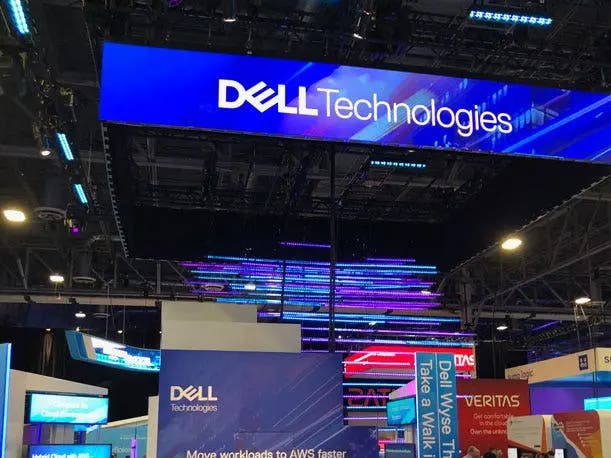
Dell unveiled a broad expansion of its AI Factory with Nvidia, including a new Dell Deskside Agentic AI system that it says can cut public-cloud costs by 87% and break even in three months. The company also launched new AI data platform, workflow, rack-scale, storage and cooling offerings tied to Nvidia Omniverse, AI-Q 2.0 and Vera Rubin NVL72. Dell said it shipped more than $25 billion of AI-optimized servers in fiscal 2024 and entered the new year with a record $43 billion backlog, while partners described rapid sales growth and large enterprise deals.
The important shift is not the product rollout itself, but the repositioning of enterprise AI from a scarce-cloud compute problem to an on-prem procurement and integration problem. That changes the economics of adoption: if token-heavy agentic workloads migrate to private infrastructure, the winners are the firms that can bundle compute, storage, networking, and deployment services into a single decision rather than selling point hardware. Dell is strengthening its moat in exactly the layer where CFO scrutiny is highest, which should extend deal cycles but increase contract size and reduce churn once projects are approved.
For NVDA, this is incremental demand durability rather than just another headline. The risk is not that on-prem displaces GPU demand; it is that it shifts demand toward larger, more standardized rack-scale deployments with tighter ecosystem control, which can actually improve attach rates for high-end platforms and adjacent networking/cooling. The second-order effect is pressure on hyperscalers and generic server OEMs: if customers can justify AI payback in three months on-prem, cloud vendors will need to discount aggressively or lose the highest-token workloads first.
DXC is the clearest “picks-and-shovels” beneficiary among the service layer, because this adoption wave monetizes implementation, governance, and workflow orchestration rather than raw AI usage. The main contrarian risk is that these projects sound cheaper than they are: the capex move front-loads spend, and many enterprises will discover that talent, data readiness, and model governance remain the bottlenecks, not infrastructure pricing. If that friction shows up in the next 1-2 quarters, near-term bookings could stay strong while actual deployments elongate, creating a lag between vendor enthusiasm and revenue realization.
The market may be underestimating how much this reinforces Dell’s mix shift toward higher-value, less commoditized infrastructure. The bear case is that AI infrastructure becomes a crowded substitute market and margins compress as everyone copies the rack-scale + storage + networking bundle. But in the next 6-12 months, the more likely outcome is that Dell uses ecosystem lock-in to convert backlog into multi-year installed base, while partners and integrators capture the fastest-growing slice of the services wallet.
AI-powered research, real-time alerts, and portfolio analytics for institutional investors.
Request DemoOverall Sentiment
strongly positive
Sentiment Score
0.74
Ticker Sentiment
