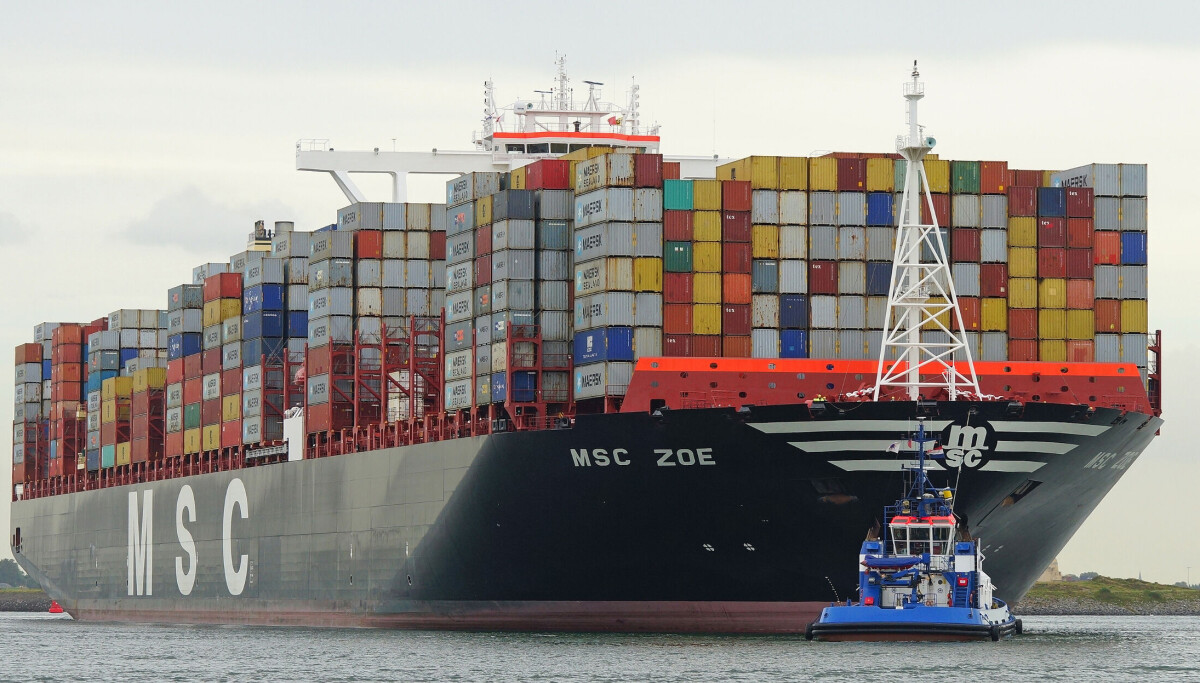
MSC CEO Søren Toft stated the company will not use the Northern Sea Route, citing unassured safe navigation, high crew risk, environmental harm and no operational need; container traffic on the NSR was roughly two dozen voyages last year and the Istanbul Bridge transit completed in 20 days. While China and South Korea are expanding Arctic sailings and the Polar Code nears its 10th anniversary, major container lines including Hapag-Lloyd likewise deem the NSR a niche corridor, meaning limited immediate operational disruption to the largest global carriers' networks.
Market structure: Arctic NSR growth (≈ two dozen container voyages last year) is niche—beneficiaries are ice-class shipbuilders, Russian export corridors and specialized Arctic operators; the clear losers are non-ice-class carriers that take regulatory/insurance exposure. Large, diversified container lines (Maersk/HLAG) maintain pricing and network power because the fuel/time savings on NSR are <10–15% for most Asia–Europe trades and do not justify elevated liability or capex for mainstream operators.
Risk assessment: Tail risks include a high-impact Arctic casualty (spill/crew loss) triggering immediate Polar Code hardening, +200–500bp jump in marine insurance premia and forced retrofits for non-compliant vessels; probability low but concentrated over 12–36 months as traffic grows. Short-term (0–6 months) market impact is negligible; medium-term (6–18 months) regulatory reviews around the Polar Code 10th anniversary (Jan 2027 horizon) are the key catalyst; long-term (2–5 years) could support sustained premium demand for ice-class vessels and salvage services.
Trade implications: Tactical alpha comes from (a) long large, risk-averse container operators that avoid NSR reputational and retrofit costs and (b) long Korean shipbuilders/engine-makers that could win ice-class orders if NSR scaling continues. Conversely, short more aggressive state-linked carriers and pure-play Arctic hydrocarbons that depend on route scale but carry sanction/environmental tail risk. Use options to express convexity: long call spreads on shipbuilders and buying short-dated puts as event hedges around Polar Code announcements.
Contrarian angles: Consensus overstates near-term disruptive potential of NSR—expect steady but limited annual voyage growth (mid-single-digit %/yr) not mass diversion. The market is underpricing regulatory repricing risk: a single Arctic major casualty could re-rate insurers and heavy users within weeks. Historical parallel: Suez disruptions yielded short-lived freight spikes but structural lane economics reverted; NSR is likelier to be an adjunct corridor, not a market share taker for top-tier liners.
AI-powered research, real-time alerts, and portfolio analytics for institutional investors.
Request DemoOverall Sentiment
neutral
Sentiment Score
0.00
