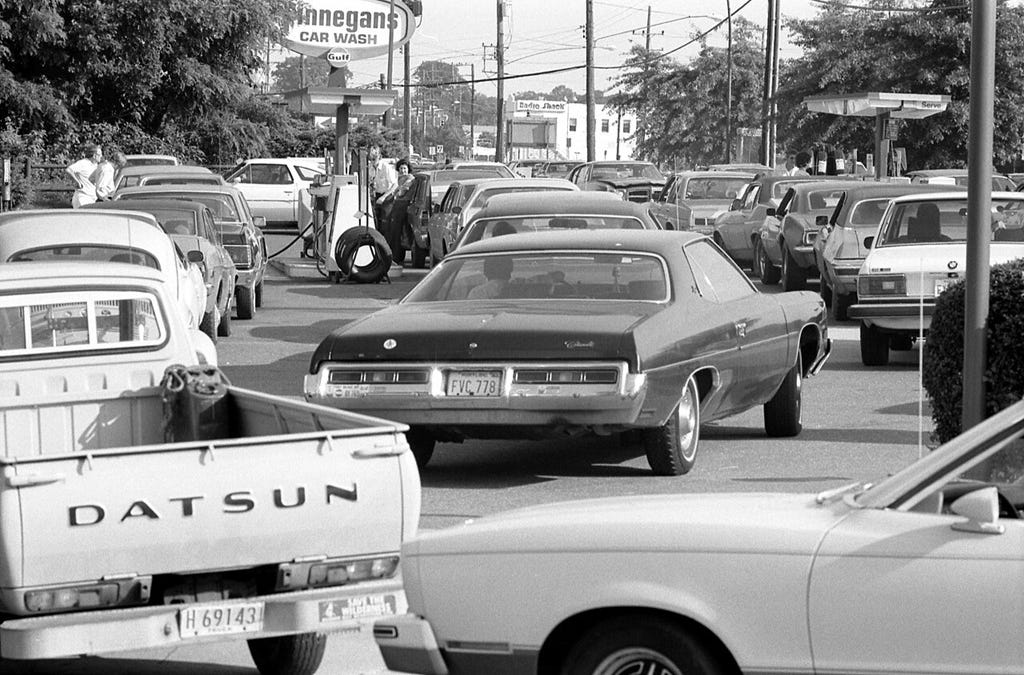
Closure of the Strait of Hormuz (carrying ~20-25% of global oil/LNG) and Iranian attacks have pushed oil roughly +50% and U.S. gasoline to about $4/gal. Using cited estimates, a sustained 50% oil spike could add ~+1.25 percentage points to CPI (to ~4%) and subtract ~1.5 percentage points from GDP (growth ~1.5%) over the next year, with Asia and poor countries bearing outsized pain. Near-term market reaction is risk-off and geopolitical, with broader market-wide implications despite shipping costs and inflation expectations showing only modest moves so far.
The immediate market impact is being transmitted unevenly through transportation and contract structures rather than symmetric price effects. Freight-rate and insurance-cost increases create a tonne-mile windfall for tanker owners and longer-haul routes, while term buyers in Asia pay a persistent premium that re-routes LNG and crude cargoes into higher-paying markets; that reallocation can tighten local fuel markets in import-dependent emerging economies even if global volumes remain intact.
Refining and midstream economics will bifurcate: coastal refiners with access to discounted domestic crude and export arbitrage will see expanding crack spreads, while inland/refiners geared to light-sweet throughput or specialty products (e.g., jet fuel) face margin compression and longer turnaround times. The elasticity advantage often cited for advanced economies is real, but it masks balance-sheet stress in frontier sovereigns and corporates that must buy FX to cover higher import bills—watch local debt spreads and CDS in energy-importing EMs for earlier warning signs than headline CPI.
Time horizons matter: shipping and insurance effects show up in weeks-to-months via spot freight and charter markets; production responses from high-cost barrels take 3–9 months to materialize; policy/diplomatic fixes can reverse much of the price signal within 30–90 days but leave redistributed flows and stranded contracts. Tail risks (escalation to broader maritime conflict, cyberattacks on terminals, or coordinated supply responses from other producers) would blow out immediate volatility and could make current option premia look cheap.
For portfolio positioning, favor cash-generative, high-margin producers and liquid owners of transport capacity while hedging consumer-facing cyclicals and EM sovereign exposure. Keep macro hedges light but nimble: inflation breakevens and short-dated protection in oil and select airline names capture the most asymmetric payoffs with defined losses.
AI-powered research, real-time alerts, and portfolio analytics for institutional investors.
Request DemoOverall Sentiment
moderately negative
Sentiment Score
-0.45
