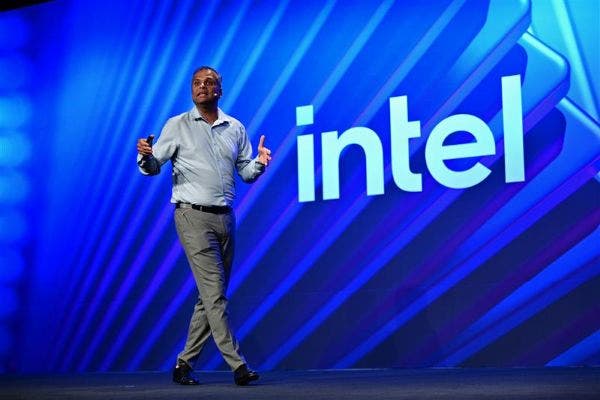
Intel has unveiled "Crescent Island," a new 160-GB, energy-efficient data center GPU optimized for AI inference workloads on air-cooled enterprise servers, featuring Xe3P microarchitecture and LPDDR5X memory. This product initiates Intel's new annual GPU release cadence, mirroring competitors, and is central to the company's strategy of delivering open, cost-optimized AI systems. With customer sampling slated for the second half of 2026, this move signifies Intel's aggressive push to gain market share in the Nvidia-dominated AI infrastructure sector by focusing on performance-per-dollar for agentic AI workloads.
Intel (INTC) has unveiled "Crescent Island," a 160-GB, energy-efficient data center GPU optimized for AI inference workloads on air-cooled enterprise servers, featuring Xe3P microarchitecture and 160 GB of LPDDR5X memory. This product, revealed at the 2025 OCP Global Summit, initiates Intel's new annual GPU release cadence, aligning with strategies adopted by competitors like Nvidia (NVDA) and AMD. The company plans to begin sampling Crescent Island with customers in the second half of 2026.
This launch signifies Intel's aggressive push to capture market share in the Nvidia-dominated AI infrastructure sector, following over 15 years of prior missteps in accelerator chips. Intel's strategy centers on providing open systems and software architecture, aiming for "power- and cost-optimized" solutions that deliver "best performance-per-dollar" for agentic AI workloads. Chief AI and Technology Officer Sachin Katti emphasized the GPU's "enhanced memory bandwidth" and "lots of memory capacity," making it suitable for token clouds and enterprise-level inference.
The move to an annual GPU release cadence directly challenges established players by offering "choice at the systems and the hardware layer" through an open, heterogeneous architecture. While the general sentiment is moderately positive (0.55) with an optimistic tone, specifically for INTC (0.8), the long lead time until H2 2026 sampling suggests a sustained effort rather than immediate market disruption. This initiative reflects Intel's commitment to innovation and competition in the critical AI hardware segment.
AI-powered research, real-time alerts, and portfolio analytics for institutional investors.
Request DemoOverall Sentiment
moderately positive
Sentiment Score
0.55
Ticker Sentiment
