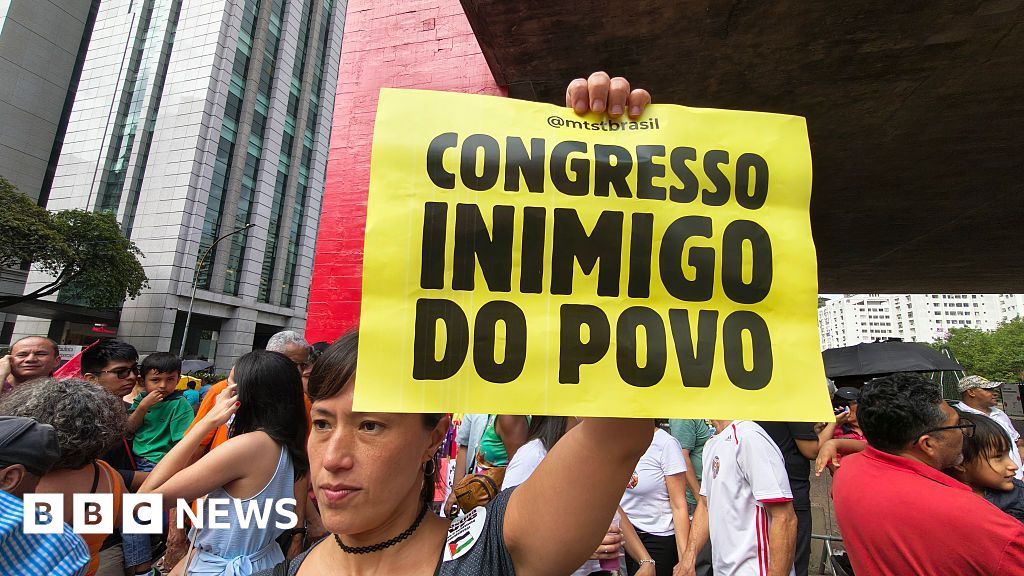
Thousands of Brazilians rallied in major cities — about 19,000 at Copacabana in Rio and roughly 13,700 in São Paulo — to oppose a congressional bill that would sharply reduce former president Jair Bolsonaro’s current 27-year sentence for plotting a coup to roughly two years and four months, according to a lawmaker backing the measure. The proposal, which passed the lower house amid chaos and is scheduled for Senate consideration this week, would also likely shorten sentences for those convicted in the January 2023 attacks on government buildings. President Lula is expected to veto the bill, but Congress could overturn a veto, leaving the legal and political outcome uncertain with material implications for rule-of-law accountability and political stability in Brazil.
Tens of thousands of Brazilians protested in major cities against a congressional bill that would sharply reduce former president Jair Bolsonaro's 27-year sentence to about two years and four months, with reported crowds of roughly 19,000 at Copacabana in Rio and 13,700 in São Paulo. The proposal, which passed the lower house amid chaotic debate, would also likely shorten sentences for those convicted for the January 2023 attacks on government buildings and is scheduled for Senate consideration this week. Brazil's Supreme Court in September found Bolsonaro guilty of proposing a coup and of knowing of a plot to assassinate Lula; thousands were detained after the January 2023 assault, underlining the bill's significance for legal accountability and social stability. Market signals show a moderately negative, volatile reaction (sentiment_score -0.5) with a non-negligible market impact score of 0.38, implying elevated near-term political risk that could translate into pressure on Brazilian assets, FX and investor sentiment until the Senate vote and any presidential veto are resolved.
The legislative path remains uncertain: President Lula is likely to veto the bill but Congress could overturn a veto, making the Senate vote and subsequent congressional actions critical binary catalysts. The combination of high-profile protests, contested judicial outcomes and a polarized legislature raises downside risk to policy predictability and heightens the chance of episodic market volatility around key procedural dates. Investors should treat the period before the Senate decision and any veto/override attempt as a heightened-risk window for Mexican sovereign, corporate credit, local equities and the real given the article's evidence of public unrest and legal reversals. Close monitoring of vote tallies, official statements from the presidency and signs of escalating street action is warranted to time exposures and risk-management measures.
AI-powered research, real-time alerts, and portfolio analytics for institutional investors.
Request DemoOverall Sentiment
moderately negative
Sentiment Score
-0.50
