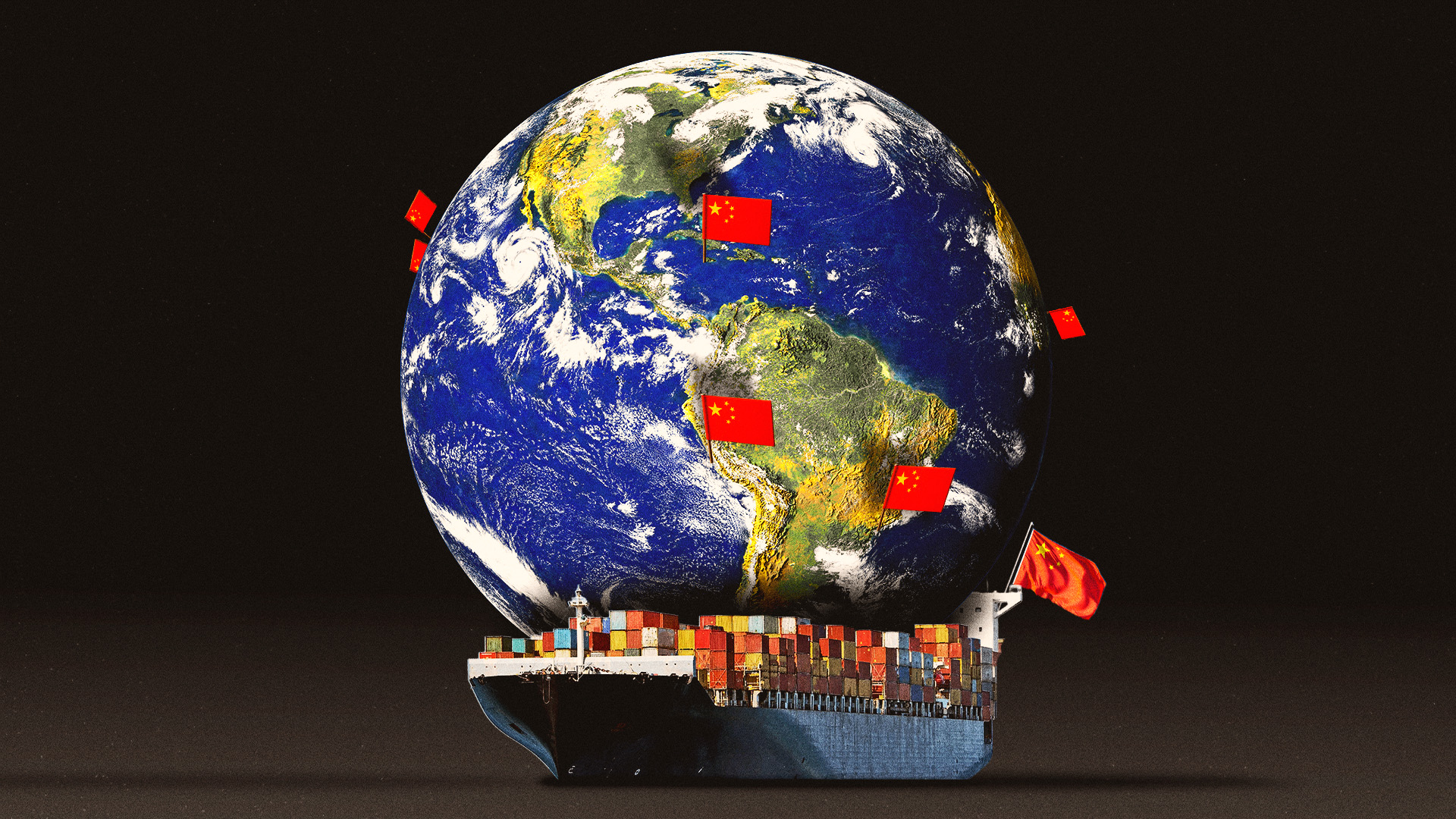
China has built a global port network—investing in 129 port projects totaling over $60 billion and operating roughly 100 ports worldwide—to secure maritime trade routes and shorten shipping times, exemplified by the China‑funded Chancay deep‑water megaport in Peru (60% COSCO, initial $1.3bn with potential expansion to $3.5bn) which could triple Peruvian agricultural exports and cut transit times by ~10 days. While these investments underpin trade and logistics efficiency (China is also the largest container‑ship producer), they raise geopolitical and national‑security concerns—17 ports have majority Chinese ownership and 14 have potential dual commercial/military use—prompting regulatory responses (EU screening) and US political pushback. The development implies a medium‑term reshaping of maritime trade flows, potential winners in port operators and logistics chains, and heightened geopolitical tail risks for investors exposed to global shipping, ports, and related infrastructure.
Market structure: China’s port push (129 projects, ~$60bn) shifts long-term pricing power toward Chinese state/private logistics and shipbuilding chains while lowering effective shipping times (example: Peru→China cut ~10 days ≈ ~25–30% transit reduction). Winners: COSCO-linked operators, Peruvian exporters (agri + minerals) and Chinese shipyards; losers: marginal Western transshipment hubs and spot-container rate beneficiaries as incremental capacity and direct deep‑water links relieve chokepoints. Cross‑asset: expect tighter Peruvian sovereign spreads (bps compression), upward pressure on commodity export volumes (copper/soy) and downward pressure on global container freight indices (SCFI/Harpex) over 6–24 months.
Risk assessment: Tail risks include rapid politicization—US/EU investment screening, sanctions or forced divestiture—leading to asset freezes or re‑routing (low probability, high impact within 0–24 months). Operational risks include construction delays and local political reversals that can push timelines 12–36+ months. Hidden dependencies: host‑country balance‑sheet stress (debt-for-infra clauses), Chinese export cycles driving utilization; catalysts are elections in Peru/Panama, EU screening votes, and major trade disputes that could accelerate decoupling.
Trade implications: Near term (0–3 months) trade on headlines (Panama/BlackRock approvals); short‑term (3–12 months) favor long exposure to Chinese port/shipping equities and Peruvian export proxies, while hedging with puts on high‑beta container shippers if SCFI falls >20%. Use 6–18 month option spreads to express views (buy puts on shipping equities; buy calls on selected miners/agri exporters). Rotate sector weight from pure logistics-arbitrage plays into EM exporters and industrials over 12–36 months.
Contrarian angles: Consensus overstates military risk; most ports remain commercial—market may overdiscount cash flows and bid multiples for operators tied to new capacity (cheap entry points). Historical parallel: commercial-to-military conversion (Djibouti) is rare and host‑consent dependent; therefore select names tied to trade growth (ports/miners) may be underpriced. Watch for unintended consequences: local backlash or renegotiation that can reset valuations abruptly—trade with size limits and configurable exits.
AI-powered research, real-time alerts, and portfolio analytics for institutional investors.
Request DemoOverall Sentiment
mixed
Sentiment Score
0.00
Ticker Sentiment
