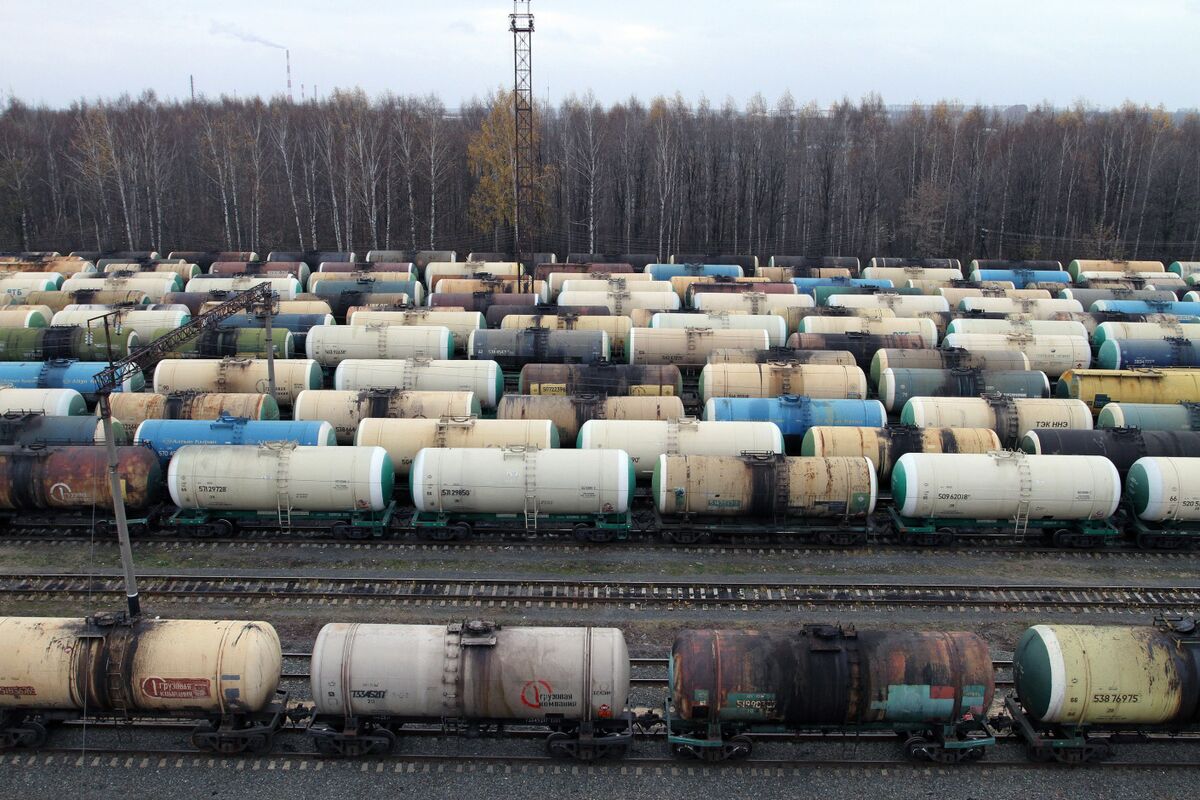
Russia’s seaborne oil-product exports fell to a wartime low of 1.7 million barrels a day in the first 15 days of November, the lowest level since the February 2022 invasion and roughly half the volume shipped that month, according to Vortexa/Bloomberg data. The sharp decline—linked to Western sanctions and repeated attacks on Russian refineries—signals growing pressure on Moscow’s export capacity and energy revenues, with potential knock-on effects for global product markets and Russia’s fiscal position.
Vortexa/Bloomberg data show Russia’s seaborne oil-product exports fell to 1.7 million barrels a day in the first 15 days of November, the lowest level since the February 2022 invasion and roughly half the volume shipped that month. The drop is explicitly linked in the report to Western sanctions and repeated attacks on Russian refineries, indicating a structural hit to export capacity rather than a transitory operational blip. The article’s sentiment and market-impact signals (sentiment_score -0.65, market_impact_score 0.6) underscore a pessimistic market reception and a meaningful potential to influence global product balances. Reduced Russian product flows create a credible risk of tighter refined-product markets and pressure on Moscow’s energy revenues and fiscal position, raising the probability of sustained price volatility and regional supply disruptions if the trend continues.
AI-powered research, real-time alerts, and portfolio analytics for institutional investors.
Request DemoOverall Sentiment
strongly negative
Sentiment Score
-0.65
