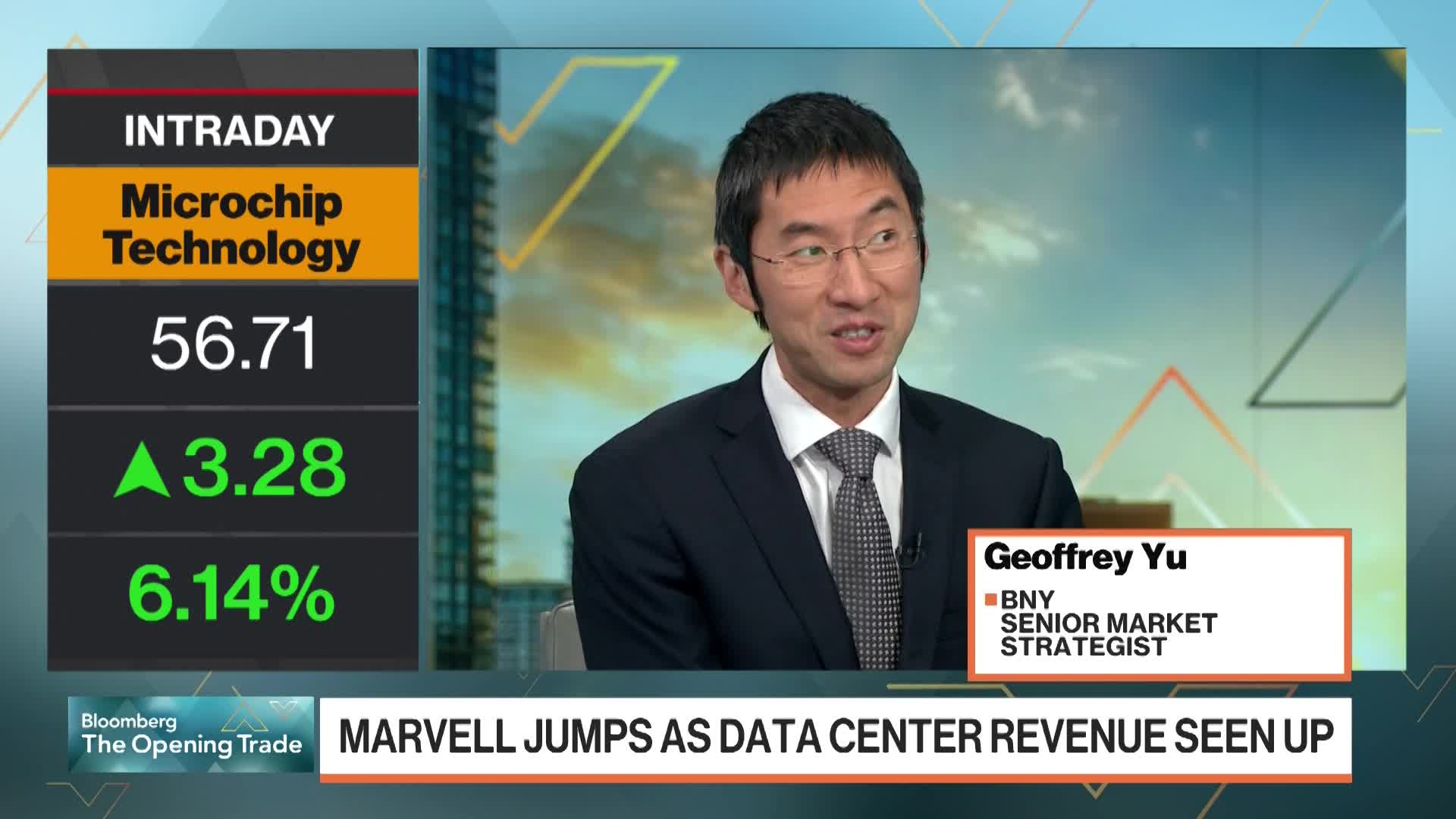
Market participants note rising global competition in AI model development—including fresh Chinese and Asian launches—and focus on reducing training costs in Asia, but institutional clients are broadly maintaining exposure to AI and semiconductor themes. At the same time, clients are trimming US consumer-facing positions, notably discretionary names and some consumer staples/food producers, signaling concern about margin stress and a K-shaped economic recovery; upcoming US consumer/sentiment data (including Michigan measures) is being watched for confirmation. Portfolio positioning is skewing toward corporate investment/CapEx and away from lower-end consumer exposure, implying potential sector-rotation trade opportunities rather than a broad market sell-off.
Market structure: The immediate winners are AI-capex beneficiaries (NVDA, LRCX, AMAT, SOXX) and power/grid names (NEE) as compute demand and capex remain clients' priority; losers are lower-end consumer-facing and food producers (XLY, XLP, TSN) where clients are trimming exposure due to margin and demand risk. Competitive dynamics: cheaper Asian/Chinese AI models will compress service/pricing power for cloud providers over 6–18 months, raising share pressure on higher-cost incumbents but likely expanding total TAM for semis and data-center equipment.
Risk assessment: Tail risks include US/China export controls, rapid AI regulatory restrictions, and a sharper-than-expected US consumer unwind that widens IG/BBB spreads for retail and food producers; monitor Michigan sentiment and CPI over next 30 days as binary catalysts. Hidden dependencies include wage inflation and freight/input cost paths that can flip staples margins within 2–3 quarters, and power availability/regulation that can constrain data-center growth.
Trade implications: Tactical bias: overweight semiconductors and industrial capex suppliers for 3–12 months (target +15–30% on conviction longs) and underweight/short consumer discretionary/staples ETFs for 1–6 months; use pairs (long SOXX, short XLP/XLY) to isolate AI vs consumer risk. Options: buy 3-month ATM calls on NVDA or SOXX sized 1–2% portfolio for convexity; buy 2–3 month puts on XLP 3–5% OTM to hedge downside.
Contrarian angle: Consensus treats staples as safe — flows show clients already cutting them, so downside may be underpriced; conversely, competition in AI could be underappreciated and accelerate price deflation, creating idiosyncratic winners among low-cost Asian cloud providers and pressure on US cloud margins over 12–24 months.
AI-powered research, real-time alerts, and portfolio analytics for institutional investors.
Request DemoOverall Sentiment
mixed
Sentiment Score
-0.10
