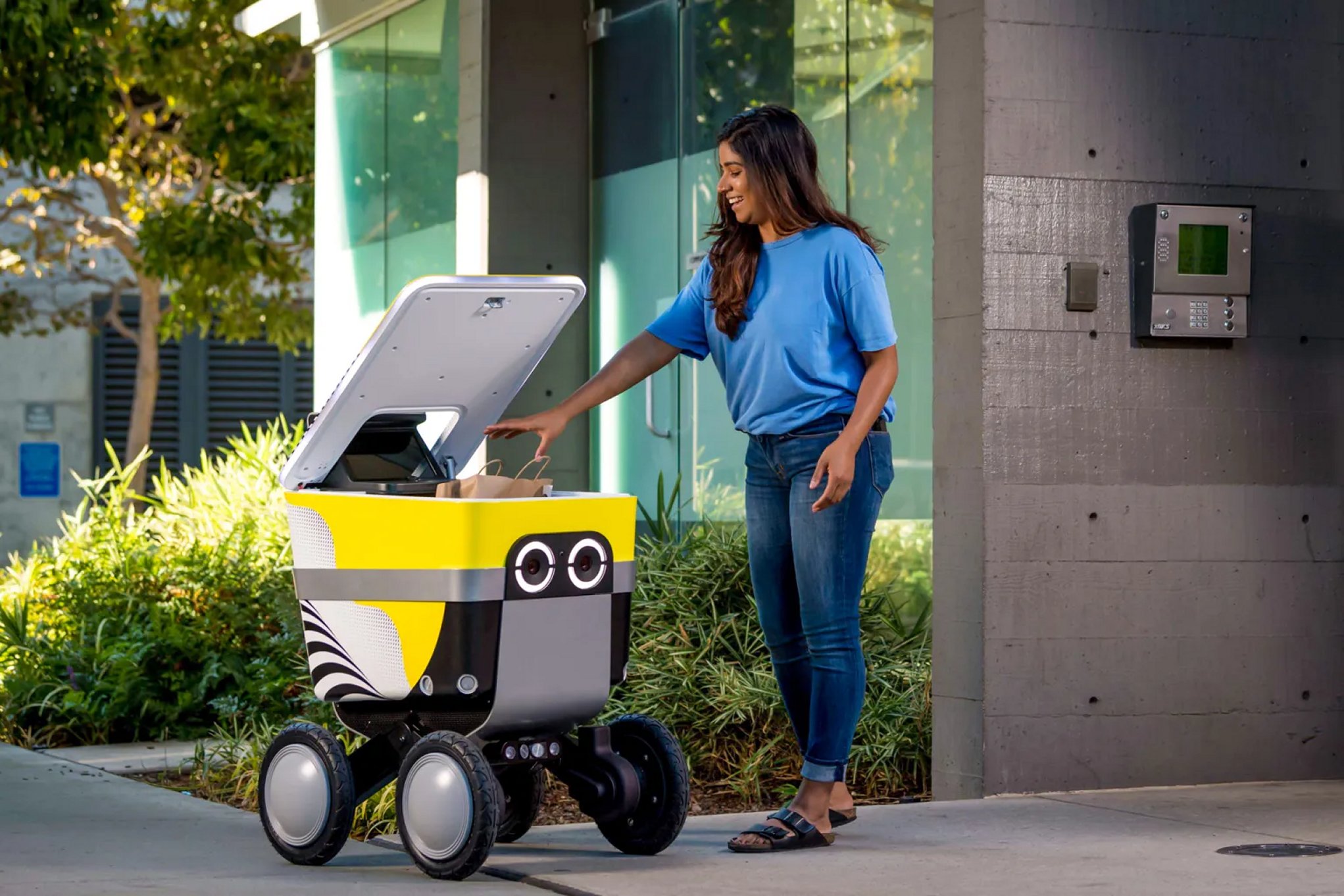
Revenue rose from $2.7M in 2024 to $25.9M in 2025, with analysts forecasting $131.5M by 2028; Serve uplisted to Nasdaq after a $4.00 offering and currently trades around $9 (peak $22.92 on Dec. 26, 2024). The company expanded its fleet from ~100 robots in 2024 to ~2,000 in 2025 (majority deployed to Uber Eats), launched Gen3 robots (48-mile range, ~15-gallon capacity, 11 mph, ~65% cheaper), and acquired Diligent Robotics to enter healthcare/service markets. At ~9x next-year sales and a $705M market cap today, a 20% CAGR to 2036 and a 10x sales multiple would imply ~$5.65B market cap (roughly an 8x increase); upside exists but the name remains highly speculative.
Serve sits at an inflection where operational scale, not headline tech, will determine winners. The core lever is density: until deployments reach localized delivery densities that amortize fixed hardware, margins will be driven by service contracts and aftermarket parts rather than unit sales. That creates a multi-year cliff where enterprise roll‑outs, city approvals, and maintenance ecosystems must align before cash flows become durable.
Second-order winners include component suppliers (sensors, battery packs, fleet telematics) and logistics software vendors that monetize orchestration; losers will be low-margin human courier pools and local labor intermediaries facing substitution pressure—which in turn raises political and regulatory risk that can manifest as sudden city-level restrictions. Healthcare robotics sales could drive higher-margin, slower-but-predictable revenue, but expect long procurement timelines and integration costs to compress near-term free cash flow.
Key catalysts and timelines: near-term (weeks–months) updates on partnership rollouts, unit economics per market, and cash runway will move the stock; medium-term (12–36 months) proof of break-even density per route and recurring service revenues will determine rerating; long-term (3–10 years) multiple expansion depends on sustained GM improvement and moat against low‑cost competitors. Tail risks include regulatory bans, vandalism/insurance shocks, or a strategic pivot by a major platform partner that re‑internalizes robotics capability.
Valuation is binary and highly path-dependent: if Serve proves unit economics at scale within 24–36 months, expect multiple expansion of several turns; if it fails, downside is large due to cash burn and dilution. Position sizing should reflect binary outcomes—small, convex allocations bought with time-limited optionality and disciplined downside protection.
AI-powered research, real-time alerts, and portfolio analytics for institutional investors.
Request DemoOverall Sentiment
mildly positive
Sentiment Score
0.35
Ticker Sentiment
