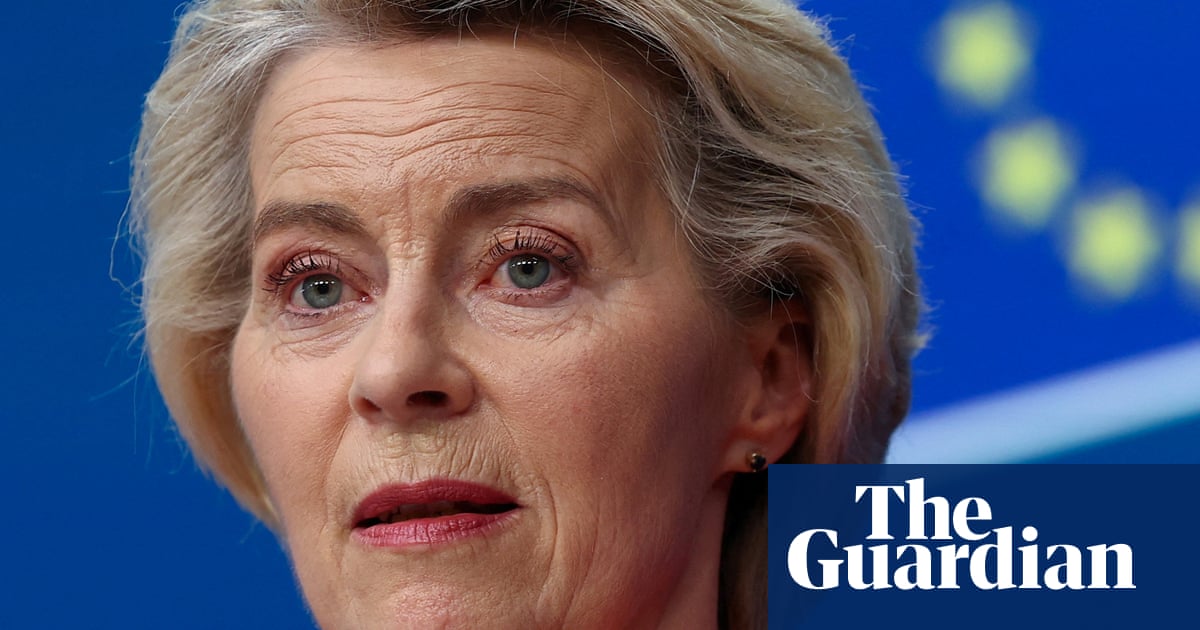
European Commission President Ursula von der Leyen is facing a rare censure motion, ostensibly over undisclosed Pfizer communications, though she is widely expected to survive the vote. However, the motion highlights significant underlying discontent among centrist and left-leaning MEPs regarding her leadership and the EPP's perceived rightward shift and willingness to align with far-right elements. This 'proxy war' signals increasing political fragmentation within the EU Parliament, posing potential challenges for future policy consensus and the formation of stable governing majorities, despite the immediate security of von der Leyen's position.
A censure motion against European Commission President Ursula von der Leyen, while certain to fail, serves as a critical barometer of rising political fragmentation within the EU Parliament. The motion, officially triggered by her refusal to release text messages with Pfizer's CEO, is widely viewed as a 'proxy war' reflecting deep dissatisfaction among her traditional centrist, centre-left, and Green allies. This discontent stems from the perceived rightward drift of her centre-right EPP group, which has occasionally aligned with far-right parties to block initiatives like an EU ethics body and to delay environmental legislation. The number of abstentions from mainstream groups will be a key indicator of the erosion of her political capital. This internal conflict creates significant uncertainty for future EU legislative priorities, including the Green Deal and the €150bn defence fund, at a time when the bloc faces major geopolitical challenges such as the war in Ukraine and potential trade disputes with the U.S. The situation underscores the difficulty in forming stable policy majorities following recent elections that strengthened right-wing nationalist factions, posing a headwind to decisive, unified EU action.
AI-powered research, real-time alerts, and portfolio analytics for institutional investors.
Overall Sentiment
mixed
Sentiment Score
-0.25
Ticker Sentiment
