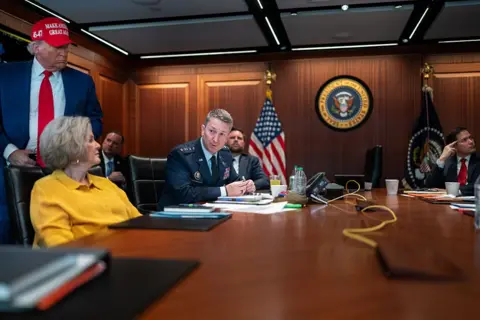
President Donald Trump's recent strikes on Iranian nuclear facilities ignited a debate regarding the scope of presidential authority versus congressional war powers, specifically Article II's Commander-in-Chief role against Article I's power to declare war. Legal experts largely affirm the President's authority for such limited military engagements, citing extensive historical precedent where presidents from both parties have acted without formal congressional declarations, often justified by national interests or anticipated threats like nuclear proliferation. While the War Powers Resolution mandates consultation, which critics argue was not fully met, the administration claims compliance with post-action notification, highlighting the established executive latitude in deploying military force without explicit prior legislative approval, a practice that has become increasingly common.
The recent US military strikes on Iranian nuclear facilities have ignited a procedural and constitutional debate regarding presidential authority, but analysis of the underlying legal and historical context suggests the action aligns with established precedent. The core tension lies between Congress's Article I power to declare war and the President's Article II authority as Commander in Chief. Legal experts cited in the report largely concur that a long-standing practice allows for isolated military engagements without prior congressional approval, particularly when justified by national interests such as preventing nuclear proliferation. This interpretation is heavily reinforced by historical precedent, with administrations from both parties, including those of Obama, Clinton, and Biden, conducting similar strikes. While critics correctly note a potential failure to meet the consultation requirement of the 1973 War Powers Resolution, the administration's compliance with the 48-hour notification clause underscores the executive branch's confidence in its legal standing. The neutral sentiment and low market impact signals indicate that market participants are likely viewing this not as a constitutional crisis, but as a continuation of established US foreign policy execution, with the domestic political debate being largely noise.
AI-powered research, real-time alerts, and portfolio analytics for institutional investors.
Request DemoOverall Sentiment
neutral
Sentiment Score
0.00
