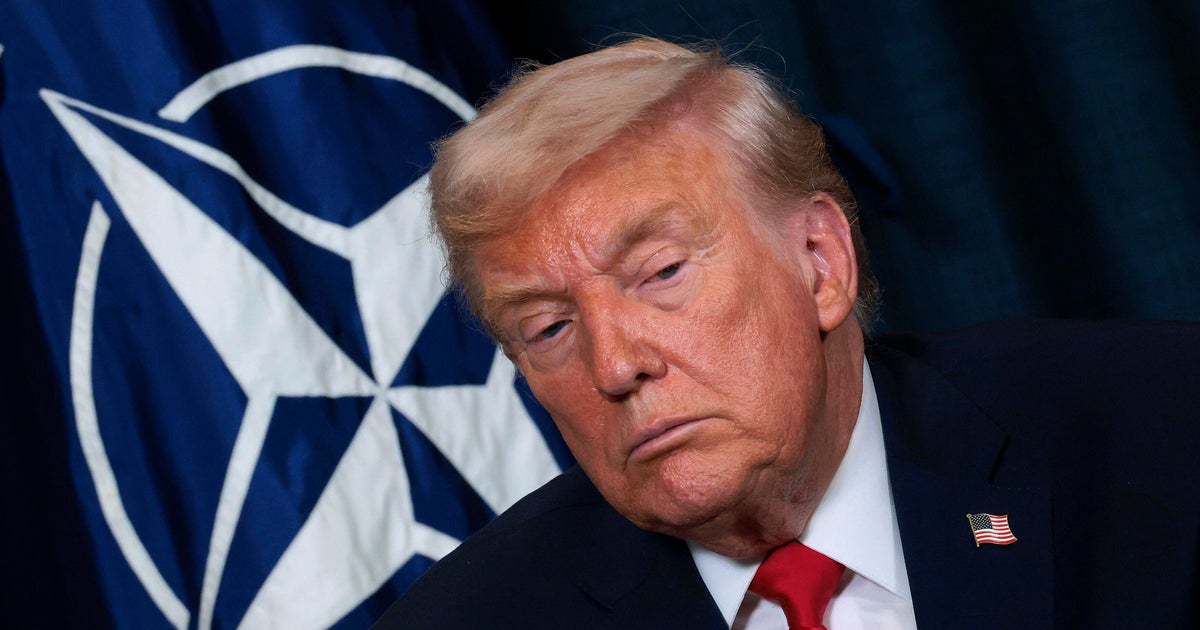
President Trump says he is 'absolutely' considering withdrawing the U.S. from NATO, prompting renewed geopolitical risk; a 2023 provision in the FY2024 NDAA now bars unilateral withdrawal and requires Senate advice and consent (two-thirds) or an Act of Congress. NATO's Article 13 also prescribes a one-year delay after formal notice, but experts warn the administration could attempt to cite executive authority, likely triggering legal challenges. Such rhetoric risks undermining trust in Article 5 and could be a material geopolitical shock to defense cooperation and risk assets if escalated.
Recent executive-level rhetoric has meaningfully increased tail-risk premia in markets that price alliance reliability; you should treat the next 1–4 weeks as a volatility window for FX, rates and defense equities rather than a binary policy event. Short-dated implied moves in EUR/USD and front-end Treasury yields should be expected to overshoot by 1–2 standard deviations on headlines, then mean-revert once legal and congressional constraints become clear.
Over a 6–24 month horizon, the more consequential effect is a durable shift in procurement and basing economics: allied capitals will accelerate inventory-building, urgent munitions orders and funding for indigenous platforms to reduce dependence on one partner’s security guarantees. That implies front-loaded revenue growth for munitions and shipbuilding suppliers (order books expanding) and a staggered uplift to major primes’ service, sustainment and ship-repair divisions as logistics are restructured.
A second-order supplier flow is likely: European and domestic contractors that can deliver plug-and-play ordnance, airlift/tanker services and expeditionary logistics will win win-bid share; incumbent systems integrators may see margin pressure from split-award competitions and added certification work. Over 12–36 months expect capex spend on coastal and port infrastructure in NATO-adjacent countries to rise, favoring offshore engineering, private security contractors and freight insurers.
Key reversals that would unwind these trades are rapid bipartisan legislative assurances, a high‑profile allied operational concession restoring overflight and base access, or a legal injunction freezing any executive action — each could compress spreads and remove the near-term premium on defense and safe-haven assets.
AI-powered research, real-time alerts, and portfolio analytics for institutional investors.
Request DemoOverall Sentiment
moderately negative
Sentiment Score
-0.45
