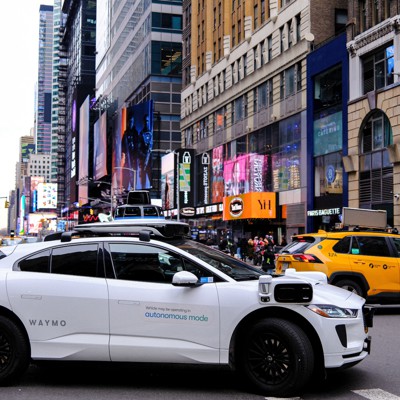
Waymo has spent at least $2.5M lobbying New York since 2019 and tested eight autonomous vehicles in NYC; its city testing permit expired last month and would need city and state renewals. Gov. Hochul briefly proposed then dropped a pilot in her executive budget amid stakeholder and labor opposition, while unions and elected officials are organizing to restrict or ban driverless cars (legislation would require a human driver). Key data points for portfolio consideration: Waymo’s national fleet ~3,000 vehicles vs. NYC TLC licensing >130,000 vehicles, strong labor/political risk could materially limit AV rollout in the country’s largest ride‑hailing market.
The fight over robotaxis in New York will not resolve on engineering merit alone — it will be decided by political leverage, union bargaining, and the structure of regulatory rents. Expect regulatory outcomes to create asymmetric payoffs: favoring strict human-driver requirements effectively caps TAM for pure-play AV operators and preserves incumbent platform economics, while permissive regimes will compress margins for traditional drivers and accelerate asset-light competition.
Timing matters: the next 6–12 months (budget cycle, permit renewals, mayoral decisions) are the highest-probability window for meaningful constraint or conditional pilots; meaningful fleet-scale adoption is still a multi-year story contingent on durable safety, insurance frameworks, and city design choices (congestion policy, curb allocation). Short, sharp shocks — a high-profile AV incident, a citywide outage, or a successful union-led injunction — can pause deployments for quarters and change valuation trajectories for operators dependent on rapid scale.
A less-appreciated second-order is the potential for regulation to create scarcity rents: licensing, local-content requirements (depots, technicians), or negotiated transition funds could raise barriers to new entrants and convert what looks like disruption into a licensing opportunity for politically connected incumbents. That dynamic favors deep-pocketed platforms able to pay for market access and lobby for onerous compliance that smaller rivals cannot absorb, compressing competition even as the technology spreads.
AI-powered research, real-time alerts, and portfolio analytics for institutional investors.
Overall Sentiment
mixed
Sentiment Score
0.00
Ticker Sentiment
