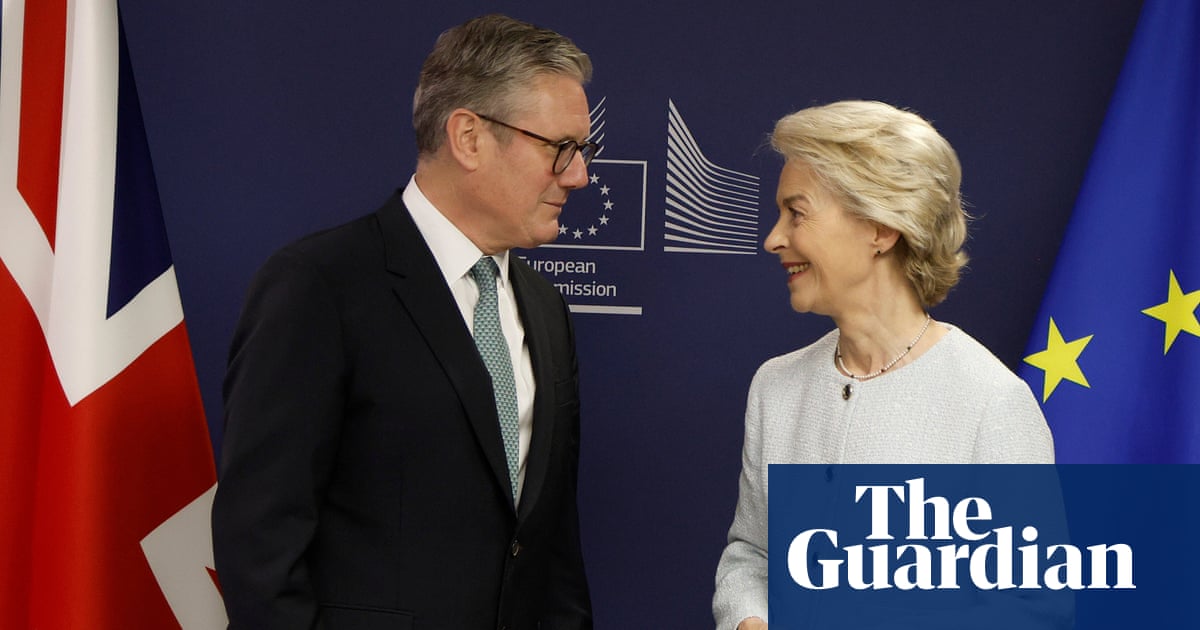
Negotiations for the UK to join the EU’s €150bn Security Action for Europe (Safe) defence fund collapsed ahead of the 30 November deadline after disagreement over an entry fee Brussels reportedly priced at up to €6–6.5bn, far above the administrative charge London expected. The failure limits immediate UK access to preferential terms (including removal of the 35% UK-content cap absent the May security pact) so British defence firms can still compete only on third‑country terms, reducing their potential role in EU-funded projects and creating political friction between London and EU partners.
Market structure: The immediate winners are continental European defence primes (Leonardo LDO.MI, Thales HO.PA, Rheinmetall RHM.DE) and US primes (LMT, RTX) who can capture Safe-funded work; direct losers are UK-focused defence names (BAE Systems BA.L, Qinetiq QQ.L) facing restricted participation and lower bargaining power. Expect a 5–15% revenue reallocation from UK suppliers to EU/US suppliers across Safe-funded programmes over 12–36 months if exclusion persists; sterling may weaken ~0.5–1% near-term on signal risk while defence-equity vol rises 15–30% implied.
Risk assessment: Tail risks include EU member states blocking UK entry permanently or the UK retaliating with subsidies that distort procurement (low-probability, high-impact) and a negotiated fee surprise >€4–6bn that forces budget reallocations; immediate (days) political headlines drive FX and small-cap volatility, short-term (weeks–months) MoD contract decisions matter, long-term (quarters–years) structural partnership shifts reconfigure supply chains. Hidden dependencies: UK tier-2/3 suppliers rely on EU primes for 30–60% of programme revenue for certain systems, creating second-order cash-flow stress if access narrows.
Trade implications: Direct plays — establish a 2–3% long in LDO.MI (target +12–18% in 6–12 months, stop-loss 10%) and a paired 2% short in BA.L (target -10% in 3–6 months, stop-loss 12%) to capture relative reallocation. FX/options — buy a 3-month EUR/GBP long (target +1–2% move) or purchase 3–6 month LDO call spreads to limit premium outlay; rotate portfolio overweight European and US defence primes, underweight UK small/mid-cap defence, scale into positions over 2–6 weeks.
Contrarian angles: Consensus underestimates UK leverage — third-country access and bilateral US/UK deals could blunt losses and prompt UK subsidies that re-rate domestic names; if UK secures US offsets or EU offers a reduced fee <€2bn within 90 days, BA.L could retrace >10% and create a mean-reversion opportunity. Historical parallel: post-2016 access shocks hit UK domestics for ~6–12 months before strategic procurement realignments; monitor MoD contract awards and EU council communiqués as binary catalysts for reversal.
AI-powered research, real-time alerts, and portfolio analytics for institutional investors.
Request DemoOverall Sentiment
moderately negative
Sentiment Score
-0.40
