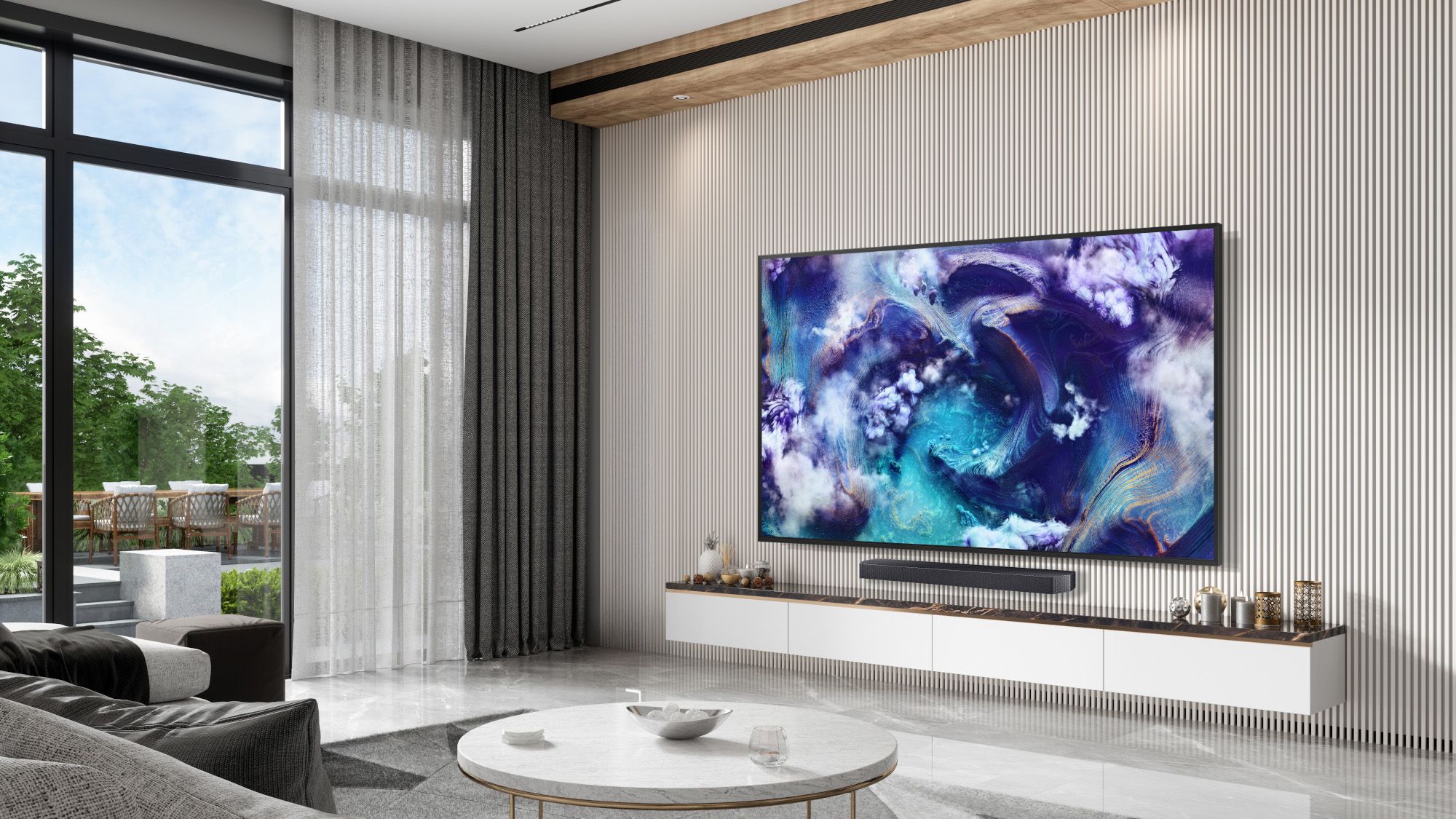
Samsung, after expanding its Mini‑LED (Neo QLED) range and releasing the flagship S95F OLED in 2025, is expected in 2026 to pursue wider adoption of Micro RGB (currently limited to a $30,000 116‑inch model), incremental OLED upgrades including more affordable SKUs, and greater Mini‑LED penetration in entry‑level QLEDs to counter competition from Hisense, TCL and LG. The company may also scale back some Vision AI features after mixed user experiences and will likely reveal much of the 2026 lineup at CES; investors should monitor product mix, pricing strategy and share gains in value segments for implications to revenue and margins.
Market structure: Winners will be vertically integrated leaders who can absorb up-front capex — Samsung Electronics (SSNLF / 005930.KS) and Samsung Display — plus driver-IC and LED-chip suppliers (benefit to semiconductor supply chain / SMH components). Losers are low-margin TV OEMs (budget Hisense/TCL equivalents, TCL 1070.HK) and panel makers that rely solely on legacy LCD/QLED if Mini-/Micro-RGB scales and forces ASP compression; expect short-term premium pricing power for flagship SKUs but rapid ASP erosion if 65"+ Micro-RGB/OLED scale initiates in 2026. FX and rates: a strong Samsung product cycle could support KRW outperformance vs JPY/ RMB and modestly tighten credit spreads for Korean suppliers; commodity impact is concentrated (LED die, driver IC wafers), not broad-based copper/oil moves.
Risk assessment: Tail risks include patent/litigation with LG/SONY over Micro/Mini-LED designs, catastrophic yield failures at sub-65" scaling (leading to large write-offs), or a rapid price war driving TV ASPs down >10% YoY. Time horizons: immediate (days-weeks) CES-driven sentiment swings, short-term (1–3 months) shipment guidance revisions, long-term (12–36 months) margin outcomes from scaling Micro-RGB and OLED cost curves. Hidden dependencies: yield curves for Micro RGB, substrate/material availability, and licensing/IP settlements; catalysts to watch are CES 2026 (Jan 6–10 window), LG OLED roadmap/pricing, and supplier capex announcements.
Trade implications: Event-driven long in SSNLF (2–3% portfolio) into CES with a tactical call-spread (Mar 2026) to capture upside while capping premium; hedge exposure with a 0.5x short in LPL (LG Display ADR) or TCL 1070.HK if public, targeting relative outperformance over 3–6 months. Buy a small SMH position (1% portfolio) or call spread (Mar 2026) to play backend demand for driver ICs; if TV ASPs print a >8% YoY decline in Q1 shipments, rotate out of consumer discretionary TVs back into content/streaming names (DIS, NFLX) which decouple hardware risk.
Contrarian angles: Consensus underestimates the time and cost to scale Micro-RGB profitably — market may be overly optimistic on near-term margin expansion, creating a window to buy suppliers at discounts when cycle noise peaks. Historical parallel: LCD oversupply in 2012–2014 depressed panel makers while vertically integrated OEMs recovered faster; unintended consequence: Samsung’s push could commoditize high-end OLED faster, pressuring Sony (SONY) and LG-bearing panel makers and benefitting third-party semis instead of panel incumbents.
AI-powered research, real-time alerts, and portfolio analytics for institutional investors.
Request DemoOverall Sentiment
mildly positive
Sentiment Score
0.25
Ticker Sentiment
