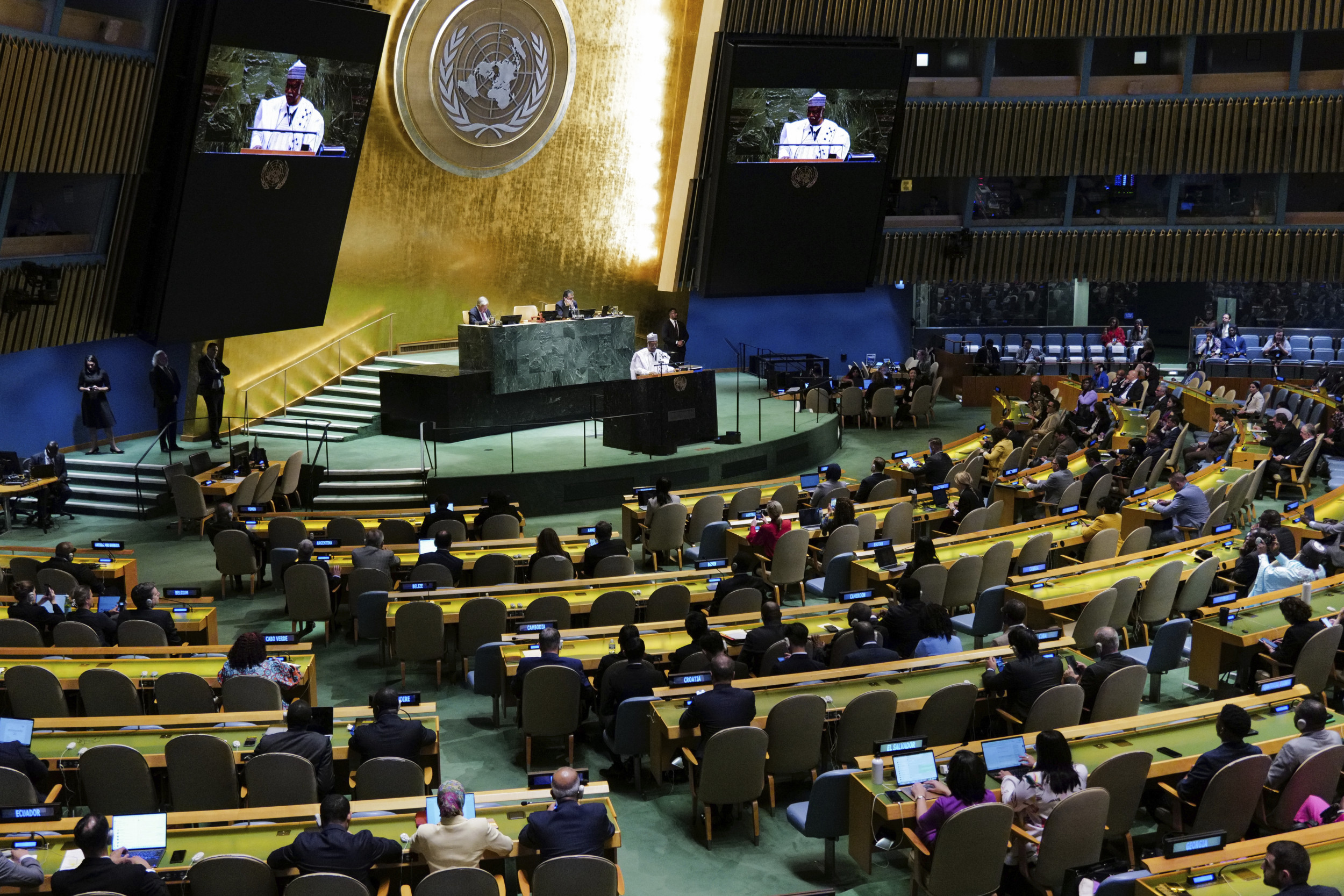
The UN General Assembly overwhelmingly passed a non-binding resolution endorsing a two-state solution for the Israeli-Palestinian conflict, with 142 votes in favor, while the U.S. and Israel, among 10 nations, voted against it. This outcome highlights the increasing international pressure and diplomatic isolation of the U.S. and Israel on the matter, despite their characterization of the resolution as a "publicity stunt" or "theater," and precedes anticipated formal recognition of a Palestinian state by several Western nations.
The United Nations General Assembly's recent vote, which saw a non-binding resolution for a two-state solution pass with 142 votes in favor and only 10 against, starkly highlights the diplomatic isolation of the United States and Israel on the Israeli-Palestinian conflict. While the U.S. and Israel dismissed the resolution as a "misguided... publicity stunt" and "theater," the overwhelming international support signals a significant global consensus. The resolution itself is multifaceted, condemning both Hamas's October 7th attack and Israel's subsequent military actions that have produced a "devastating humanitarian catastrophe." It also outlines a post-conflict framework involving the Palestinian Authority governing all Palestinian territory and a temporary UN stabilization mission. The most critical forward-looking indicator is the stated expectation that key U.S. allies, including Britain, France, and Canada, will formally recognize a Palestinian state in the near future. This potential divergence among Western powers represents a notable shift in the diplomatic landscape and could create new pressures, despite the non-binding nature of the current resolution and the low immediate market impact score of 0.25.
AI-powered research, real-time alerts, and portfolio analytics for institutional investors.
Overall Sentiment
neutral
Sentiment Score
0.00
