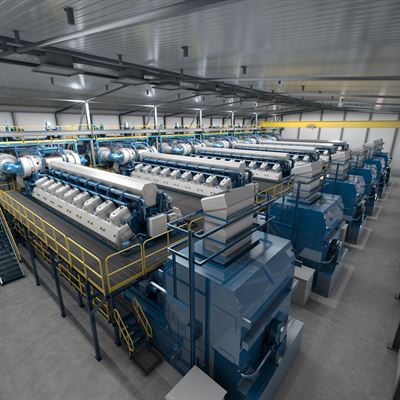
Wärtsilä has been awarded an order to supply 24 Wärtsilä 50SG engines totaling 429 MW for a U.S. investor‑owned utility power plant serving a data center; the order was booked in Q1 2026 and commercial operations are planned for late 2028–early 2029. The contract underscores demand for flexible, fast‑start generation amid rapid data‑center expansion and renewable intermittency, and should modestly boost Wärtsilä Energy’s backlog and revenue visibility (Wärtsilä reported EUR 6.4bn net sales in 2024).
Market structure: This Wärtsilä order (24 x 50SG = 429 MW, ops 4Q2028–1Q2029) reinforces a bifurcated power market where fast-flex gas engines gain share as short-duration firming vs. capital-intensive long-duration storage. Clear winners: Wärtsilä (WRT1V.HE), service-heavy OEMs, and data‑centre REITs (EQIX, DLR) that need dispatchable capacity; relative losers include pure-play baseload turbine vendors and merchant renewables without integrated storage. Expect modest pricing power for flexible capacity through 2028 as lead times and backlog grow, supporting OEM aftermarket/service cashflows.
Risk assessment: Tail risks include near-term permitting/regulatory bans on new gas-fired assets or rapid adoption of long‑duration storage, which could strand assets and compress margins; operational/supply-chain delays could push COD beyond 2029 and defer revenue. Immediate (days) impact: limited; short-term (weeks–months): orderbook/backlog revisions and supplier bookings; long-term (2028–2032): material revenue and service annuity expansion if data‑centre demand continues. Hidden dependencies: fuel contracts (LNG vs pipeline), capacity payment structures, and USD/EUR FX translation for Wärtsilä revenues.
Trade implications: Direct long in Wärtsilä (WRT1V.HE) and selective exposure to data‑centre REITs (EQIX/DLR) captures demand; commodity hedge via short-dated natural gas calls (UNG) if storage tightness emerges. Pair trade: long Wärtsilä vs short larger turbine peers to exploit differentiated exposure to flexible engines and services; consider 9–18 month option structures to express view with capped downside. Key catalysts: quarterly order-flow, EIA storage reports, and permitting decisions—act on confirmed multi-quarter order uplifts or two consecutive EIA storage anomalies.
Contrarian angles: Consensus underweights the velocity risk from falling battery/storage costs that could blunt engine demand before 2030 — history (post‑2015 gas buildouts) shows rapid tech shifts can compress OEM margins. Market may underprice regulatory risk and stranded‑asset scenarios; hedge long positions with 6–12 month puts or tight call spreads. If Wärtsilä’s order cadence slows or data‑centre operators push for electrified on‑site storage, reprice exposure quickly.
AI-powered research, real-time alerts, and portfolio analytics for institutional investors.
Request DemoOverall Sentiment
mildly positive
Sentiment Score
0.30
