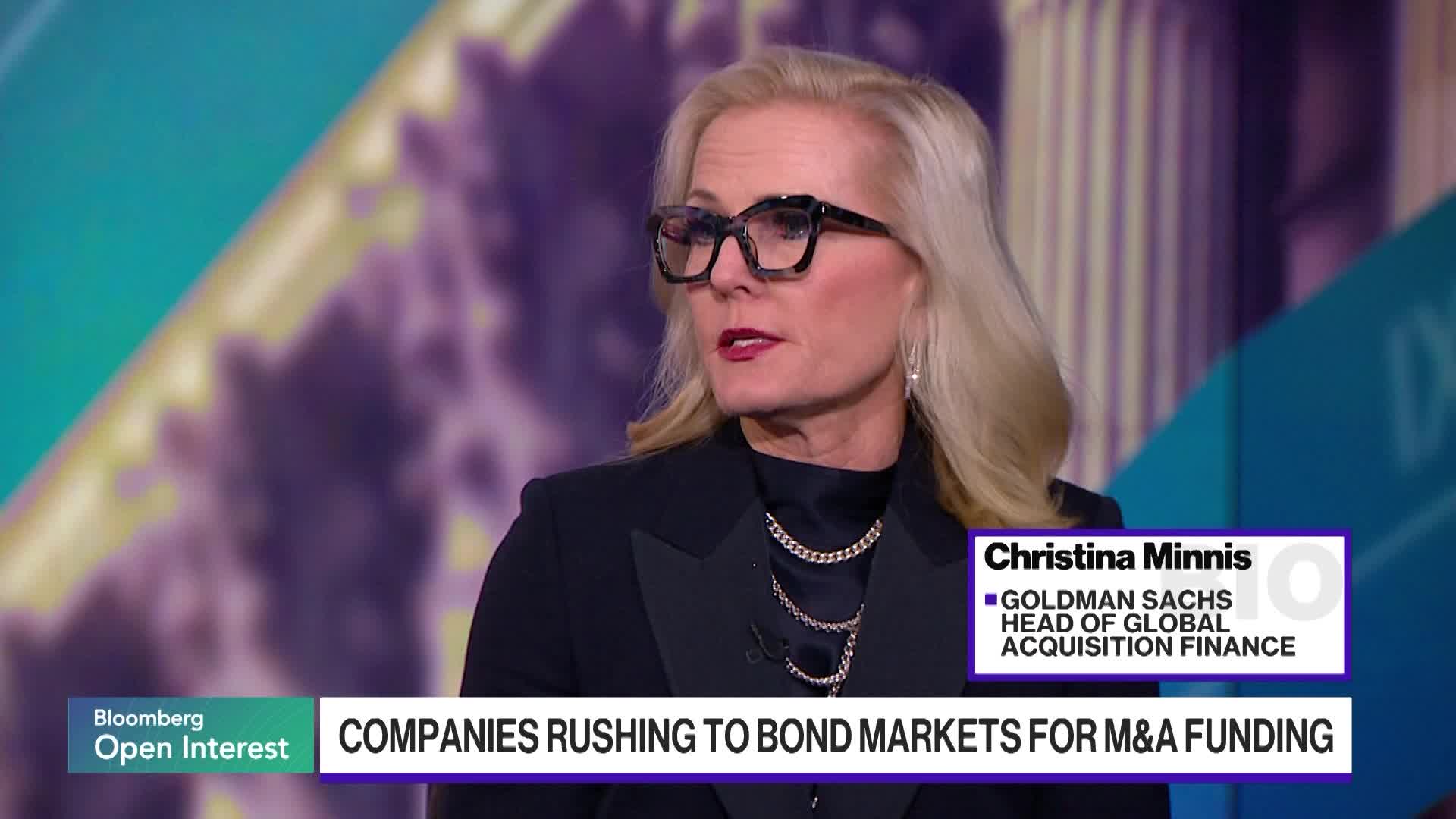
Market participants report a strong revival in credit and M&A activity driven by heavy sponsor capital, AI-driven corporate investment and renewed appetite for infrastructure and energy-transition financing. Firm forecasts include a US GDP upgrade to 2.5% for 2026, private credit at roughly $1.7tn and sponsor revenues up ~45% with $10bn+ megadeals nearly doubling year-over-year; spreads are tight but managers expect credit dispersion and prudent hedging. The team expects a couple more Fed cuts with front-end rates falling toward ~3.0–3.25% and the 10-year settling near ~4.25%, supporting deal flow while advising vigilance on individual company leverage and sector volatility.
Market structure: Winners are global investment banks with scale in private credit and M&A advisory (GS, large PE sponsors, AI/energy-infra lenders) as private credit grows ~20% YoY and allocative share to infra can rise from 1–2% to ~5% over 12–36 months. Losers include single-name levered tech borrowers and institutions with outsized unhedged exposures (example ORCL CDS widening); spreads are tight now, implying low near-term compensation for idiosyncratic credit risk. Cross-asset: expect credit spreads to compress further until rates or macro shocks reverse; floating-rate loans outperform IG duration instruments, while industrial metals and oil see upside from energy-transition capex.
Risk assessment: Key tail risks are a rapid move in the 10yr >4.5% (triggering +100–300bp wider HY OAS), a concentrated AI/infra credit loss, or regulatory action on private credit fees within 6–18 months. Immediate catalyst window: ORCL earnings and convertible/loan announcements (days); medium-term: Fed guidance and two implied 2026 cuts (months); long-term: secular reallocation into private markets (quarters). Hidden dependencies include sponsor reinvestment capacity, covenant-lite issuance, and mark-to-market liquidity for large megadeals.
Trade implications: Tactical plays: long GS equity (capture cross-selling/private-credit fee growth), tactical protection on ORCL (puts/CDS around next earnings), and overweight floating-rate loan exposure (BKLN) for 3–12 months to capture spread vs duration risk. Use 3–6 month ORCL put spreads to cap premium, size protection to 0.5–1% of NAV; maintain stop-loss rules tied to 10yr >4.5% or HY OAS +100bp.
Contrarian angles: Consensus underestimates the speed of reallocation from public-to-private credit if yields stay ~4.25% and M&A megadeals continue; conversely, crowding into AI lenders risks single-name concentration losses. Historical parallel: 1999–2000 tech M&A froth showed how fast dispersion appears once rates or earnings disappoint; set explicit thresholds (10yr >4.5% or HY OAS +100bp) to cut long-credit and unwind crowding.
AI-powered research, real-time alerts, and portfolio analytics for institutional investors.
Request DemoOverall Sentiment
moderately positive
Sentiment Score
0.45
Ticker Sentiment
