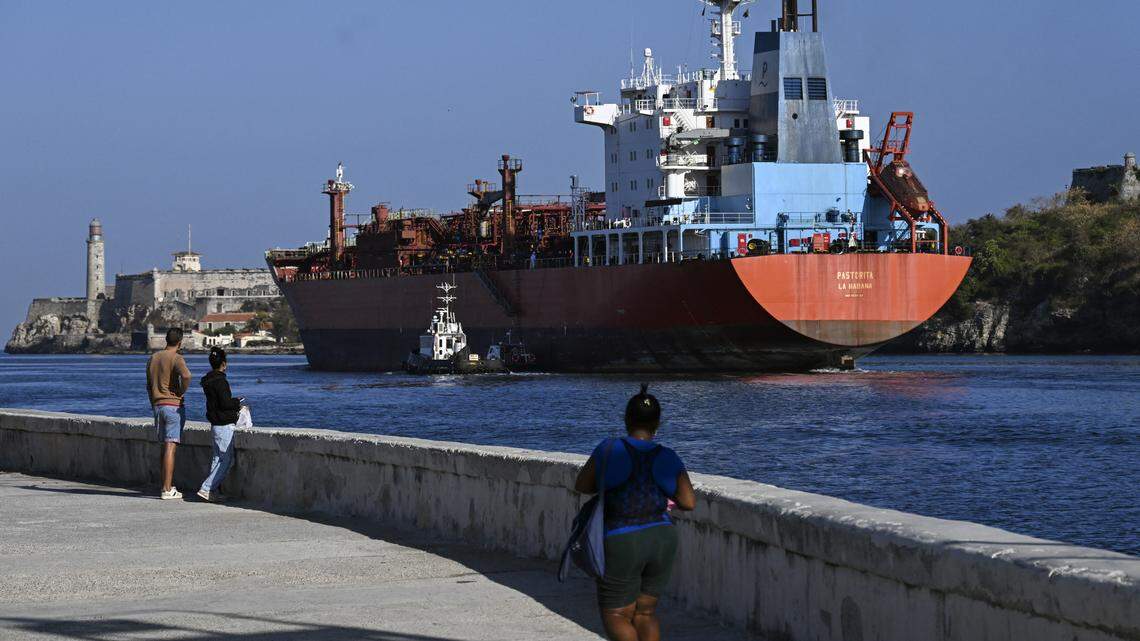
700,000–730,000 barrels of Russian crude aboard the tanker Anatoly Kolodkin is en route to Cuba and could arrive within ~6 days, creating a direct test of U.S. enforcement after the Treasury amended a waiver to explicitly exclude shipments to Cuba. Cuba has received only two tankers so far this year, and its refineries would need roughly 2–3 weeks to process this cargo, so any delivery would be short-term relief. The incident raises sanctions-enforcement and regional geopolitical risks that could affect Caribbean shipping patterns and set a precedent for future Russia-to-Latin America energy shipments.
This episode is less about the barrels and more about the operational and insurance frictions that follow a sanctioned-ship standoff. Expect near-term increases in war-risk and voyage-specific premiums for Atlantic crossings (applied as $/day or percentage add-ons to charter rates) and a spike in demand for owners able to offer transparent, compliant flags and AIS histories; those two effects will reallocate freight away from opaque tonnage and into higher-quality fleets within days.
Market mechanics: if Washington signals enforcement (diplomatic pressure, interdiction, or port denial), owners will face cargo seizure risk and counterparties will increasingly require escrowed payments/letters of credit routed through compliant banks — adding settlement latency measured in days to weeks and effectively tightening delivered supply to oligopolies that can handle the compliance burden. Conversely, if the U.S. stands down, expect a short-lived normalization of logistics but a persistent premium on sanction-evasion complexity priced into freight and insurance for months.
Time horizons and tail risks: freight and insurance repricing will materialize fastest (48–72 hours to 2 weeks), refinery throughput adjustments in Cuba would lag by 2–3 weeks, and a geopolitical escalation that draws in naval interdiction could vertically shift regional risk premia for 3–6 months. The main reversal catalysts are (1) a clear U.S. policy signal to allow or block the delivery, and (2) rapid imposition of secondary sanctions on identified beneficial owners; either will re-rate exposed equities and derivative products sharply.
AI-powered research, real-time alerts, and portfolio analytics for institutional investors.
Request DemoOverall Sentiment
neutral
Sentiment Score
0.00
