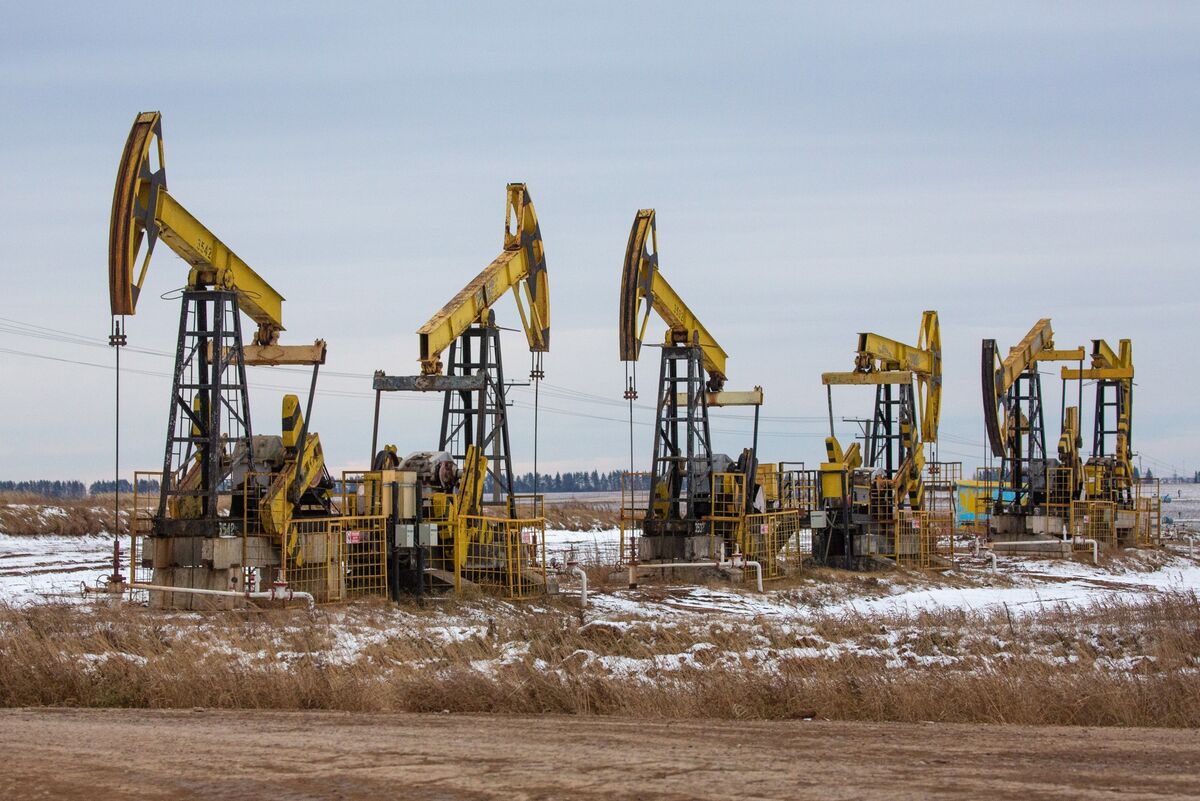
Oil prices stabilized early this week, with Brent trading above $63, as market participants weighed concerns over a looming global crude surplus against the implications of recent U.S. sanctions on Russian producers. Traders are closely monitoring upcoming supply and demand outlooks from OPEC and the International Energy Agency, which are expected to provide further clarity on the evolving supply-demand dynamics.
Oil prices have stabilized following two consecutive weekly declines, with Brent trading above $63 a barrel and West Texas Intermediate below $60. This stabilization reflects a market grappling with conflicting signals: concerns over a looming global crude surplus are being weighed against potential supply disruptions from recent U.S. sanctions on Russian producers. The overall market sentiment is moderately negative, characterized by uncertainty.
The market's immediate focus is on the upcoming supply and demand outlooks from OPEC and the International Energy Agency, expected this week. These reports are critical for providing clarity on the evolving supply-demand dynamics, which currently suggest a potential oversupply scenario. Traders are particularly concerned that global crude supplies are poised to run ahead of demand.
While the sanctions on Russian producers introduce a bullish geopolitical risk to supply, the primary bearish driver remains the fundamental prospect of oversupply. This tension between geopolitical supply constraints and underlying oversupply expectations creates a volatile and uncertain environment for crude oil prices, indicating a moderate market impact.
AI-powered research, real-time alerts, and portfolio analytics for institutional investors.
Request DemoOverall Sentiment
moderately negative
Sentiment Score
-0.50
