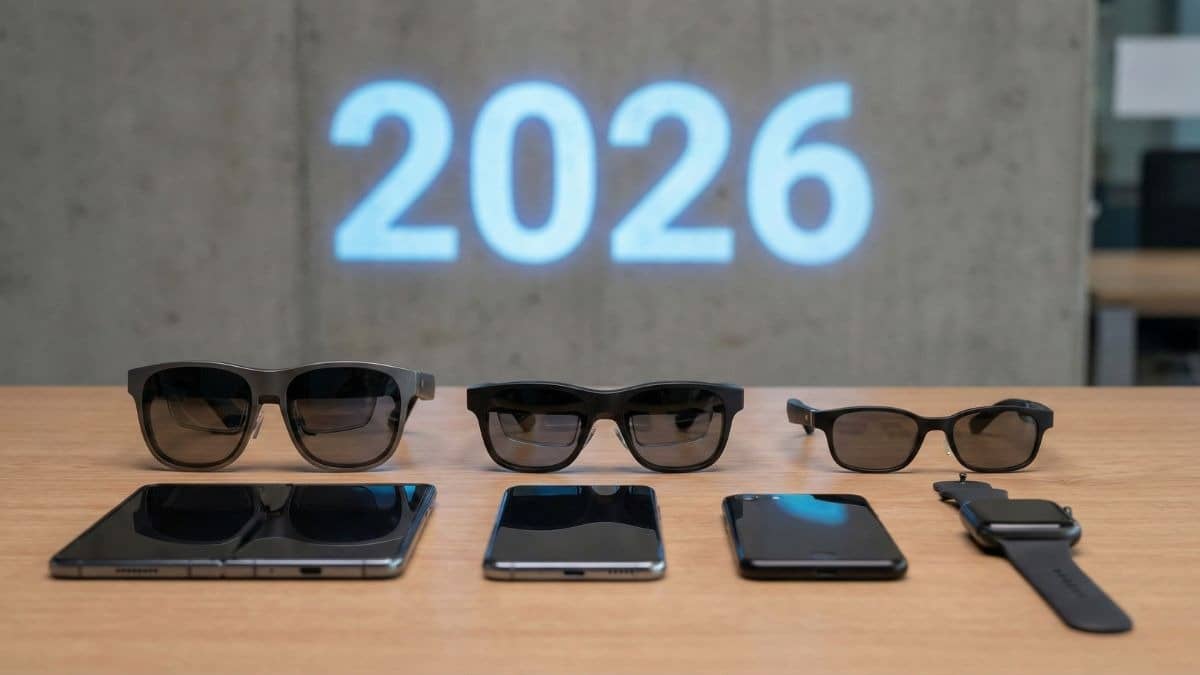
Google has previewed Gemini on Android XR and signalled plans to launch AI-powered smartglasses in 2026, demonstrating features such as turn-by-turn navigation, messaging, live translation and hands-free camera capture. The market is splitting into lightweight no-display audio/camera models and higher-cost in-lens display devices; smartglasses are expected to take over short, contextual tasks while smartphones retain apps, payments and heavy compute due to battery, comfort and privacy constraints. Investors should watch component suppliers, eyewear partners and Android XR ecosystem participants for incremental revenue opportunities, though near-term displacement of smartphone-derived revenue looks limited.
Market structure: Google (GOOGL/GOOG) and component suppliers (e.g., QCOM) are the clear near-term winners as Android XR creates a software+services annuity for navigation, translation and search ads; incumbent smartphone vendors retain core revenue for heavy tasks so absolute displacement is limited. Expect modest pricing power for platform owners (Google ads/search + Play services) and margin pressure for hardware-first entrants; component demand will shift toward camera modules, waveguides and low-power SoCs, tightening those supply pockets over 12–24 months.
Risk assessment: Tail risks include fast-moving privacy regulation (EU/US bans on covert cameras) or antitrust limits on bundling which could curtail Google’s ability to monetize – these are low-probability but could cut projected incremental services revenue by >30% if enacted. Immediate volatility will spike around 1–3 product announcements (next 3–6 months); adoption and margin outcomes play out over 2–4 years once battery/thermal constraints are resolved.
Trade implications: Tactical trades favor 3–4% overweight in GOOGL into the 6–12 month window ahead of product launches and a 1–2% overweight in QCOM for component exposure, funded by trimming 1–2% consumer hardware cyclicals. Options: use 9–15 month call spreads on GOOGL sized to 0.5–1.0% of NAV to cap premium; consider protective hedges if regulators publish restrictive language.
Contrarian angles: The market underestimates social acceptance and privacy-driven limits — not every market becomes phone-replacing; hardware margins may compress rapidly as manufacturers subsidize optics to gain share. Historical parallels to wearable waves (smartwatches vs smartphones) suggest slow diffusion with concentrated winner-take-most outcomes; watch for unintended outcomes like component bottlenecks that could inflate costs and slow unit growth.
AI-powered research, real-time alerts, and portfolio analytics for institutional investors.
Request DemoOverall Sentiment
mildly positive
Sentiment Score
0.35
Ticker Sentiment
