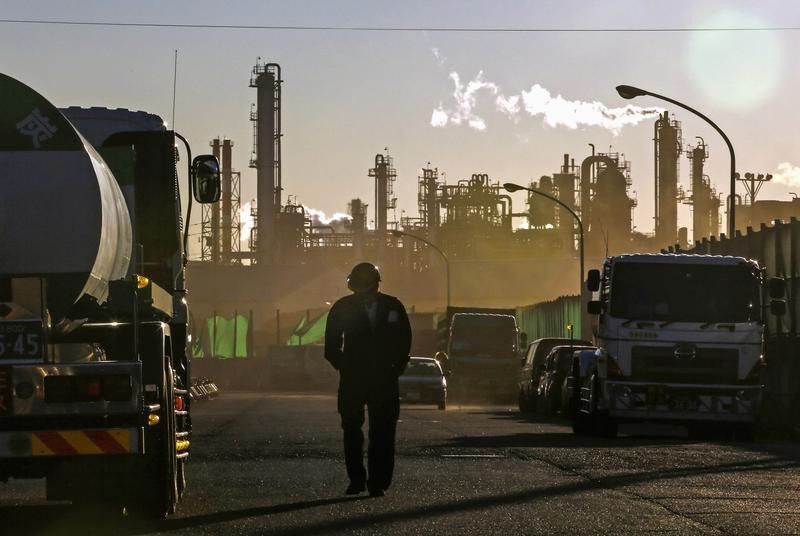
Japan warned that oil prices are unlikely to return to the $60-$70 per barrel range soon, implying a prolonged high-cost energy environment for manufacturers and consumers. Tokyo is using AI to identify supply chain bottlenecks and will continue gasoline subsidies for now, but not indefinitely. The unresolved Strait of Hormuz situation adds geopolitical risk to crude flows and could keep energy and logistics costs elevated across Asia.
The bigger market implication is not a simple oil beta trade; it is a margin reset for Asian manufacturing and logistics. If energy input costs stay elevated, the first-order winners are upstream energy and freight, but the second-order losers are Japanese and Korea-linked industrials, chemicals, and precision manufacturing that operate on thin spreads and cannot reprice fast enough. That creates a lagged earnings downgrade cycle over the next 2-3 quarters, especially for exporters with heavy regional supply-chain exposure and limited pricing power.
Japan’s move toward AI-based supply-chain monitoring signals that management teams are preparing for operational rather than just price volatility. That tends to favor software/automation vendors, industrial optimization tools, and logistics platforms that can monetize exception management, while it increases scrutiny on firms with brittle procurement networks. The market is likely underestimating the capital intensity of resilience: more inventory, more redundancy, and more expedited shipping all compress ROIC before any revenue benefit shows up.
The contrarian angle is that a prolonged high-price regime is bearish for cyclicals only if demand remains intact; if crude stays firm long enough, policy response becomes the main catalyst. Diplomatic pressure, strategic releases, or a rapid de-escalation in maritime risk could unwind the trade quickly, so this is more of a weeks-to-months positioning thesis than a years-long secular call. The cleanest expression is relative value: own hard-asset cash flow and logistics enablers, short energy-sensitive manufacturers that cannot pass through costs.
SMCI and APP are not direct geopolitics hedges, but they can benefit as AI spending becomes tied to operational efficiency and supply-chain control. That makes them viable longs only on dips, not as momentum chase names, because any risk-off move from oil shock headlines can still compress multiple expansion in high-beta growth.
AI-powered research, real-time alerts, and portfolio analytics for institutional investors.
Request DemoOverall Sentiment
moderately negative
Sentiment Score
-0.35
Ticker Sentiment
