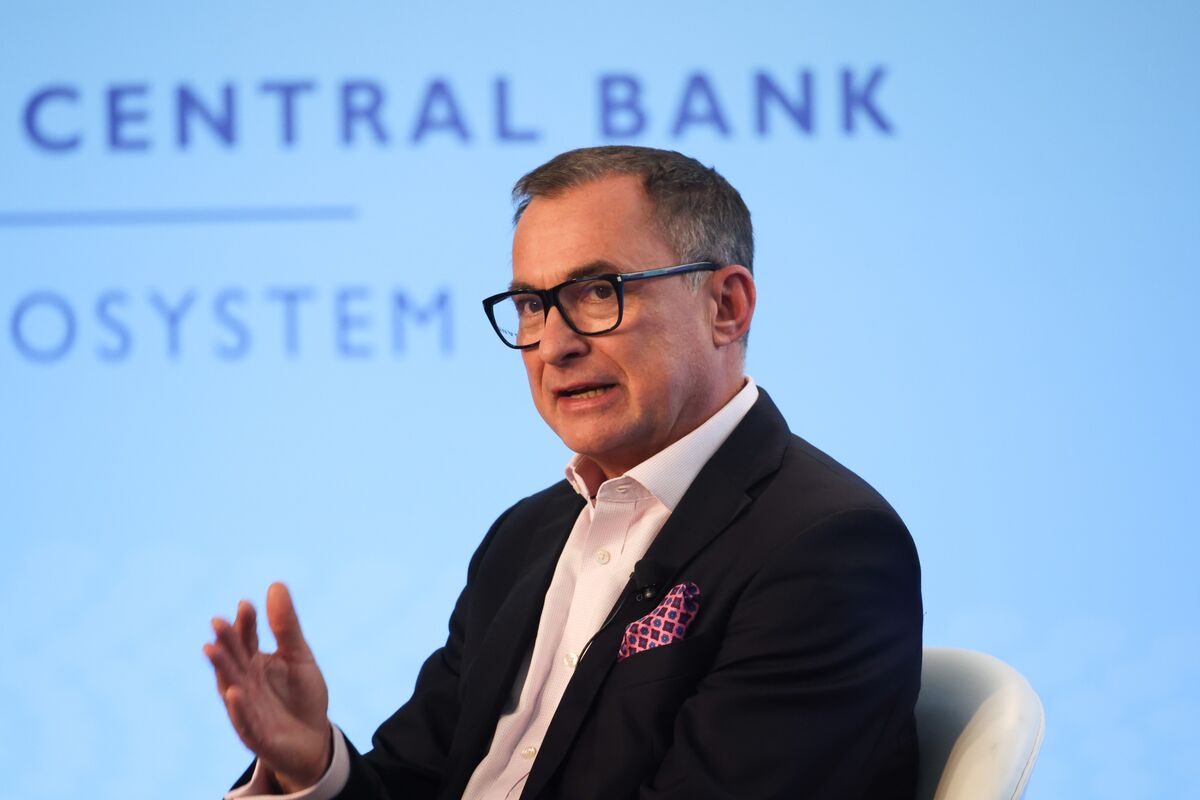
ECB Governing Council member Joachim Nagel said the central bank may "have to do something" as the Iran-related energy shock persists, signaling a possible policy response. He noted the energy supply shock is becoming more persistent and that the ECB is moving away from its baseline scenario. The comments point to renewed inflation and growth risks from Middle East conflict, with potential implications for euro-area rates and broader markets.
The key market implication is not a one-off policy tweak, but the risk that the ECB is forced into a more asymmetric reaction function just as growth is already fragile. An energy shock that persists for months typically hits Europe through three channels: higher headline inflation, weaker real incomes, and tighter financial conditions via wider credit spreads. That combination is usually bearish for cyclicals and small caps first, then gradually bleeds into banks if loan growth slows and asset quality fears rise.
Second-order winners are less obvious than the headline losers. US exporters with pricing power and non-European revenue mixes should hold up better than domestic European industrials, while select energy producers and shipping/logistics names may benefit if disruption reprices transport and LNG flows. The larger macro risk is that the ECB talks dovish on growth but cannot ease much because inflation expectations re-accelerate; that policy trap tends to compress equity multiples in Europe faster than earnings estimates fall.
The contrarian point is that the market may be overestimating the durability of the inflation impulse and underestimating how quickly demand destruction can show up. European consumers are more rate-sensitive than US consumers, so if energy stays elevated, discretionary spending can weaken within 1-2 quarters, reducing the pass-through to core inflation later in the year. If geopolitical risk premium fades or energy supply normalizes, the trade unwinds fast and the ECB can revert to a data-dependent stance, which would trigger relief rallies in beaten-down rate-sensitive assets.
AI-powered research, real-time alerts, and portfolio analytics for institutional investors.
Request DemoOverall Sentiment
mildly negative
Sentiment Score
-0.25
