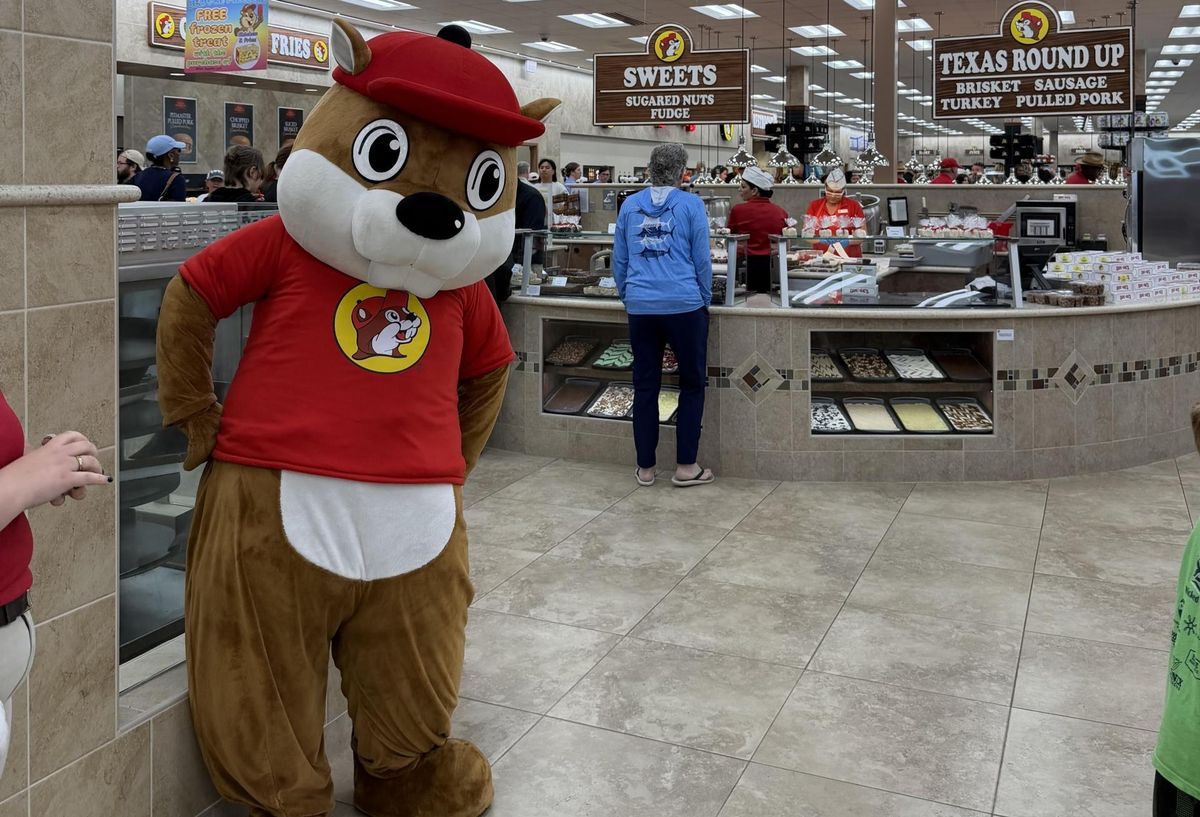
Buc-ee’s is accelerating its national rollout, with at least 6 new states slated for openings by the end of 2027 and first-time entries into Arizona and Arkansas expected by year-end. The chain now has 55 locations across 12 states, and several planned travel plazas are large-format sites of 70K-74K SF with extensive fuel capacity, underscoring continued expansion momentum. The news is positive for Buc-ee’s growth outlook, but the market impact should be limited given the company’s private status and the largely incremental nature of the expansion update.
The expansion is a signal that the premium roadside stop model still has pricing power even in a softer consumer backdrop. The second-order winner is less Buc-ee’s itself than the ecosystem built around large-format travel plazas: land developers near highway interchanges, fuel distributors, local labor markets in exurban growth corridors, and nearby quick-service chains that benefit from traffic spillover. The fact that the format keeps scaling up suggests management believes throughput per site and merchandise mix can offset higher build costs, which is a positive read-through for any operator with strong site selection and balance-sheet capacity.
The more interesting implication is competitive pressure on weaker convenience-store formats. Large-box travel centers force a bifurcation: either you are a destination stop with amenities and strong brand pull, or you are a commodity fuel stop vulnerable to margin compression. That is a negative second-order for smaller regional c-stores and for incumbents that rely on fuel-only traffic; over 12-24 months, the threat is not just lost customers but the need to reinvest in store capex and labor to avoid being displaced on interstate corridors.
The bull case is still underappreciated, but so is the execution risk. These projects are long-dated and capital intensive, so the near-term catalyst is mostly sentiment and land/permit progress rather than revenue. The key tail risk is a consumer pullback that reduces discretionary in-store basket size; if fuel volumes hold but retail attach rates fall, the economics of oversized plazas can deteriorate quickly. Another risk is local political pushback on traffic, zoning, and water/sewer infrastructure, which could delay openings by quarters and compress expected returns.
Consensus may be overestimating how easily this format scales outside its core geography. The brand has cult equity, but road-trip behavior, density of highway networks, and state-level permitting are uneven; expansion into more regulated or lower-traffic markets could lower productivity per site. That creates a nuanced setup: the growth story is real, but the market may reward only the best-located openings and discount the rest until traffic data proves the model travels as well as the logo.
AI-powered research, real-time alerts, and portfolio analytics for institutional investors.
Request DemoOverall Sentiment
mildly positive
Sentiment Score
0.35
