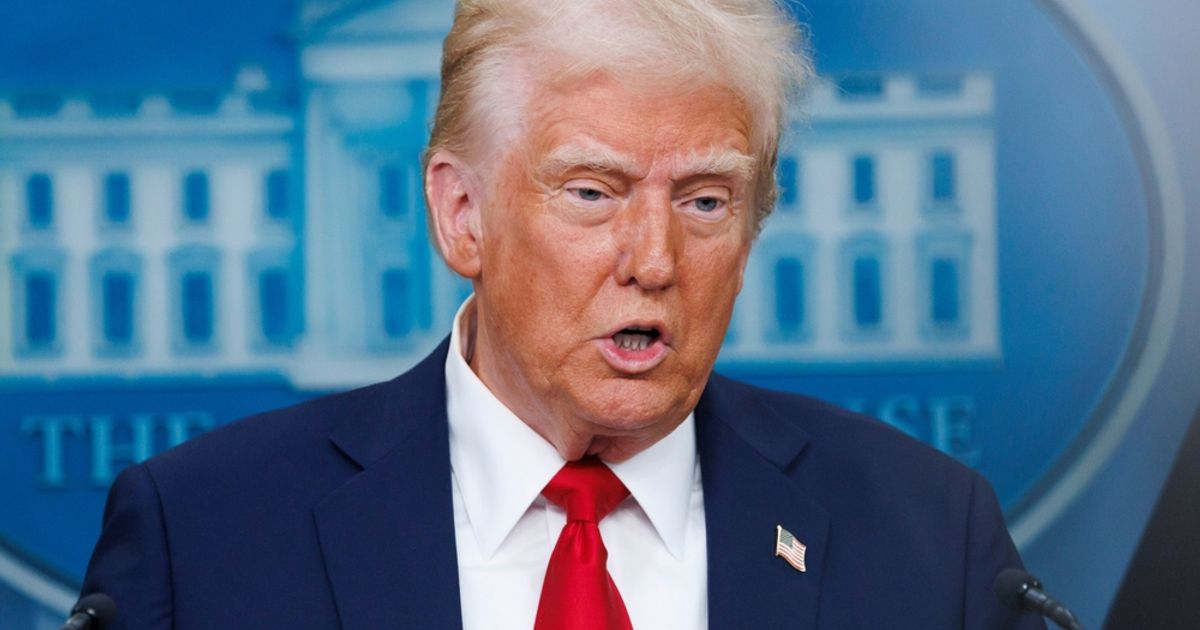
U.S. stock futures, particularly the Russell 2000, and the dollar are declining following President Trump's announcement of new unilateral tariff rates and escalating tensions with Iran; the dollar index hit a three-year low of 97.8. Trump's trade stance is renewing uncertainty after recent talks with China, while geopolitical risks in the Middle East are driving oil volatility and demand for safe-haven assets like gold and U.S. Treasury bills. In company news, Boeing is down 7.7% premarket after an Air India crash, while CureVac jumped 30% after being acquired by BioNTech.
The market is exhibiting significant risk-off behavior, as indicated by U.S. stock futures declining broadly ahead of the opening bell; the Russell 2000, focused on domestic small-caps, leads the descent with a 1% fall, Dow Jones futures are down 0.7%, and both S&P 500 and Nasdaq 100 futures have dropped 0.6%. This negative sentiment, reflected by an overall score of -0.6 and a high market impact score of 0.75, is primarily driven by President Trump's announcement of forthcoming letters detailing new unilateral tariff rates to various countries within about two weeks, a development that overshadows the recent U.S.-China deal which maintained tariffs at 55% and thus renews widespread trade uncertainty. A potential mitigating factor is the U.S. Treasury Secretary's suggestion of a 90-day extension for countries engaging in 'good faith' efforts. Compounding these trade concerns are escalating geopolitical tensions with Iran, fueled by President Trump's skepticism over a nuclear accord and threats of military action, which has seen Iran's defence minister warn of retaliatory strikes. Consequently, the U.S. dollar index has slumped to a three-year low of 97.8, weakening 0.9% against the euro to $1.1587, 0.55% against the Japanese yen, and 0.3% versus the British pound. This environment has increased demand for safe-haven assets, with gold prices inching higher and U.S. Treasury bill yields declining. WTI crude oil experienced volatility, initially rallying to $67.5 a barrel on Middle East tensions before retreating to $66.9. Analysts note investor concerns about high stock valuations amid these combined uncertainties. In specific company news, Boeing (BA) shares declined 7.7% premarket following an Air India 787 Dreamliner crash, reflecting a highly negative sentiment (-0.9). Conversely, CureVac (CVAC) surged 30% (sentiment +0.9) after BioNTech (BNTX, sentiment +0.2) agreed to acquire it in an all-stock deal. GameStop (GME) fell 16.5% premarket (sentiment -0.8) after announcing a fundraising proposal, while Voyager Technologies saw its shares jump 82% in after-hours trading on its debut, valuing the defence and space technology firm at approximately $3.5 billion.
AI-powered research, real-time alerts, and portfolio analytics for institutional investors.
Request DemoOverall Sentiment
strongly negative
Sentiment Score
-0.60
Ticker Sentiment
