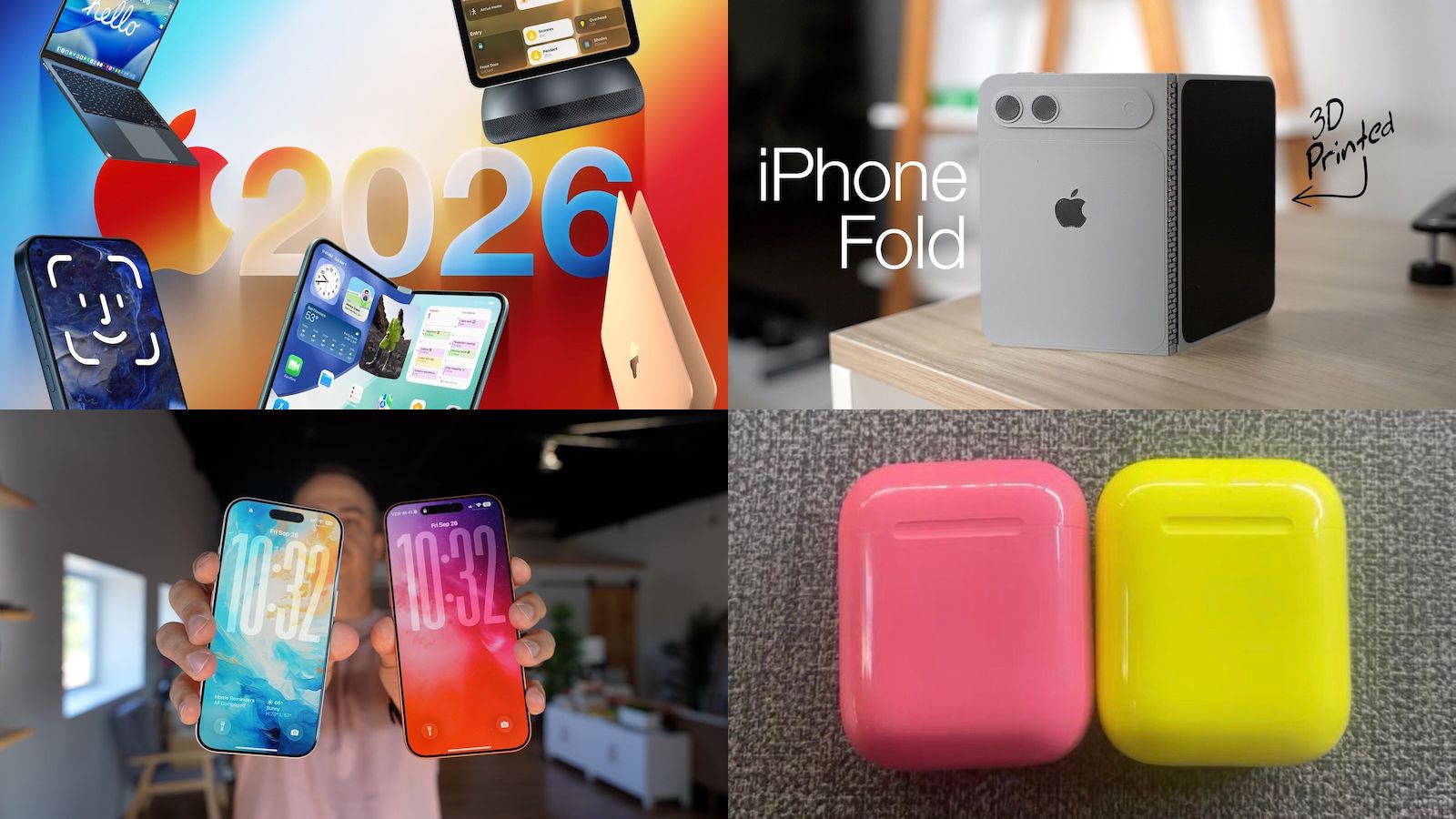
Apple is expected to deliver a product-heavy 2026 with a rumored September launch of a foldable iPhone (reported ~5.4 inches closed, approaching an ~8-inch unfolded display), a low-cost MacBook, possible OLED MacBook Pro, a new home hub, and an LLM-powered Siri. The company’s conservative AI spending has left it with more than $130 billion in cash and marketable securities, positioning Apple to pursue acquisitions or partnerships if AI startup valuations soften; other near-term items include Fitness+ program updates and surfaced AirPods prototype color tests.
Market structure: Apple (AAPL) is the clear near-term winner — new hardware categories (foldable iPhone in Sep 2026, low-cost MacBook, home hub, LLM Siri) increase Apple's TAM and give it pricing optionality across hardware+services; suppliers of flexible OLEDs, TSMC and Apple-specific component vendors should see 5–15% incremental revenue upside in FY26 if adoption is healthy. Losers are ad-driven AI incumbents (GOOGL/GOOG, META) in the short run as skepticism around AI ROI cools investment appetite and rerates growth multiples. Cross-asset: expect AAPL equity implied vol to rise 20–40% into WWDC (June) and Sep events, modest USD strength on safe-haven flows into big tech cash, and small upward pressure on commodity prices used in flexible displays (+3–8%).
Risk assessment: Tail risks include a foldable hardware failure (user UX or build yield problems) that trims AAPL unit growth by >5–10% in FY27, regulatory/antitrust action on acquisitions in 6–18 months, or a broader AI funding pullback that forces write-downs in high-multiple peers. Short-term (days–weeks) risks are event volatility around WWDC and earnings; medium-term (3–9 months) risks are supply constraints or margin compression from low-cost product pushes; long-term (12–36 months) hinge on LLM Siri monetization and M&A execution. Hidden dependencies: Apple’s LLM progress depends on GPU procurement (NVDA/AMD) and data-licensing agreements; foldable rollout depends on Samsung Display supply and hinge durability — watch yield signals and supplier capex guidance.
Trade implications: Direct play — establish a 2–3% long AAPL position ahead of WWDC (June) and add to a 3–5% position into Sep if pre-launch telemetry (supply chain order increases, supplier guidance) is positive; hedge with a 1% notional put for 6 months if AAPL IV spikes >30%. Pair trade — long AAPL (2%) vs short GOOGL (1%) or META (1%) until FY26 earnings re-acceleration, expecting relative outperformance of 200–400 bps. Options — buy AAPL Jan 2027 20% OTM LEAP calls (size 1–1.5% notional) or a Sep 2026 call spread to capture product-launch upside while limiting premium; for GOOG/META consider buying 3–6 month put spreads if sentiment deteriorates >15% from current levels. Rotate into semiconductors (TSM, NVDA exposure via options) and consumer hardware suppliers; reduce ad-tech/ARPU-dependent names by 30–50% of current exposure.
Contrarian angles: Consensus underestimates the strategic value of Apple’s $130B+ liquidity — if AI startup valuations fall 20–50% in H2 2026, Apple can scale inorganic capability cheaply, creating a multi-year moat; this is underpriced in GOOG/META downside narratives. Reaction to an “AI bubble” is likely overdone for AAPL but possibly underdone for NVDA (upside if Apple outsources compute) and some suppliers — consider asymmetric bets (small long NVDA call skew or long supplier equities vs short ad-tech). Historical parallel: Apple’s category-creating launches (iPhone, AirPods) drew initial skepticism then durable ecosystem monetization; downside is a failed hardware category which would cascade to suppliers — use options hedges and set stop-loss at 12–15% drawdown per position.
AI-powered research, real-time alerts, and portfolio analytics for institutional investors.
Request DemoOverall Sentiment
mildly positive
Sentiment Score
0.30
Ticker Sentiment
