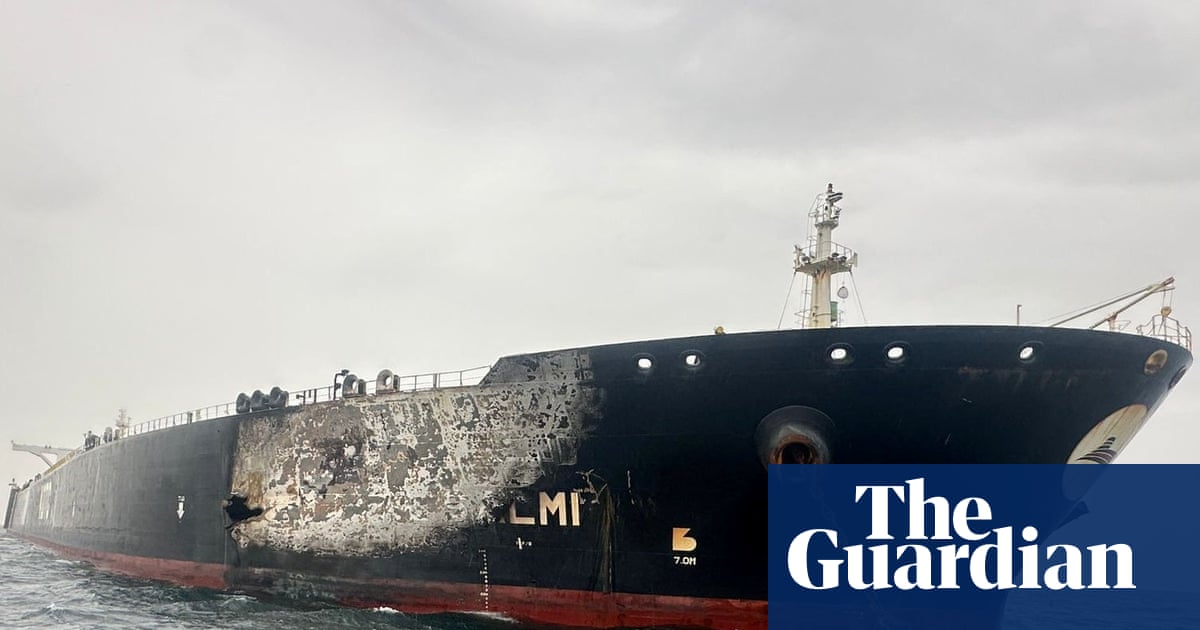
The Al Salmi tanker carrying ~2.0m barrels of crude (≈$200m at current prices) was struck by an Iranian drone while anchored in Dubai, causing hull damage and a fire that was extinguished with no leak or injuries. The attack briefly lifted crude prices and occurs as Brent is up ~59% in March amid widening Middle East hostilities, materially increasing supply disruption risk via the Strait of Hormuz. US troop reinforcements and escalatory political rhetoric further raise the probability of broader regional escalation and policy uncertainty. Monitor oil prices, shipping/insurance spreads and regional defense exposures; adopt risk-off positioning and hedge energy and logistics exposures where appropriate.
This attack amplifies a persistent premium on seaborne crude logistics and war-risk insurance that has already migrated into spot and freight markets; expect VLCC/Tanker time-charter and war-risk premium components to remain elevated for weeks and spike around headline-driven windows (notably the April 6 deadline). Higher shipping bills act like a production-side tax: refiners with long crude receipts and fixed conversion throughput will see margin compression, while upstream producers capture most of the price uplift but also face directionally higher lifting and transport costs.
A key second-order effect is rerouting and basin substitution economics — buyers in Asia can pay modestly higher FOB differentials to source from West African or US Gulf origins rather than risk transits, creating near-term winners among flexible-loading producers and short-haul tanker owners. Conversely, players exposed to scheduled crude voyages through chokepoints (terminals, transshipment hubs, and integrated trading desks with long-laycan commitments) face margin squeezes and operational disruptions that cannot be hedged with vanilla crude swaps.
Tail risk is asymmetric and calendarized: a sustained closure or escalation could push Brent into a $100+/bbl regime within 2–8 weeks, while a credible diplomatic de-escalation or a unilateral reopening by Iran/other parties could erase the premium in 1–4 weeks. Watch three high-frequency catalysts — war-risk insurance rate prints, VLCC time-charter rates, and headline timeline adherence to the April deadline — as binary triggers that will flip directionality faster than end-demand elasticities can adjust.
The market is partially pricing a permanent supply shock, but demand destruction is an under-appreciated governor; at sustained elevated fuel prices, expect 1–3% incremental GDP drag in major importers over two quarters which historically pulls crude back 10–20% from peak. That makes short-duration, event-driven structures and relative-value positioning superior to naked directional participation for the next 60–90 days.
AI-powered research, real-time alerts, and portfolio analytics for institutional investors.
Request DemoOverall Sentiment
strongly negative
Sentiment Score
-0.75
