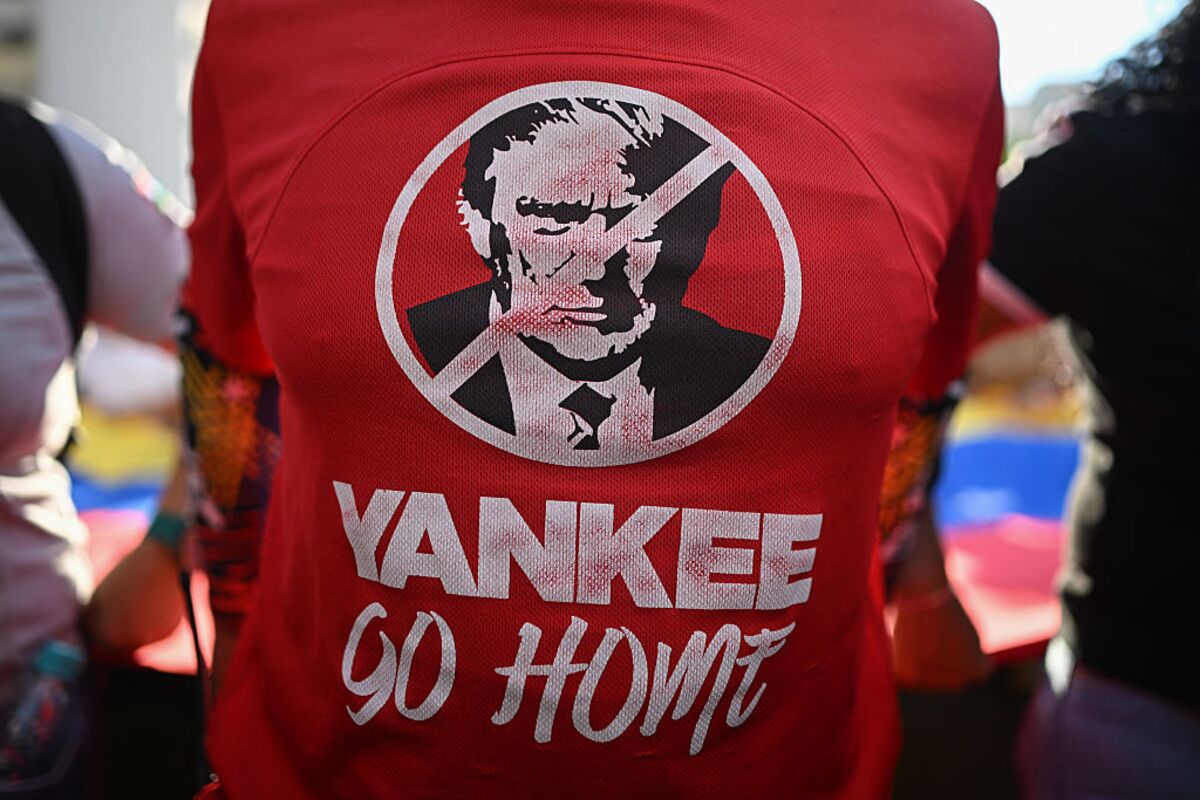
The US has deployed the USS Gerald R. Ford and a large mix of military assets — dozens of advanced fighter jets, thousands of troops, guided‑missile destroyers, special operations forces, armed drones, gunships and possibly a nuclear submarine — off Venezuela, while strikes on speedboats alleged to be running drugs have killed over 80 people since early September. The Pentagon reportedly has options to expand strikes into Venezuela to pressure Nicolás Maduro, but the White House has publicly denied such plans and officials appear unclear on the legal authority for attacks; the buildup raises acute geopolitical risk and regional instability that could affect investor exposure to the region and risk assets.
Market-structure: A US naval buildup off Venezuela is a net positive for defense contractors and commodity-insurance providers and a negative for Venezuelan/Latin‑American risk assets. Expect a 3–8% bid for large-cap defense names over 1–3 months if media attention persists and a 50–300bp widening in sovereign CDS for small Caribbean/Andean issuers on sustained escalation. Energy markets price a risk premium: a contained flare-up likely adds $3–8/bbl for Brent; a strike or embargo could add $15+/bbl within days.
Risk assessment: Tail risks include a US strike provoking wider regional retaliation or Russian/Cuban logistic moves; these are low probability (~10–20%) but high impact (oil +$15–25, EM spreads +300–600bp). Immediate (days) risks = volatility spikes (VIX +25–50%), short-term (weeks) = EM equity/debt drawdowns, long-term (6–24 months) = protracted defense procurement cycles and sanctions regimes embedding higher costs. Hidden dependencies: sanctions, congressional action, and allied responses can rapidly flip the risk-on/risk-off dynamic.
Trade implications: Favor short-duration, event-driven positions: tactical long on defense (delta via 3–12 month call spreads), tactical long on oil via 3–6 month call spreads or energy ETFs, and short/hedge EM LatAm beta via 3-month put spreads or CDS shorts. Use volatility products (VIX calls or VXX call spreads) as cheap tail hedges; prefer options to outright leverage because political timing is uncertain.
Contrarian: The market may overprice a structural oil shock — Venezuela production is already depressed (~1.0–1.5mbd), so persistent $15+ spikes are unlikely without broader Gulf supply disruption. Defense equities often gap up on headlines but revert within 1–3 months absent contract wins; favor option structures over full-equity exposures. Monitor policy statements and OPEC meetings as primary reversal catalysts.
AI-powered research, real-time alerts, and portfolio analytics for institutional investors.
Request DemoOverall Sentiment
moderately negative
Sentiment Score
-0.40
