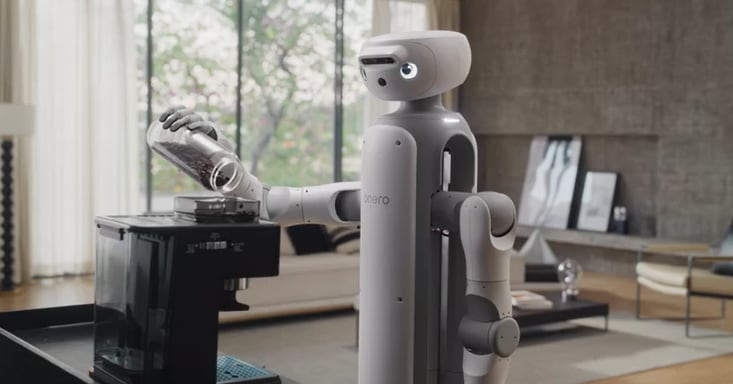
Major global home-appliance manufacturers unveiled new labour‑saving technologies—including smart, automated and AI-enabled appliances and robotics—aimed at automating household chores and enhancing convenience for consumers. The moves signal a strategic push into higher‑value connected devices and potential recurring service revenue, but are unlikely to meaningfully shift near‑term earnings; investors should track unit sales, average selling prices, uptake of subscription/after‑sales services and any supply‑chain constraints for signs of material financial impact.
Market structure: Incumbent large appliance OEMs (Whirlpool WHR, Midea 000333.SZ, Samsung 005930.KS, LG 066570.KS) and platform providers (Amazon AMZN, Google GOOG) are the primary winners as AI-enabled features create bundled hardware+service revenue and raise switching costs. Smaller pure-play appliance makers and low-margin retailers face margin compression as premium smart SKUs command price premiums of +10–30% and software/service ARPU emerges (potential $20–50/household/year). Expect a 1–3ppt share shift to software-enabled incumbents over 12–24 months, putting pricing power in firms that control cloud/OS integrations.
Risk assessment: Tail risks include privacy/regulatory crackdowns (EU/US IoT data rules) and chip supply shocks (NVIDIA/NXP shortages) that could wipe 5–25% off expected margin gains; product recalls or safety incidents could cause 1–2 quarter revenue disruption. Immediate (days) reactions will be muted; short-term (weeks–months) will see re-rating around trade show launches and earnings; long-term (1–3 years) depends on service monetization and ecosystem wins. Hidden dependencies: margins hinge on cloud partnerships and edge-AI silicon availability, not just SKU upgrades.
Trade implications: Direct plays favor long positions in WHR (hardware+service rollouts), Midea (scale in China) and semis/AI suppliers (NVDA, QCOM) with 6–12 month horizons; consider 3–5% portfolio exposure across these. Pair trades: long software-capable OEMs vs short small-cap appliance makers/weak retail distributors; options: buy 6–12 month call spreads on NVDA or WHR to leverage adoption without paying full IV. Rotate 2–4% from pure brick-and-mortar retail into semiconductors and consumer-tech exposure.
Contrarian angles: Consensus understates customer resistance to recurring subscription fees and repairability backlash that could limit ARPU — penetration may plateau if payback >36 months. The market may be underpricing risks from increased returns/repairs and secondhand flows that depress new-unit growth by 5–10% in some markets. Historical parallel: smartphone ecosystem consolidation — winners will be platform owners, not merely large OEMs; a mistaken long-on-size (scale alone) could underperform platform-native players.
AI-powered research, real-time alerts, and portfolio analytics for institutional investors.
Request DemoOverall Sentiment
mildly positive
Sentiment Score
0.25
