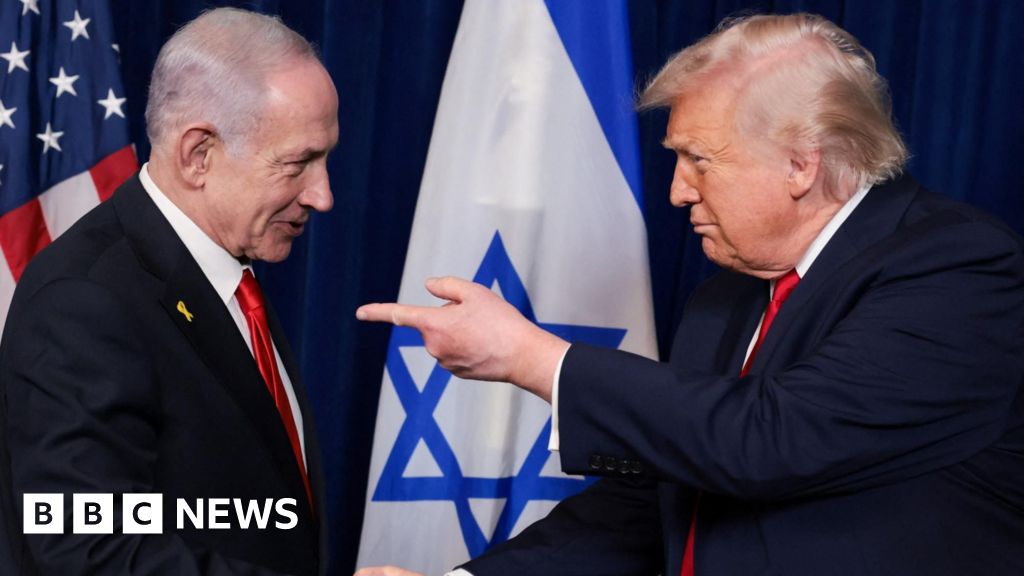
Israeli Prime Minister Benjamin Netanyahu has accepted an invitation to join US President Donald Trump's new 'Board of Peace', a body aimed at overseeing Gaza reconstruction and stability; a leaked charter outlines renewable three-year terms and offers permanent membership for $1bn contributors. Trump will chair with broad authority and has named a seven-member founding Executive Board (including Marco Rubio, Jared Kushner and Tony Blair); a separate Gaza Executive Board includes regional actors whose inclusion has drawn Israeli objections. The development heightens geopolitical and governance risks around reconstruction financing and coordination, and, given the fragile ceasefire and ongoing casualties, introduces additional risk-off pressures for investors with exposure to the region or to defense, aid-financial flows and political risk-sensitive assets.
Market structure: The Board of Peace proposal re-centers US-led, bilateral reconstruction capacity and effectively creates a new funding auction (permanent seats for $1bn). Winners are US defence primes and large engineering/materials firms that can be politically awarded multi-year contracts; losers are multilateral contractors, UN-linked service providers and small regional firms facing contract exclusion. Expect pricing power to shift toward politically connected US firms over 12–36 months, compressing margins for European competitors.
Risk assessment: Key tail risks include full military escalation (WTI +$10–$20 within days), major donor withdrawal, or legal/UN pushback that stalls funding for 6–24 months. Short-term (days–weeks) risk is volatility around charter/funding announcements; medium (3–12 months) is contracting cadence and currency/sovereign stress; long-term (1–3 years) is execution, corruption and cost inflation raising project capital intensity by 20–40%. Monitor US congressional appropriation votes and formal charter text as binary catalysts.
Trade implications: Favor US defence (LMT, RTX, NOC) and large-cap construction/materials (CAT, KBR, NUE) for multi-quarter exposure; tactically hedge with oil upside via WTI call spreads or XLE longs for 1–3 months. Buy GLD/TLT as a 1–3 month tail hedge against escalation; trim concentrated Israel/EM equity exposure immediately. Use options to size asymmetric risk (call spreads on energy, puts on EM/Israel ETFs).
Contrarian angles: The consensus focuses on immediate escalation; underappreciated is multi-year reconstruction spend that could exceed $50–100bn cumulatively and disproportionately benefit US engineering and steel producers. Conversely, if ceasefire holds >90 days and funding lags, defence names could retrace 10–25% — force hedge ratios accordingly and prefer revenues tied to signed contracts, not political promises.
AI-powered research, real-time alerts, and portfolio analytics for institutional investors.
Request DemoOverall Sentiment
moderately negative
Sentiment Score
-0.35
