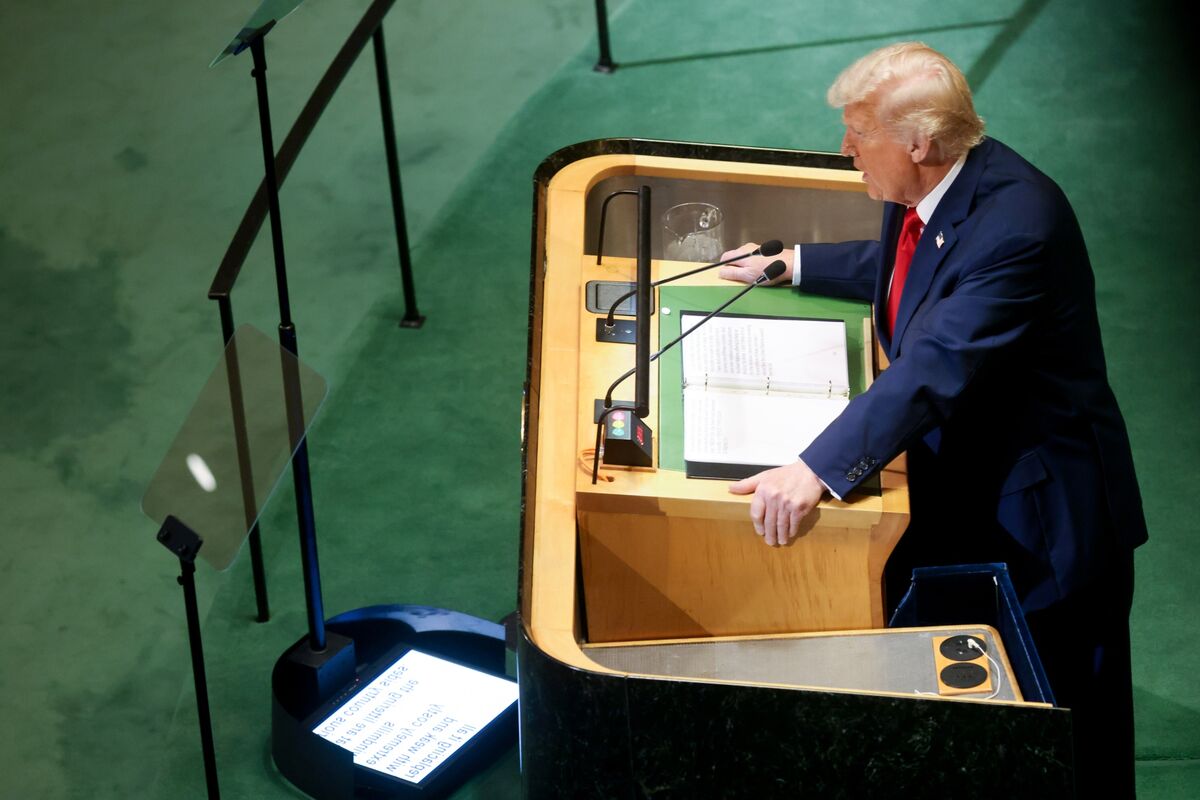
During his address to world leaders at the United Nations, US President Donald Trump denounced climate change as a 'con job' and criticized green energy, delivering a nearly hour-long speech containing misleading claims. This stance, articulated amidst Climate Week NYC and ahead of upcoming climate talks, reinforces the US administration's opposition to climate action, signaling potential implications for global environmental policy and investments in the renewable energy sector.
In a formal address to the United Nations, the US President articulated a strong stance against prevailing climate science, labeling climate change a "con job" and denouncing green energy. The speech, noted for its nearly hour-long duration and misleading claims, occurred strategically during Climate Week NYC and ahead of major international climate negotiations. This public reinforcement of the US administration's anti-climate action policy signals significant and continued policy uncertainty for the renewable energy sector. The moderately negative sentiment and moderate market impact score (0.5) suggest that while this position is not new, its high-profile reiteration creates headwinds for industries dependent on supportive federal climate policies and may signal a further divergence between US and global environmental standards.
AI-powered research, real-time alerts, and portfolio analytics for institutional investors.
Request DemoOverall Sentiment
moderately negative
Sentiment Score
-0.40
