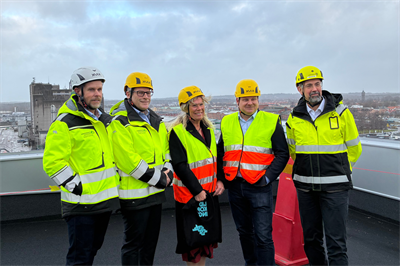
Lantmännen’s SEK 1.2 billion pea-protein facility in Lidköping has reached the halfway point and remains on schedule for start-up in the first half of 2027, with buildings largely complete externally and internal process-equipment installation underway. The plant is designed to receive about 40,000 tonnes of peas and faba beans annually and produce roughly 7,000 tonnes of protein isolate for the food industry, potentially prompting farmers to boost legume cultivation. The project emphasizes sustainability—nitrogen-fixing crops, process-water treatment/reuse and valorisation of side streams—and has received support from Naturvårdsverkets Klimatklivet, aligning with Lantmännen’s broader strategy to strengthen Swedish food security and domestic processing capacity.
Lantmännen has reached the midpoint of its SEK 1.2 billion pea-protein facility in Lidköping with construction progressing to internal process-equipment installation and external buildings largely complete; production is still on schedule for the first half of 2027 following a September 2024 groundbreaking and several years of preparatory studies and planning. The plant is engineered to receive ~40,000 tonnes of peas and faba beans annually and to produce roughly 7,000 tonnes of protein isolate for the food industry, a defined output that will require a “substantial increase in production” among local growers according to management.
The project has explicit sustainability features — nitrogen-fixing crops that reduce mineral fertiliser use, process-water treatment/reuse, and valorisation of side streams — and has received support from Naturvårdsverkets Klimatklivet, aligning with broader ESG and domestic food-security objectives that Lantmännen has prioritized. Lantmännen’s cooperative structure (17,000 farmer-owners, SEK 70 billion turnover) gives it potential sourcing advantages, but management acknowledges farmer uptake will be gradual rather than immediate.
Market signals are mildly positive (sentiment score 0.28, market impact 0.25); principal risks remain execution to the 2027 start date and the pace of raw-material ramp-up among farmers, which will determine when the facility contributes meaningfully to domestic protein supply and downstream margins.
AI-powered research, real-time alerts, and portfolio analytics for institutional investors.
Request DemoOverall Sentiment
mildly positive
Sentiment Score
0.28
