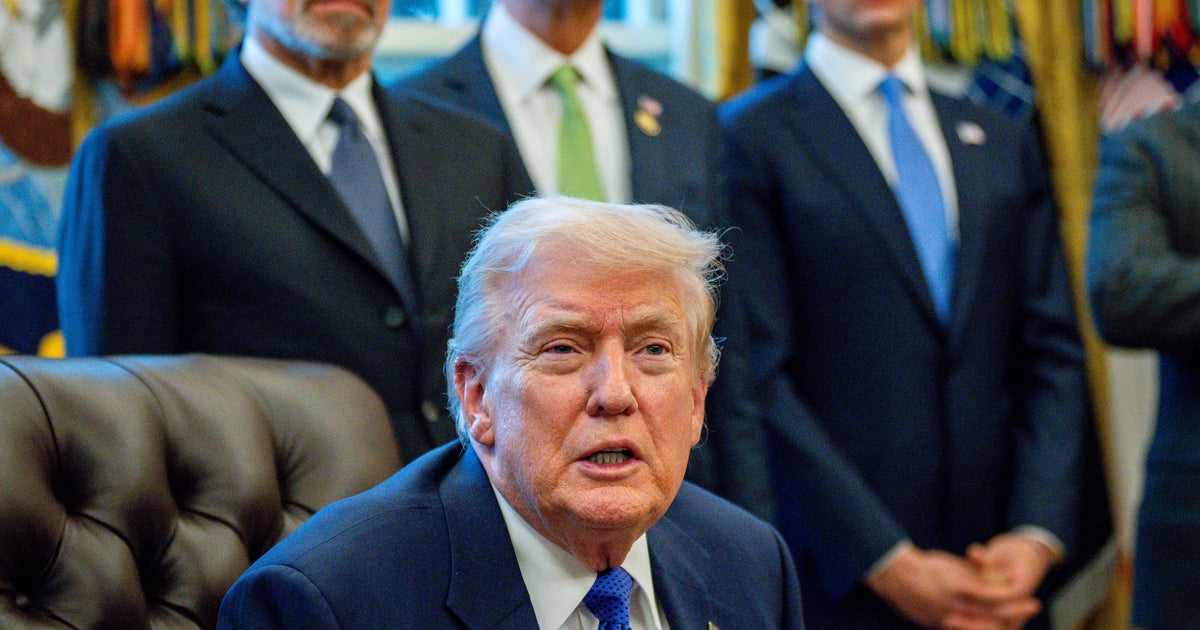
President Trump urged Republicans to "nationalize" voting and to "take over" administration of federal elections in at least 15 states, renewing efforts to expand federal involvement despite the Constitution vesting election administration with states. His administration has pursued an executive order requiring proof-of-citizenship (partially blocked by courts), DOJ demands for voter rolls, and backing for the SAVE Act, while legal challenges, recent FBI actions in Fulton County and pushback from GOP leaders on Capitol Hill highlight ongoing litigation and political friction that could increase regulatory and political risk ahead of the 2026 midterms.
Market structure: Federalization talk raises demand for cyber/identity/security services and legal/regulatory work while creating downside for politically exposed small-cap and state-contracted service providers. Expect incremental pricing power for leading cybersecurity vendors (CRWD, PANW) and defense contractors (LMT, NOC) as governments reallocate budgets; media/news traffic should spike but ad-revenue impact is uneven. Cross-asset: near-term risk-off pushes into Treasuries (yields down 10–30bps), USD safe-haven bid, higher implied equity volatility (VIX +5–15 pts in shock scenarios), and commodity impact limited outside gold (+3–7%).
Risk assessment: Tail risks include a constitutional/legal showdown that triggers sustained market volatility (VIX>30 for multiple weeks) or localized civil unrest disrupting state operations and credit in affected municipalities. Immediate window (days): headlines-driven intraday spikes; short-term (weeks–months): litigation and SAVE Act legislative progress; long-term (quarters+): structural state budget shifts into election security CAPEX. Hidden dependency: increased federal data demands raise contracting opportunities but also counterparty and compliance risk for vendors handling PII.
Trade implications: Direct plays favor 6–24 month longs in top-tier cyber (CRWD, PANW) and 3–12 month longs in prime defense (LMT) while keeping cash hedges. Pair trades: long cyber/defense vs short regional-bank / small-cap political-exposure (KRE, IWM small-cap tilt). Options: allocate ~1–2% portfolio to 90–180 day VIX call or VXX call spreads as a convex hedge; use 3–6 month call options on CRWD/PANW for leveraged exposure. Rotate away from consumer discretionary and state-dependent contractors into large-cap quality and security software over next 4–12 weeks.
Contrarian angles: Consensus overstates near-term federal takeover probability — constitutional and GOP pushback make sweeping nationalization unlikely, so market panic will be transient and create buy-the-dip opportunities in quality tech and defense. Historical parallel: post-2000 election uncertainty produced a <10% market drawdown then quick recovery; similar pattern probable unless legal escalation occurs. Unintended consequence: sustained talk of federal oversight will drive multi-year state CAPEX into secure voting infrastructure and ID verification, a durable revenue tail for security vendors if legislation nudges funding (monitor SAVE Act progress).
AI-powered research, real-time alerts, and portfolio analytics for institutional investors.
Request DemoOverall Sentiment
mildly negative
Sentiment Score
-0.25
Ticker Sentiment
